A Tampa Bay electrical panel upgrade EV charger job starts with spare capacity. It doesn’t start with a published metro price. Duke Energy Florida’s Charger Prep Credit can help Pinellas wiring for a Level 2 charger. It can also cover the electrical upgrades that charger needs. Tampa Electric, TECO, doesn’t name a residential home-charger rebate on its primary pages. Confirm both with the utility on your bill before you spend.
Your utility is the first split
Tampa Bay power isn’t one company across the metro. Duke Energy Florida serves Pinellas County and much of Pasco. TECO serves Tampa, most of Hillsborough, and parts of Pinellas and southern Pasco. Withlacoochee River Electric Cooperative serves northern and central Pasco, except the Dade City area. A driver in north or central Pasco is often a WREC member. Don’t call TECO or Duke until the bill names them.
In 2025 Duke launched the Charger Prep Credit, the Off-Peak Charging Credit, and Fleet Advisory. The Charger Prep Credit is a one-time credit toward wiring and electrical upgrades. That’s for a Level 2 charger, residential or business. It doesn’t cover charger hardware or permit fees. Ask Duke for current terms before you subtract anything from a quote.
TECO’s Drive Smart program is a commercial and public charger incentive. The Alternative Fuels Data Center lists Level 2 and DC fast rebates for non-residential sites. TECO’s home EV pages point owners to charging guidance and [email protected]. A residential home-charger rebate couldn’t be confirmed on a primary TECO page.
Florida has no state EV purchase rebate or tax credit. A federal credit used to cover part of home charger installation. It expired for work completed after December 31, 2025. Peace River Electric Cooperative and Florida Power & Light serve parts of the Manatee and Sarasota ring. Exact EV programs for those two couldn’t be confirmed on a primary page. Read the utility name on your bill, then call that company.
Older Pinellas stock vs new east-county streets
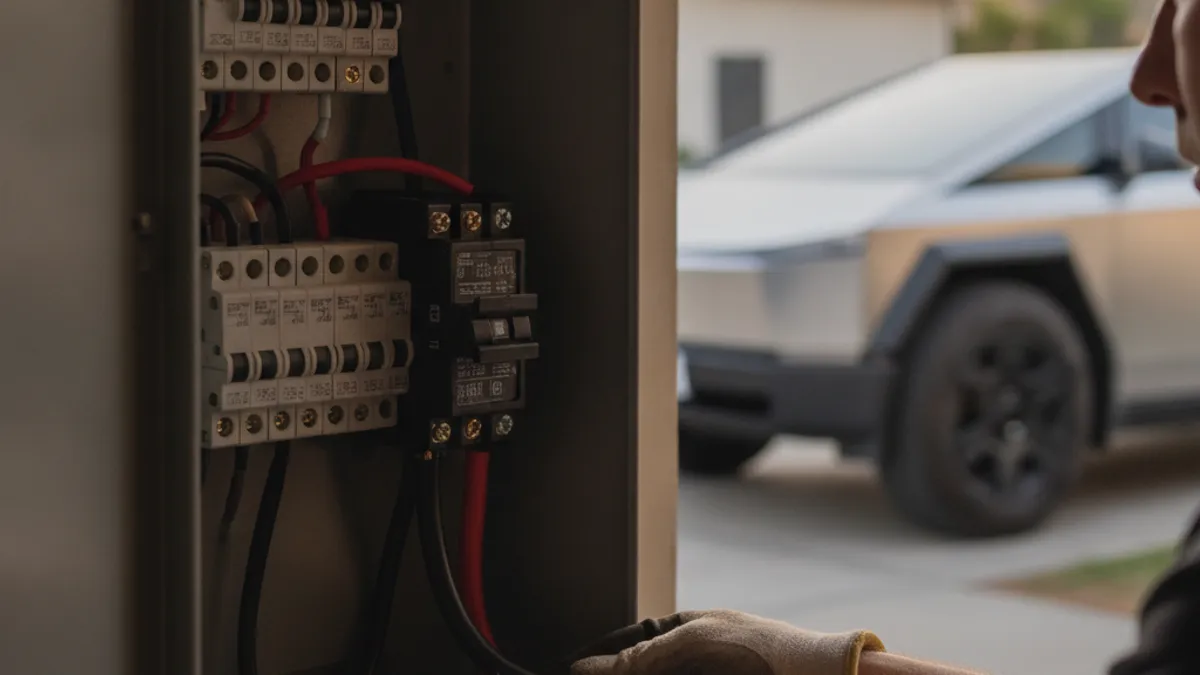
A Level 2 charger runs on a 240-volt circuit. That’s the same family of load as an electric dryer or range. Before that circuit is added, a licensed electrician runs a load calculation. They add up what the panel already powers. Then they see if a charger still fits. Your electrician and your city inspector decide what’s required. Charge Pro TPA doesn’t make that call for you.
Housing age is the local split in this metro. Census figures put 56.6 percent of Lealman homes as built before 1980. St. Petersburg sits at 51.5 percent pre-1980 stock. Those streets often have less spare panel capacity. Lakewood Ranch shows 0.7 percent of homes built before 1980. Fish Hawk is 0.8 percent, and Westchase is 1.0 percent. On those streets, 240-volt home charging is near-universal. An East Hillsborough charger install guide covers that side city by city.
Charge Pro TPA is a referral line, not an electrician. We match stranded EV drivers with independent local mobile rescue operators. We don’t upgrade panels, and we don’t pull those permits. We don’t hold a trade license for that work.
If the load calculation comes back short
The electrician may have more than one path. A load-management device can throttle the charger when the house is already drawing hard. In some garages that’s enough to skip a full panel swap. Some layouts can share an existing high-draw circuit with the new charger circuit. That share doesn’t work for every panel layout.
A full panel upgrade is the heavy path. It can mean a new panel, a new main breaker, and updated grounding. Your utility may also have to coordinate on the service. That path usually needs its own electrical permit. A verified metro-wide price for that work couldn’t be confirmed on utility or county pages. Get a written quote after the electrician walks the panel.
Permits, condos, and what you should confirm
Confirm the permit with your city or county building department. A quote that skips the permit to look cheaper is a warning. Unpermitted panel work can follow you at resale and with your insurer. Ask your building department about the permit fee. A countywide figure couldn’t be confirmed from a primary page.
Florida Statute 718.113(8) gives a condominium unit owner the right to install an EV charging station. It has to sit in their limited common element or exclusively designated parking space. A declaration or covenant can’t be enforced to prohibit it. The board can’t deny a properly submitted request. The owner still pays installation, operation, maintenance, insurance, and separately metered electricity. That right doesn’t create spare amps on a maxed building service. Get the load calculation done early, even before you buy a charger.
Who does this work, and who doesn’t
A panel upgrade is licensed electrical work in this state. Verify the electrician’s license with the city or county before you sign. Charge Pro TPA doesn’t perform that electrical work. We don’t own trucks, yards, or parts inventory. The operators we connect you with quote a roadside charge, then bill you directly.
A Level 1 outlet is a hard daily plan while you wait. Recurrent Auto finds an EV loses about 5 percent of range at 90°F. Loss runs 20 to 30 percent above 95°F. We walk home charging cost in Tesla home charging rates.
While the panel work is still open
If the pack runs down before the circuit is live, call for mobile EV charging. Operators we connect you with bring a 240-volt Level 2 source to the car. They use a native NACS plug, plus CCS or J1772 adapters for non-Tesla EVs. They typically add 10 to 20 miles of range in 15 to 30 minutes of charging. That’s charging time, and it’s never an arrival time.
See home 240-volt charging versus a roadside charge for the driveway split. Home charger install versus roadside rescue covers that install wait.
Call (813) 536-4545 and we’ll connect you with a local operator. That operator quotes you before starting, then bills you directly. We don’t set the price or promise when they arrive.
Frequently asked questions
Do I always need a panel upgrade for a home EV charger?
No, homes with spare capacity often don’t need one. Older Lealman and St. Petersburg stock is more likely to be tight. Newer Westchase, Fish Hawk, and Lakewood Ranch garages already run 240-volt charging. The electrician’s load calculation is the only honest answer for your house.
How much does an electrical panel upgrade EV charger job cost in Tampa Bay?
A verified metro figure couldn’t be confirmed on Duke, TECO, or county pages. Get a written quote after the load calculation. Pinellas Duke customers should ask if the Charger Prep Credit still applies to the wiring. Confirm it on Duke’s page before you subtract it.
Does TECO rebate a home panel upgrade for an EV charger?
A named residential home-charger rebate couldn’t be confirmed on TECO’s primary pages. Drive Smart is the commercial and public charger program. Pinellas Duke customers should ask about the Charger Prep Credit. That credit goes toward wiring and electrical upgrades, not the charger hardware or permit fees.