Your wall charger failed. The car in the driveway is still empty. In Tampa Bay those are two different jobs. They don’t share a crew. A licensed electrician owns the install and the repair. A mobile 240-volt visit is what gets the car off the driveway. The search behind that morning is ev charger installation versus roadside. Charge Pro TPA doesn’t pull permits or run conduit. We connect stranded drivers with independent local operators.
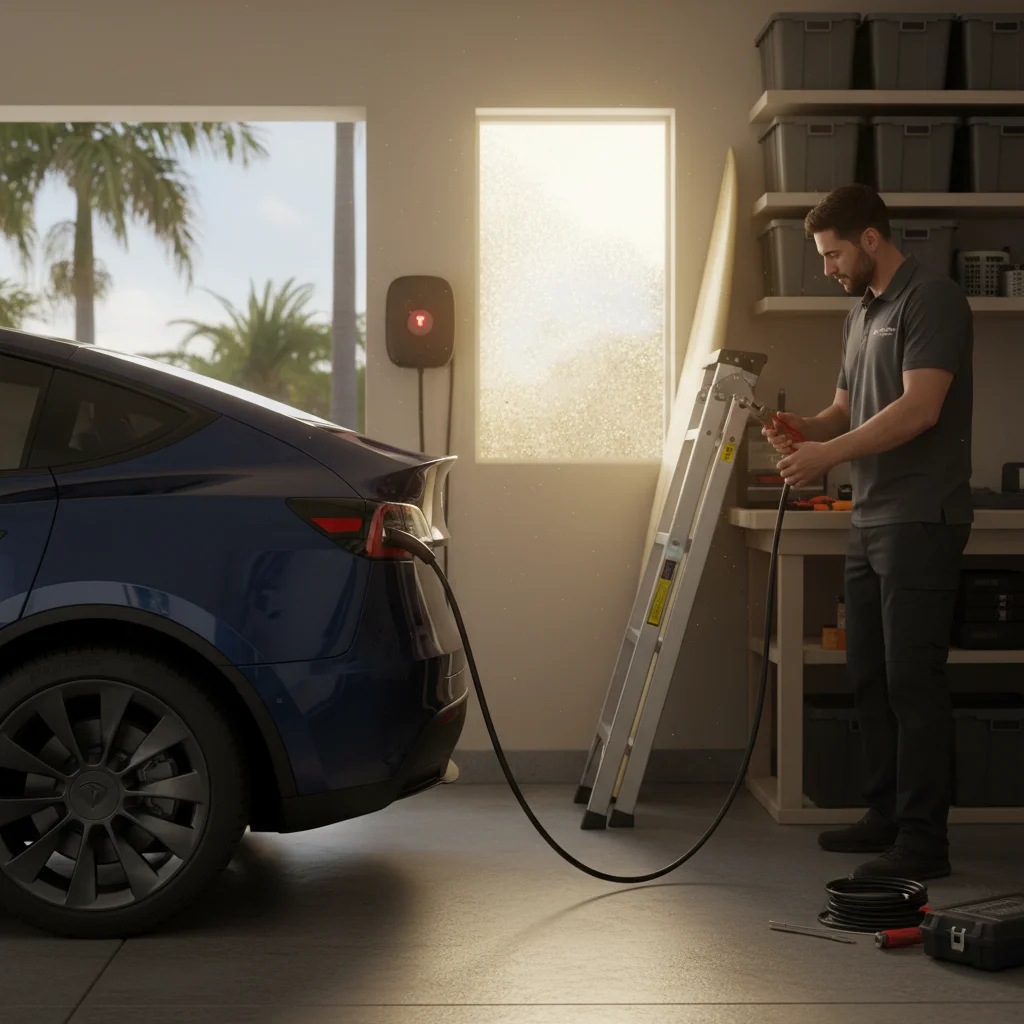
The install and the rescue are not the same trade
Home charging is the weeknight plan in Westchase, Carrollwood, or Fish Hawk. You plug in after dinner. You want a usable pack by sunrise. When the session never starts, the wall box is an electrical problem. The car is a range problem. Mixing those jobs burns the morning.
Charge Pro TPA is a referral line. We match you with mobile rescue operators. We don’t hold a trade license. We don’t employ technicians. We own no trucks, no warehouse, and no charger inventory. The operator who takes the job quotes you before any work starts. That operator bills you directly. The pros we connect you with are licensed and insured. They aren’t your installing electrician.
Installation belongs with a licensed electrical contractor. Confirm that license with the state before anyone opens your panel. A specific Florida license class for this work wasn’t confirmed here. Ask the contractor which state license they hold. Then verify it yourself on the state’s contractor lookup. Tampa, St. Petersburg, and Clearwater each run a permit desk. Unincorporated Hillsborough does too. Get the filing city in writing.
Skip a handyman for a hardwired 240-volt circuit. If you can’t confirm an electrical license, wait. For panel capacity, use the East Hillsborough charger install notes. Pair that with the panel upgrade guide. Those pages are about the house. This page is about the morning you can’t leave.
Why the housing stock changes the morning
Tampa Bay isn’t one housing map. Lakewood Ranch, Fish Hawk, and Westchase are among the newest places in this metro. Census figures put pre-1980 stock at about 0.7 percent in Lakewood Ranch. Fish Hawk is about 0.8 percent. Westchase is about 1.0 percent. 240-volt home charging is near-universal on those master-planned streets. When a charger dies, the circuit is usually already there. You still need the car to move.
Lealman sits at the other end. About 56.6 percent of its housing predates 1980. St. Petersburg is near 51.5 percent. An older garage may never have received a dedicated 240-volt run. A failed overnight charge can mean a tired 120-volt outlet. It can mean a tripped breaker. It can mean a wall box that never had a clean install. The car doesn’t care which story is true. It’s still sitting.
Pinellas condos are a third pattern. Florida Statute 718.113(8) covers a unit owner’s right to install an EV charging station. It applies inside a limited common element or an exclusive parking space. A declaration can’t block a properly submitted request. The board can’t deny that request when it’s filed correctly. The owner pays for installation, operation, maintenance, insurance, and separately metered electricity. Until that station is live, the pack can still sit empty.
Town ‘n’ Country and Egypt Lake-Leto sit on Hillsborough’s west side. Brandon, Valrico, and Riverview stretch the east-county commute along SR-60 and I-75. The charger question follows the building. The roadside question follows the car.
What your utility will fund, and what it will not
Utilities shape the install. They don’t bring a plug to your bumper.
Tampa Electric serves the City of Tampa and most of Hillsborough County. It also reaches parts of Pinellas and southern Pasco. TECO publishes Residential Service and RSVP-1 time-of-use. TECO’s Drive Smart program is listed by the Alternative Fuels Data Center. It’s a rebate for non-residential Level 2 and DC fast stations. TECO’s home EV pages point owners to charging guidance and [email protected]. A named residential home-charger rebate wasn’t on the primary pages we read. Check TECO’s current EV pages before you buy hardware.
Duke Energy Florida serves Pinellas County and much of Pasco. In 2025 it launched a Charger Prep Credit for wiring and electrical upgrades. That credit is for homes and businesses. Duke says it doesn’t cover charger hardware or permit fees. Duke also offers an Off-Peak Charging Credit for residential off-peak charging. Duke’s 2025 release described two weekday off-peak windows. One ran 10 a.m. to 6 p.m. The other ran 11 p.m. to 5 a.m. Weekends and holidays were listed as all day. Confirm the current windows and credit on Duke’s site.
Withlacoochee River Electric Cooperative serves northern and central Pasco, except the Dade City area. A Land O’ Lakes or Lutz driver is often a WREC member. That driver often isn’t a TECO or Duke customer. Ask your own co-op about make-ready work.
Exact utility boundaries in Bradenton, Palmetto, and Sarasota weren’t verified on a primary page. Read the name on the bill, then call that company.
Florida has no state EV purchase rebate or tax credit. Utility programs are the local incentive layer. None of them replace a mobile visit when the wall unit is already dark.
What usually kills an overnight session
Most failed charges look the same at 6 in the morning. The app shows far less range than you planned. The wall lights are wrong. The car never took power.
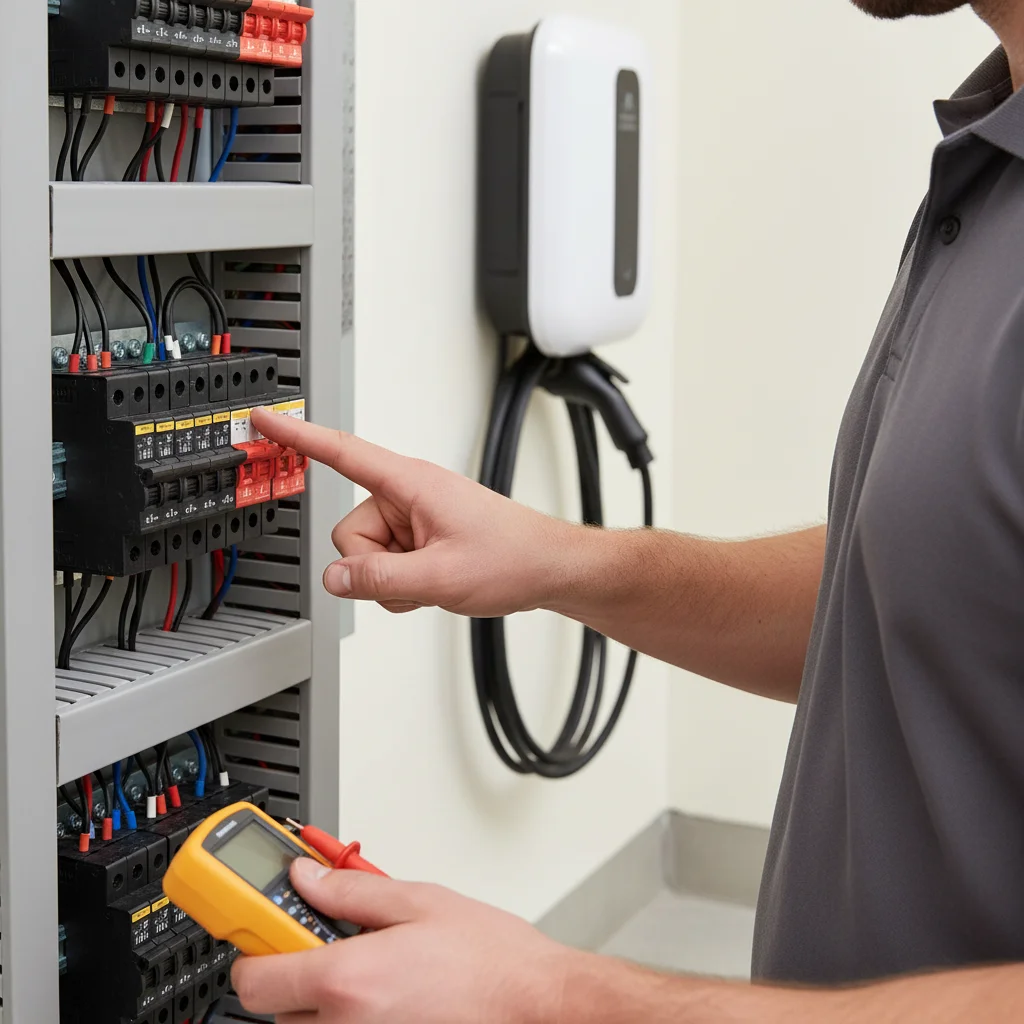
Start at the panel. A Level 2 circuit can trip a breaker after hours of continuous draw. Reset it once if you know the breaker. If it trips again, stop. That’s electrician work, not a second reset. See our notes on a charger that keeps tripping the breaker.
GFCI devices in garages can nuisance-trip on charger electronics. The wall box may show a fault light. The car may log a charge error.
The cable and the handle take the wear. Bent pins can kill a session. So can a tired latch. Humidity on the connector can do it too. Tampa Bay runs a long air-conditioning season from spring into late fall. Recurrent Auto’s published research finds about 5 percent range loss at 90°F. Loss runs 20 to 30 percent above 95°F. It’s roughly 17 to 18 percent near 100°F. A thin overnight charge plus a hot commute is a hard pair.
Hurricane Helene in late September 2024 drove record storm surge at Tampa Bay tidal gauges. St. Petersburg faced a forecast of 5 to 8 feet of surge. Hurricane Milton followed in early October 2024. It dropped at least 18 inches of rain on parts of St. Petersburg. When the house is dark, a healthy wall charger does nothing. A home battery may keep lights on. It may not feed the EV circuit.
Ruskin, Apollo Beach, and Gibsonton sit in south Hillsborough evacuation zones. So do low-lying Pinellas and the barrier islands. A dead wall charger before a surge warning is a range problem. Get range into the car first. Schedule the electrician after you’re on higher ground.
A 12-volt battery can also fake a charger failure. The car won’t wake, so it never requests current. Operators in this network can jump or replace a dead 12-volt on site. They handle Tesla and every major EV brand. If the dash is dark, say that when you call.
What a roadside 240-volt visit actually does
A mobile rescue in this network isn’t a DC fast station on a truck. Operators we connect you with bring a 240-volt Level 2 source to the car. Teslas take a native NACS plug. Other brands use a CCS or J1772 adapter. Typical charging time adds 10 to 20 miles of range. That takes 15 to 30 minutes of charging. That clock is plug-in time. It isn’t a promise of when someone arrives. Charge Pro TPA doesn’t publish arrival times. The operator quotes you before the session starts.
That slice of range often covers a short local loop. It can also cover a drive to a public charger you already trust. This is mobile EV charging, not an install. It’s also EV roadside assistance in a driveway or an HOA lot. For the voltage comparison, see home 240-volt charging versus a roadside charge.
Skip the Selmon Expressway reversible lanes if your pack is already low. THEA’s REL is a roughly 10-mile elevated segment between Brandon and downtown Tampa. There’s no local surface shoulder on that elevated run. Stay in a driveway or a surface lot where an operator can park.
How to choose before you call anyone
If you never had 240-volt at the house, the long fix is a licensed electrician. Ask whether they have installed your charger brand. Ask who pulls the permit. Ask whether the quote is a fixed price or an estimate. Ask what written warranty they put on labor. We can’t confirm a standard warranty term for Tampa Bay electrical contractors. Get that term on paper.
If the car has to move, that electrician visit doesn’t fill the pack. Public charging is one path. Use it if you can still reach a station you know. A tow to a charger is the slow backup. Hillsborough and Pinellas cap non-consent tow rates at the county level. Current maximum figures weren’t confirmed against the live filed schedules. Ask the tower for the rate on file before you consent.
Charge Pro TPA doesn’t set prices. If you need another session before the electrician returns, call again. Get a fresh quote.
When the wall box can wait
Leave the install on the electrician’s calendar. Use the mobile visit for the car. That’s the versus. People search charger installation because they want the house fixed. They search roadside because the school run in Riverview already started. Both can be true on the same morning.
The network handles Tesla and every major EV brand. It doesn’t inspect your panel. It doesn’t file a permit with Tampa or with Pinellas County. The operator’s job is the bumper.
Call (813) 536-4545 when the car won’t cover the next trip. Tell the operator it’s a failed home charger if that’s true. Stay with the car if you can. Keep the charge port clear. The quote comes before the plug goes in.