A 240 volt EV charging station is home Level 2 charging. It fits most newer Tampa Bay houses. It doesn’t travel with you when the pack is empty. Westchase, Fish Hawk, and Lakewood Ranch often already have that 240-volt panel. It’s in the garage. Older Pinellas condos often don’t. That includes much of Lealman and large parts of St. Petersburg. Those two situations need different help.
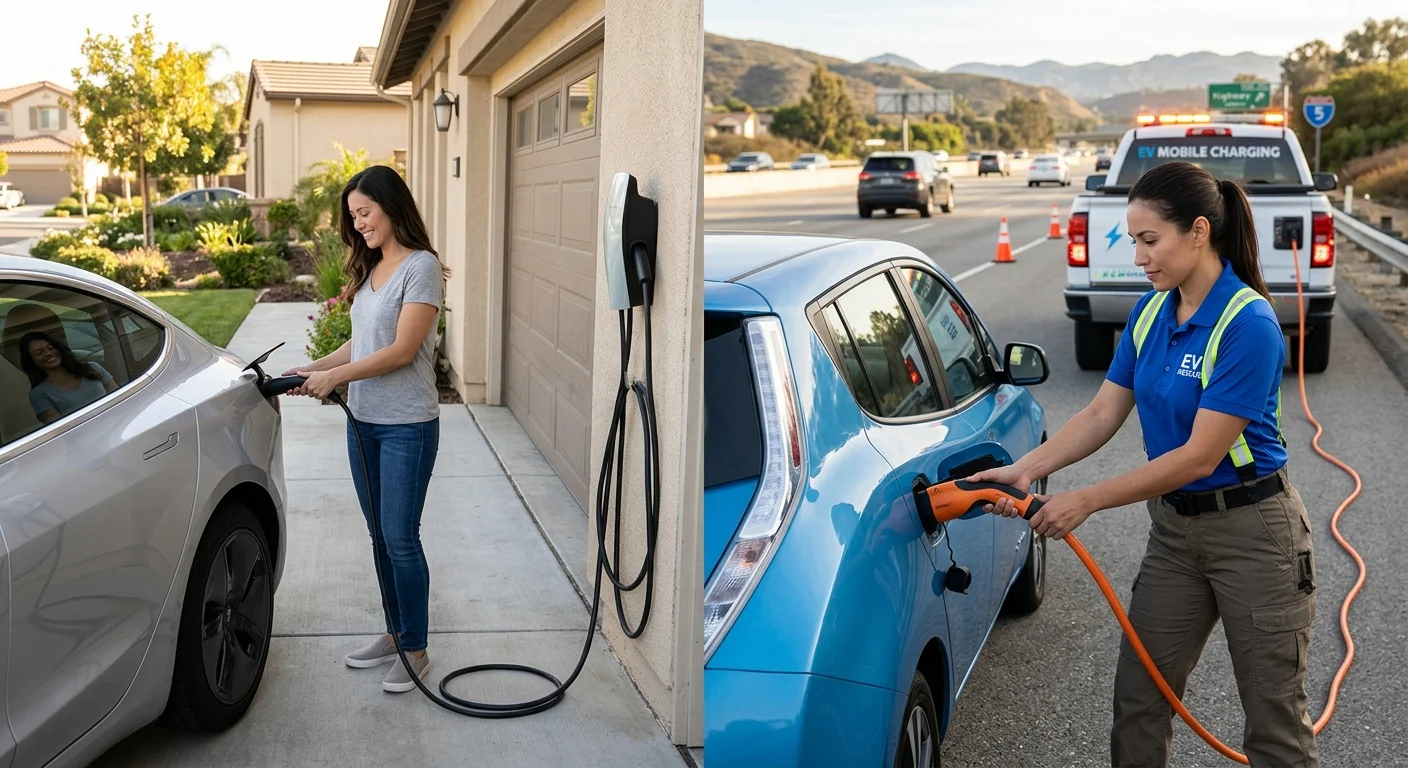
Newer suburbs and older Pinellas stock are not the same job
Census housing age is the local split. Lakewood Ranch has 0.7 percent of homes built before 1980. Fish Hawk sits at 0.8 percent. Westchase is about 1.0 percent. In those master-planned suburbs, 240-volt home charging is near-universal. The electrician is usually adding a dedicated circuit. They’re not hunting spare slots in a 1960s panel.
Lealman sits at the other end. About 56.6 percent of its housing went up before 1980. St. Petersburg is close behind at 51.5 percent. Those buildings often share parking and older panels. Many are condos with a board in the middle.
Florida Statute 718.113(8) still gives a unit owner a path. They may install a charging station in their limited common element. They may also use an exclusively designated parking space. The board can’t deny a properly submitted request. A declaration can’t be enforced to prohibit the install. The owner still pays for installation, operation, maintenance, and insurance. Electricity has to be separately metered. The association doesn’t pick up that bill. That’s why Pinellas condo life and a Fish Hawk driveway differ. One household overnight-charges on 240 volts. The other plans around public stations. When the car can’t reach one, they need a mobile charge.
East Hillsborough leans newer. Plant City and Fish Hawk tell a newer wiring story. Our East Hillsborough charger install guide stays on that home-side work.
What a 240-volt EV charging station actually is
The U.S. Department of Energy describes residential Level 2 as 240-volt service. Voltage isn’t the whole rate. The circuit rating matters. The charger and the car also set the rate.
Level 1 is a regular 120-volt household outlet. It’s slower. Our Level 1 charger guide explains why that outlet rarely keeps up. Tampa Bay heat is the reason. Recurrent Auto published range-loss data for heat. It finds about 5 percent of range gone at 90°F. Above 95°F the loss climbs to 20 to 30 percent. Near 100°F it’s roughly 17 to 18 percent. The effect varies by model. Overnight Level 1 can’t always replace what the AC took on I-75.
A home 240-volt station is planned charging. You have a parking space, time, and a fixed circuit. A licensed electrician checks panel capacity and household demand. Charge Pro TPA doesn’t install that equipment. We don’t inspect panels. We connect stranded drivers with independent local operators when the car is already stuck.
Your utility depends on the address
Tampa Electric, known as TECO, serves the City of Tampa. It also covers most of Hillsborough County. Parts of Pinellas and southern Pasco sit on TECO too. TECO’s Drive Smart program is for commercial and public chargers. That includes Level 2 and DC fast sites. A specific residential home-charger rebate could not be confirmed on TECO’s primary pages. Confirm any home incentive with TECO before you budget for it.
Duke Energy Florida serves Pinellas County and much of Pasco. Duke launched three EV programs in 2025. They’re the Charger Prep Credit, the Off-Peak Charging Credit, and Fleet Advisory. Charger Prep is a one-time credit toward wiring upgrades for Level 2. It doesn’t cover the charger hardware or permit fees. Confirm Off-Peak terms on Duke’s own pages before you count on them.
WREC serves northern and central Pasco, except the Dade City area. That’s Withlacoochee River Electric Cooperative. A Lutz or Land O’ Lakes driver may be a WREC member. They may not be a TECO or Duke customer. Florida has no state EV purchase rebate or tax credit. Ask the utility that actually serves the house.
Confirm the car, then confirm the circuit
Start with the exact make, model, and year. Then read the owner’s manual for compatible charging. Level 2 gear commonly uses J1772 or J3400, also called NACS. The manufacturer is still the authority for your EV. Don’t pick a cable by the shape of the handle.
A 240-volt outlet in the garage isn’t a charging plan. A licensed electrician has to evaluate the circuit. They also check the panel, household demand, and the proposed station. Charge Pro TPA doesn’t make that property assessment. We don’t pull permits. The city or county serving the address sets the permit path. Confirm the current forms with that building department before work starts. Our panel upgrade guide walks through Tampa Bay wiring realities. Keep that work with an electrician, not a roadside operator.
For a roadside call, share the vehicle details. Note any warning on the screen. Give remaining charge, connector type, and a precise location. Say whether the car can shift, steer, or accept a charge. The matched operator then assesses mobile energy or a tow.
A wall charger can’t follow you onto I-275
A fixed 240-volt EV charging station stays on the house. It doesn’t help a car stopped on I-4, I-75, or I-275. It also doesn’t help on the Veterans Expressway, the Suncoast Parkway, or SR-60. A nearby building’s cord isn’t a charging source. The property owner, the circuit, and the vehicle all have to agree.
The Selmon Expressway’s Reversible Express Lanes make this sharper. Those elevated lanes run about 10 miles between Brandon and downtown Tampa. There’s no local surface shoulder on the elevated segment. THEA clears the lanes before each reversal. A driver who runs the pack down on the REL needs a rescue plan. They don’t need a home-install quote.
Florida Statute 316.194 covers stopping outside business or residence districts. It bars leaving a car on the paved highway when you can pull off. Subsection (2) exempts a disabled vehicle. A dead EV on a shoulder counts. Stay out of live lanes.
FDOT Road Rangers in District 7 patrol I-4, I-75, and I-275. They also cover the airport interchange. Dial *347. Published services include a 12-volt jump, fuel, flat-tire help, water, and two free local calls. They can move a disabled vehicle to a safer spot. The published list doesn’t include charging an EV. That isn’t a claim that Rangers refuse an electric car. Florida Highway Patrol Troop C covers those interstates.
A failed overnight charge at home isn’t automatically a roadside case. If the car is parked safely, diagnosis may belong at the house. Read home charger install versus a roadside charge before you mix those jobs. If the car is away from home, out-of-charge recovery may be the path. Smoke, fire, or live traffic comes first. Call emergency services.
Heat, storms, and why overnight 240 volts still matter
Tampa Bay’s air-conditioning season runs from spring into late fall. Heat and AC are the whole range story. That’s why a working 240-volt station is the daily plan. Westchase and Fish Hawk already live that way. A Pinellas condo without a dedicated circuit leans harder on public charging. When remaining miles don’t line up, a mobile rescue is the backup.
Helene in late September 2024 drove record storm surge at Tampa Bay tidal gauges. Milton arrived in early October 2024. It dropped at least 18 inches of rain on parts of St. Petersburg. If the house is dark, the wall charger is dark too.
Mobile charging versus a tow
Mobile charging can fit when the EV can accept power where it sits. Independent operators we connect you with bring a 240-volt Level 2 source. Tesla owners get a native NACS plug. Other EVs use a CCS or J1772 adapter. The usual result is about 10 to 20 miles of range. That takes 15 to 30 minutes of charging. That’s charging time, not an arrival time. The goal is enough mobility to reach a fixed charger.
Our mobile EV charging page is the referral path. Charge Pro TPA makes the match. The operator does the work. They quote you before starting. They bill you directly. We set no prices. We own no trucks. We employ no technicians. The pros we connect you with are licensed and insured.
Transport may be the better path when the vehicle won’t accept power. Ask what equipment will be used. Ask what outcome is expected. Ask what it will cost. Operator charges could not be confirmed as one Tampa Bay figure. Confirm those details with the matched operator.
When to call Charge Pro TPA
Call when the EV can’t reach a usable charger. You need a local operator to assess a mobile charge or a tow. We serve Tampa Bay. The operators we connect you with handle Tesla and every major EV brand. They can also jump or replace a dead 12-volt battery on site. Call (813) 536-4545 and we’ll connect you with a local EV rescue operator.