You parked a new EV in a Brandon garage that still has a 120-volt outlet. On SR-60 that setup falls behind by week two.
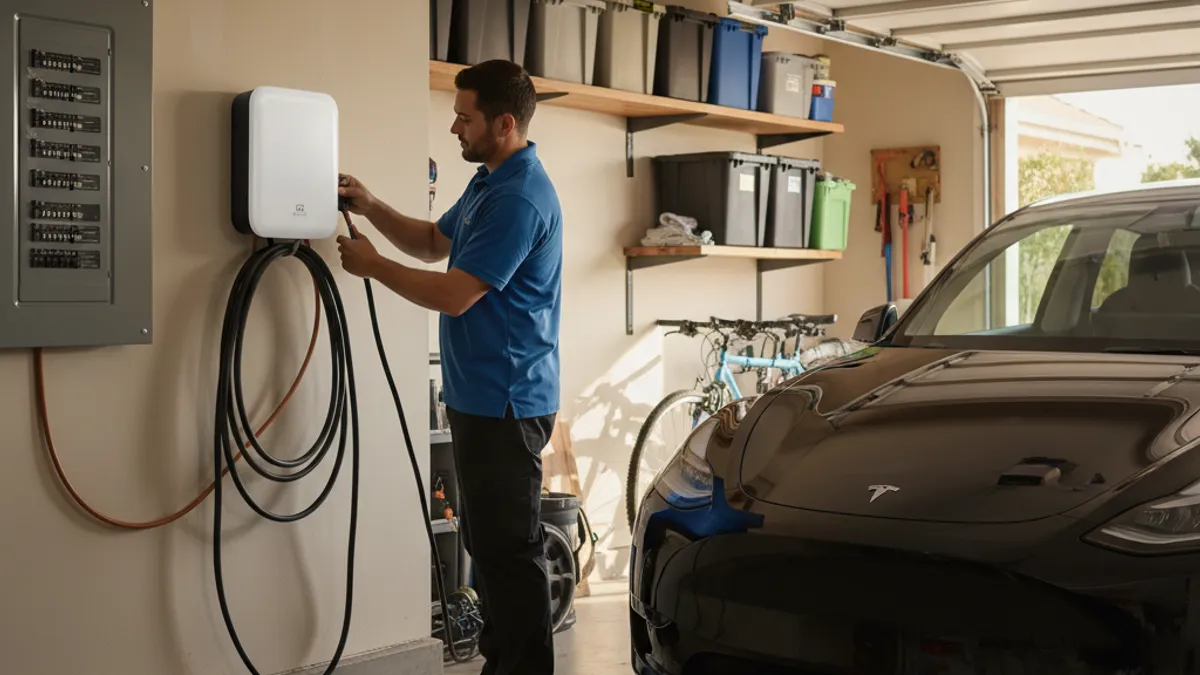
Heat and stop-and-go drain a pack on I-75 and Brandon Boulevard. The trip computer often misses that. Recurrent Auto published the heat-and-range numbers. An EV loses about 5 percent of range at 90°F. The loss runs 20 to 30 percent above 95°F. It sits around 17 to 18 percent near 100°F. East Hillsborough is flat. Grade never hands that range back. A Level 2 wall circuit is how most owners here stop chasing overnight trickle.
Charge Pro TPA isn’t the electrician. We’re a referral line. We match stranded EV drivers with independent local mobile rescue operators. The pros we connect you with are licensed and insured. We don’t hold a contractor license. We don’t wire panels. The operators we connect you with bring a 240V Level 2 source to the car. They quote you before they start. This page answers the home-install search. It covers Brandon and the I-75 suburbs around it.
TECO is the utility. Drive Smart isn’t a home rebate.
Tampa Electric serves the City of Tampa. It also serves most of Hillsborough County. Parts of Pinellas and southern Pasco sit on TECO too. Brandon, Riverview, Valrico, Fish Hawk, Bloomingdale, and Mango sit in that Hillsborough footprint. If the bill says TECO, you’re not in Duke Energy Florida territory. Duke’s Charger Prep Credit and Off-Peak Charging Credit don’t apply to a TECO garage.
TECO’s published EV charger program is Drive Smart. The Alternative Fuels Data Center lists two pieces. One is an EV Level 2 Charging Station Purchase Rebate for non-residential sites. The other is an EV DC Fast Charging Station Purchase Rebate, also non-residential. That’s a commercial and public-station incentive. It isn’t a wallbox rebate for a Sterling Ranch garage.
A named residential home-charger rebate for TECO customers couldn’t be confirmed. TECO’s primary pages didn’t list one. TECO’s home EV guidance lives at tampaelectric.com/electricvehicles/evsforhome. The contact they publish is [email protected]. Write them. Read the live page. Don’t treat a rebate as part of the job until TECO says it is.
Florida doesn’t offer a state EV purchase rebate. Utility programs are the layer that exists. In these I-75 suburbs that program is Drive Smart. It’s aimed at non-residential stations.
What TECO does publish for homes is rate design. Residential Service, or RS, is the tiered schedule. Residential Service Variable Pricing, RSVP-1, is the time-of-use plan. Confirm current off-peak windows on TECO’s own rate pages. Confirm energy rates there too. Then have the installer set the charger to fill in those windows. Our guide on what shapes Tesla home charging cost in Tampa Bay covers the utility side. It shows how utility choice drives the bill.
East Hillsborough housing is newer than the search suggests
A lot of national install guides assume cramped 1960s service. Brandon’s census numbers don’t match that picture.
ACS 2019-2023 figures show 8.1 percent of Brandon homes were built before 1980. That older slice is the census proxy. Those houses may need extra work to take a 240-volt charger. The rest of the CDP is 1980 or later. Compare it with Lealman, where 56.6 percent of homes predate 1980. St. Petersburg sits at 51.5 percent. Fish Hawk, just south in the same county, is 0.8 percent pre-1980. In that master-planned stock, 240-volt home charging is near-universal.
Newer still doesn’t mean skip the load calculation. A full panel is a full panel. Pool equipment eats headroom. So does a heat pump. A long feeder to a side-yard pad eats it too. The electrician should add the household demand and show you the math. If the quote never mentions the panel, get another quote.
When the math is tight, licensed electricians usually look at a few paths. One is load-management hardware that throttles the charger. Another is a panel upgrade. A shared high-draw circuit works only in some layouts. Charge Pro TPA doesn’t perform that work. Panel upgrades for a home EV charger covers the wiring realities. What moves the quote is spare capacity, feeder length, and extra equipment. The contractor quotes those items before opening the panel.
Brandon, then the suburbs on I-75 and SR-60
Brandon
Brandon is unincorporated. It’s a census-designated place, not a city with its own electrical counter. ACS 2019-2023 puts the population at 116,365. The land area is about 33 square miles. Permits, if they’re required for your 240-volt circuit, run through Hillsborough County. Your HOA may control the first step in a gated tract. A current county permit rule for a residential Level 2 circuit couldn’t be verified. No live building-department page was confirmed for this article. Ask the electrician who pulls the paper. Then confirm with the county before work starts.
Corridors that shape daily range start with I-75 and the Selmon Expressway. SR-60, Bloomingdale Avenue, and Causeway Boulevard round out the grid. SR-60 is Brandon Boulevard through town. The Selmon reversible express lanes terminate on the east in Brandon. The Tampa Hillsborough Expressway Authority runs those reversible lanes. They’re a roughly 10-mile elevated segmental bridge. They sit in the median to downtown Tampa. Direction reverses through the day. Westbound into downtown runs from about 5 a.m. to noon. Then the lanes go eastbound. Crews clear every vehicle before a reversal. There’s no local surface shoulder on the elevated deck. Running low up there is a roadside event. It isn’t a garage wiring problem.
Westfield Brandon mall and the apartment stock off SR-60 generate short, frequent trips. Named areas inside the CDP include Limona, Lakewood, and Sterling Ranch. The Bloomingdale edge shares the southern grid. For road-level help, use the Brandon EV charging page. For the wallbox, start with TECO and a written load calculation.
Riverview
Riverview is the next Hillsborough suburb south along I-75. TECO still covers most of the county. Treat TECO as the default unless your bill names someone else. Housing-age data for Riverview wasn’t in the research packet for this page. We won’t invent a panel profile. Get the load calculation. The I-75 commute is where summer AC shows up. Slow traffic shows up on the battery graph too.
Valrico
Valrico sits east of Brandon on SR-60. Same county. Same TECO default. Same warning: a neighbor’s quote isn’t yours. Feeder length from panel to driveway changes street by street. Workday stop-and-go on SR-60 is the range drain. There isn’t a hill to give range back.
Fish Hawk
Fish Hawk is master-planned and new. Only 0.8 percent of homes predate 1980. 240-volt charging is near-universal there. Remaining issues tend to be HOA placement. Indoor versus outdoor equipment matters too. Later electrification can still fill a panel. Get association rules in writing. Then let the electrician run the numbers. Local road context is on the Fish Hawk EV charging page.
Bloomingdale, Mango, and the rest of east county
Bloomingdale Avenue ties southern Brandon into Bloomingdale. Mango sits toward Tampa near the I-75 and SR-60 interchange. Thonotosassa and Plant City continue the map east. They’re Hillsborough places. TECO is the usual utility unless a bill says otherwise. Separate city building departments for those CDPs weren’t verified. Default to Hillsborough County and the electrician’s permit practice.
The I-75 and SR-60 interchange is a real stranding spot. So is the Selmon reversible-lane eastern terminus. Florida Statute 316.194 covers a disabled vehicle on the shoulder. It’s lawful when the car can’t be moved off the traveled way. FDOT Road Rangers in District 7 patrol I-75. Dial *347. Published Road Ranger help includes a 12-volt jump, tire help, and fuel. It also includes two local calls and moving a disabled vehicle to a safer spot. The materials reviewed don’t list charging an EV. That’s an observed absence in the published list. It isn’t a claim that Rangers refuse EV drivers. Florida Highway Patrol Troop C handles incidents on the same interstates. Florida 511 carries the traffic picture.
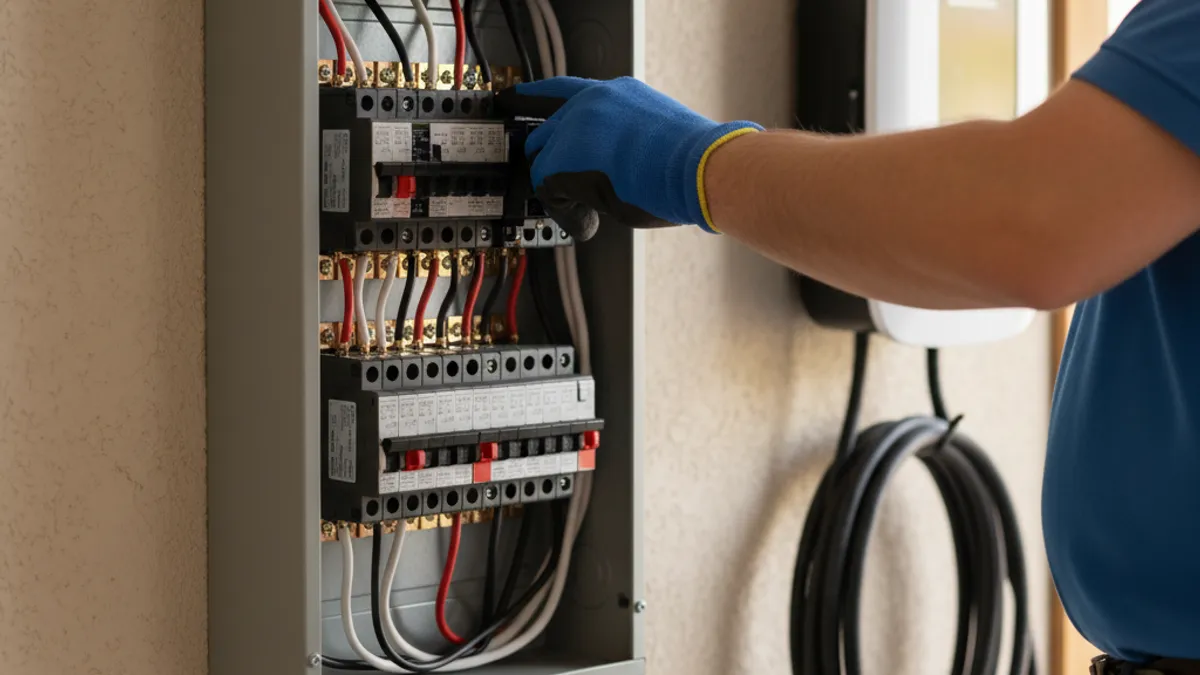
What actually changes an install quote
An honest electrician is quoting a circuit, not a plastic enclosure.
Spare panel capacity is the first driver. Distance from the panel to the parking pad is the second. Permit, inspection, and extra hardware sit after that. A load-management device can keep some full panels from needing a replacement. A panel upgrade is the heavier path. Circuit sharing works only in some layouts.
Charge Pro TPA doesn’t set electrician prices. Your installer quotes you before opening the wall. Independent rescue operators we connect you with do the same. They quote before they charge a stranded car.
Get at least two written quotes. Compare load calculations, not headlines.
Condos on paper, apartments off SR-60
Florida Statute 718.113(8) gives a condominium unit owner a clear right. They can install an EV charging station within their limited common element. They can also use an exclusively designated parking space. A declaration or covenant can’t be enforced to prohibit that install. The board can’t deny a properly submitted request. The owner bears installation, operation, maintenance, and insurance. Separately metered electricity is on the owner too.
That statute is a condo rule. It doesn’t automatically cover a leased apartment off Brandon Boulevard. If you rent near Westfield Brandon, ask the property manager in writing. Don’t add a 240-volt circuit to a shared garage on a handshake.
When you plug in, once the circuit is live
East Hillsborough garages run hot through a long AC season. Heat doesn’t keep a Level 2 charger from working. Filling the pack in a peak TECO window is the painful path. Confirm RSVP-1 windows on TECO’s rate pages. Schedule the charger for the off-peak blocks those pages list.
Overnight charging also keeps the car off midday heat in a closed garage. That’s a comfort issue. It’s a battery-temperature issue too.
If the wallbox is still a quote
A household 120-volt outlet is Level 1. It trickles range. It can cover a short local loop. It often can’t replace an SR-60 workday plus cabin AC. Public charging along the SR-60 and I-75 commercial strip is the other self-serve option. Check the live apps for open stalls. This page won’t guess which stalls are open.
If the car is already too low to reach a station, call for mobile rescue. The same is true after a Level 1 night that came up short. Operators we connect you with bring a 240V Level 2 source to the bumper. They carry a native NACS plug. They also carry CCS or J1772 adapters for non-Tesla EVs. They typically add 10 to 20 miles of range. That’s in 15 to 30 minutes of charging. That window is charging time. It isn’t an arrival time. The operator quotes you before starting and bills you directly.
Dispatch for that help is mobile EV charging. The wiring contrast is in home 240-volt charging versus a roadside charge in Tampa Bay. If the home unit already exists and then dies, read home charger install versus roadside rescue.
After the sticker is on the panel, and the car still won’t charge
Breakers trip. GFCI devices open. Chargers throw error codes after the electrician has left. That’s a stranded-car morning, not a permit problem. Call the installer back on the warranty. If you need range in the pack, a mobile Level 2 charge gets you moving. You sort the wallbox on your own clock.
Questions that separate a real quote from a box price
Ask every electrician these:
- Will you run a load calculation, and can I see it in writing?
- Does this panel need extra equipment or an upgrade?
- Who pulls the Hillsborough County permit, and is inspection inside the quote?
- How long is the wire run to where I park?
- Can this charger follow TECO’s RSVP-1 off-peak windows?
- Are you a licensed Florida electrical contractor?
Clear answers beat a vague opening quote that skips the panel.
Frequently asked questions
Does TECO pay toward a home charger in Brandon?
Drive Smart is TECO’s published charger incentive. It’s written for non-residential Level 2 and DC fast sites. A named residential home-charger rebate couldn’t be confirmed on TECO’s primary pages. Use tampaelectric.com/electricvehicles/evsforhome and [email protected] before you count on a credit.
Why did my neighbor in Fish Hawk get a simpler quote?
Fish Hawk’s housing is almost all post-1980. 240-volt charging is near-universal there. Brandon is still mostly post-1980, but 8.1 percent of its stock is older. Panel fill and feeder length also differ lot to lot. A quote that never runs a load calculation is the one that changes later.
How do I keep driving before the installer finishes?
Level 1 from a household outlet is slow. Public charging is the other self-serve path. If the pack is already too low, Charge Pro TPA connects you with an independent operator. That operator brings Level 2 to the car.
A Level 2 circuit is worth doing in these I-75 suburbs. Treat TECO as the utility. Treat Drive Smart as a public-station program. Confirm permits with Hillsborough County. Insist on a load calculation. While the wall is still open, you can still move the car. Operators we connect you with can put 10 to 20 miles back in the pack. Call (813) 536-4545. They quote you before they start.