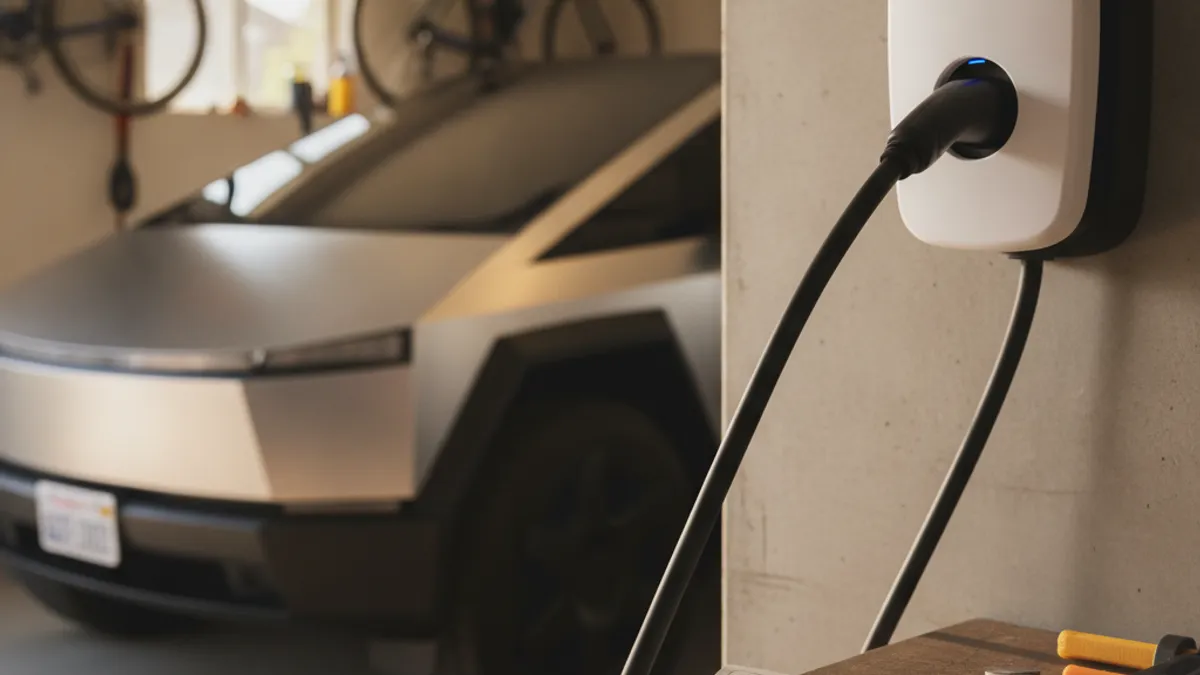
Tesla home charging cost in Tampa Bay follows your utility, not a national average. Tampa Electric’s RS plan doesn’t bill like Duke Energy Florida in Pinellas. Withlacoochee River Electric Cooperative in north Pasco doesn’t match either one. Pull the per-kWh line off your latest bill. That’s the only rate that belongs in the math.
Which utility is actually on your bill
TECO serves the City of Tampa and most of Hillsborough County. It also covers parts of Pinellas and southern Pasco. Duke Energy Florida serves Pinellas County and much of Pasco. WREC serves northern and central Pasco, except the Dade City area. The co-op bills more than 280,000 accounts. Those accounts stretch across Pasco, Hernando, Citrus, Sumter, and Polk.
A Pasco driveway can sit on any of the three. Don’t call TECO or Duke for a WREC meter. Land O’ Lakes and Wesley Chapel need that check first. New Port Richey and inland north Pasco often land on WREC.
Florida has no state EV purchase rebate or tax credit. Utility programs are the only published breaks.
Run the kWh math on your own bill
Cost is pack energy times your billed rate. A Model S or X pack holds more energy than a Model 3 or Y. A bigger pack costs more to fill. Starting at 20 percent instead of empty cuts the session.
The wall always sends more energy than the pack stores. Conversion heat eats part of every charge, so use wall kWh from the app. Multiply that by the energy charge on this month’s bill. When the utility updates the tariff, the same session changes. A dollar figure printed here would already be wrong.
TECO RS and RSVP-1
Tampa Electric publishes two residential schedules that shape home charging. Residential Service, called RS, is a tiered plan. Residential Service Variable Pricing, RSVP-1, is a time-of-use plan. Current cents aren’t listed here because they move. Confirm them on tampaelectric.com or on the bill’s rate breakdown.
RSVP-1 exists so the clock matters. The same commute can land in different price windows. On RS, the tier you’re in is the lever. Neither schedule’s live rate belongs in a blog post.
TECO’s Drive Smart program is a commercial and public charger incentive. AFDC lists Level 2 and DC fast rebates for non-residential sites. TECO’s home EV pages point owners to install guidance and [email protected]. A named residential home-charger rebate wasn’t on those primary pages. Don’t plan a budget around a rebate that isn’t confirmed.
Plant City, Valrico, or Brandon installs start with the East Hillsborough charger install guide.
Duke’s Off-Peak Charging Credit
Duke Energy Florida launched three EV programs in 2025. The Off-Peak Charging Credit is a residential monthly bill credit. You earn it by charging during Duke’s off-peak windows. The Charger Prep Credit is a one-time wiring credit. It helps with the electrical upgrades a Level 2 charger needs. It doesn’t cover the charger hardware or permit fees. Fleet Advisory, the third program, is built for fleets.
Duke’s March 2025 release listed a monthly credit and off-peak hours. Confirm the current credit and windows with Duke before you rely on them. Clearwater and St. Petersburg owners should look for those names on duke-energy.com.
WREC in north Pasco
North and central Pasco often mean WREC, not TECO or Duke. Member services set the residential tariff you actually pay. No verified EV-specific WREC credit name turned up for this page. Ask which schedule you’re on, then use that kWh rate. Don’t import a Tampa RS rate onto a WREC account.
The house, the panel, and the condo board
Home Level 2 on your own meter is still the cheap path per kWh. Many owners never catch up on a 120-volt Level 1 outlet. That’s covered in what a Level 1 charger is, and why it isn’t enough here.
Westchase, Fish Hawk, and Lakewood Ranch are among the newest stocks. Census figures put pre-1980 housing at 1.0, 0.8, and 0.7 percent. 240-volt home charging is near-universal in those communities. Lealman has 56.6 percent of homes built before 1980. St. Petersburg is close behind at 51.5 percent. Older panels are why a panel upgrade for a home EV charger shows up first.
Pinellas condos add statute, not a rate. Florida Statute 718.113(8) lets a condo owner install a charger. It has to sit in the limited common element or an exclusively designated parking space. A declaration can’t be enforced to block a properly submitted request. The owner still pays install, operation, maintenance, insurance, and separately metered electricity. If you can’t charge at home, you’re buying public kWh instead.
When the wall unit fails, compare a home 240-volt charge versus a roadside charge.
Heat raises how often you charge
Tampa Bay’s air-conditioning season runs from spring into late fall. The metro is flat and near sea level, so grade never returns range. Recurrent Auto’s research finds about 5 percent range loss at 90°F. Above 95°F the loss runs 20 to 30 percent. Near 100°F the loss sits around 17 to 18 percent. The effect varies widely by model. Your utility’s cents per kWh don’t change. The number of kWh you buy in July does.
DC fast charging at a Supercharger is priced for speed. Per kWh it’s almost always higher than home Level 2 on a residential schedule. Confirm the live Supercharger price in the Tesla app. Compare it with the energy line on your bill.
When you can’t reach a wall connector
Home math only helps when the car can plug in. Charge Pro TPA is a referral line. It matches stranded Tesla drivers with independent local mobile rescue operators. Those operators bring a 240V Level 2 source to the car. They typically add 10 to 20 miles in 15 to 30 minutes of charging. That’s charging time, never an arrival time. The operator quotes you before starting and bills you directly. See mobile EV charging for how that session works.
If you’re already stranded, call (813) 536-4545. It isn’t a promise that a truck is around the corner.
Frequently asked questions
How much does it cost to fully charge a Tesla at home in Tampa Bay?
There’s no single metro figure you can trust. Multiply wall kWh by the energy rate on your TECO, Duke, or WREC bill. Confirm RS, RSVP-1, or Duke’s Off-Peak Charging Credit on the current schedule.
Does Duke’s Off-Peak Charging Credit lower the cost?
It can, if you charge inside Duke’s current off-peak windows. Confirm the credit and the windows with Duke. Don’t use a dollar figure from an old release.
Is a Supercharger cheaper than plugging in at home?
Usually it isn’t, because DC fast charging is priced for speed. Home Level 2 on your residential schedule is the lower per-kWh path. Check the live app price against your bill.