The screens went black after a late run on I-275. You’re on the shoulder with the hazards on. You need to know whether Tesla’s own roadside program still answers after dark. We couldn’t confirm Tesla’s overnight hours from the sources this site can cite. Don’t treat an old search snippet as a live schedule. Open the Tesla app tied to this car. Read the options shown for this vehicle and this pin.
Tesla’s program is not a Tampa Bay night desk
Tesla roadside assistance belongs to Tesla. Charge Pro TPA is a referral line for Tampa Bay. We match stranded EV drivers with independent local mobile rescue operators. We don’t run Tesla’s queue. We don’t publish hours. We don’t own trucks. We don’t set a price.
If the app offers a request path, that path is Tesla’s. If you call us, an independent operator quotes you before starting. That operator bills you directly. Treating both as one nighttime Tesla desk causes delays. People wait on a channel that never covered this stop.
Hours and coverage are different questions. A button can show up while your exact problem sits outside the terms. Read every condition on the screen before you submit.
For a wider look at what Tesla’s program includes, and what it doesn’t, see what’s included in Tesla roadside help, and what isn’t.
Read the app. Don’t trust an old listing.
Open the Tesla app connected to the stranded car. Find the current Roadside or support area. If a request option is there, follow the on-screen steps. Save screenshots of the terms and any confirmation.
Have the location in words, not only a map pin. On I-75 near Wesley Chapel, say northbound or southbound. Name the nearest exit. Say whether you’re on the shoulder. On the Lee Roy Selmon Expressway, name the lane set. Say local lanes or the Reversible Express Lanes. The REL is a roughly 10-mile elevated segment between Brandon and downtown Tampa. THEA reverses the direction through the day. Those lanes are cleared before each reversal. There is no local surface shoulder on the elevated stretch.
A garage name and level at Tampa International Airport beats a vague airport pin. TPA publishes free EV charging in its on-airport parking garages and the cell phone lot. A car that sat for a week and won’t wake is often a 12-volt problem.
Don’t keep retrying a number copied from an old directory. See Tesla roadside phone number, and the Tampa Bay backup to call. It explains why the app still belongs in that check.
After dark, treat the road as the first problem
If the Tesla is in a live lane, call 911. If someone is in immediate danger, call 911. That’s an emergency, not a coverage debate.
Florida Statute 316.194 covers a disabled vehicle on the paved highway. You may remain there when you truly can’t get it off the roadway. A dead EV on the shoulder fits that exception. It does not turn the shoulder into a shop. Don’t push the car from a live lane. Don’t pry panels beside traffic.
FDOT Road Rangers in District 7 patrol I-4, I-75, and I-275. They also cover the airport interchange in the Tampa Bay area. Dial *347 from a mobile phone. Published help includes a jump-start, tire help, and fuel. They can make two local calls. They can move a disabled vehicle to a safer spot. The Road Rangers materials we reviewed do not list charging an EV. Florida Highway Patrol Troop C covers disabled vehicles on these interstates.
Use hazards if they work. Say travel direction, shoulder side, nearest exit, and mile marker. A map pin shouldn’t replace that spoken description.
The Sunshine Skyway on I-275 is a hard place to sit after dark. The main span sits 432 feet above the shipping channel. FHP closes it when sustained winds reach 40 mph. Fog that drops visibility below about 100 feet can close it too. If you’re on that span, follow troopers on scene. Our out of charge on the Sunshine Skyway guide is for that stop. It is not a substitute for 911.
On the Veterans Expressway and the Suncoast Parkway, exits sit farther apart. On US-19 in Pasco, name the city you’re nearest. That might be New Port Richey, Holiday, or Bayonet Point. North and central Pasco drivers are often Withlacoochee River Electric Cooperative members. It doesn’t change who you call from the shoulder.
Describe what failed. Don’t invent the fix.
Tell Tesla, a Road Ranger, or a local operator what you see. Don’t diagnose the car from the shoulder.
Useful facts: the screens are dark or lit. The car will or won’t shift. A warning is on the display. The high-voltage percent, if it still shows. Whether you’re blocking a lane.
A Tesla that won’t move can be an empty pack. It can also be a 12-volt failure, a tire, or something else. Don’t say it just needs a jump unless that’s confirmed. The wrong description sends the wrong truck.
We couldn’t confirm a current, complete Tesla coverage list from our approved sources. Tesla’s in-app terms for this vehicle decide whether the request qualifies. We also couldn’t confirm that Tesla covers every request without billing you. Location and service type still matter. Ask who sets the bill. Ask who collects it if the request isn’t covered.
Heat is still in the story after sunset. Tampa Bay’s air-conditioning season runs from spring into late fall. Recurrent Auto’s published research finds an EV loses only about 5 percent of range at 90°F. Loss rises to 20 to 30 percent above 95°F. A late trip that used AC hard can land you lower than the morning estimate. Don’t treat those figures as Tesla’s own numbers.
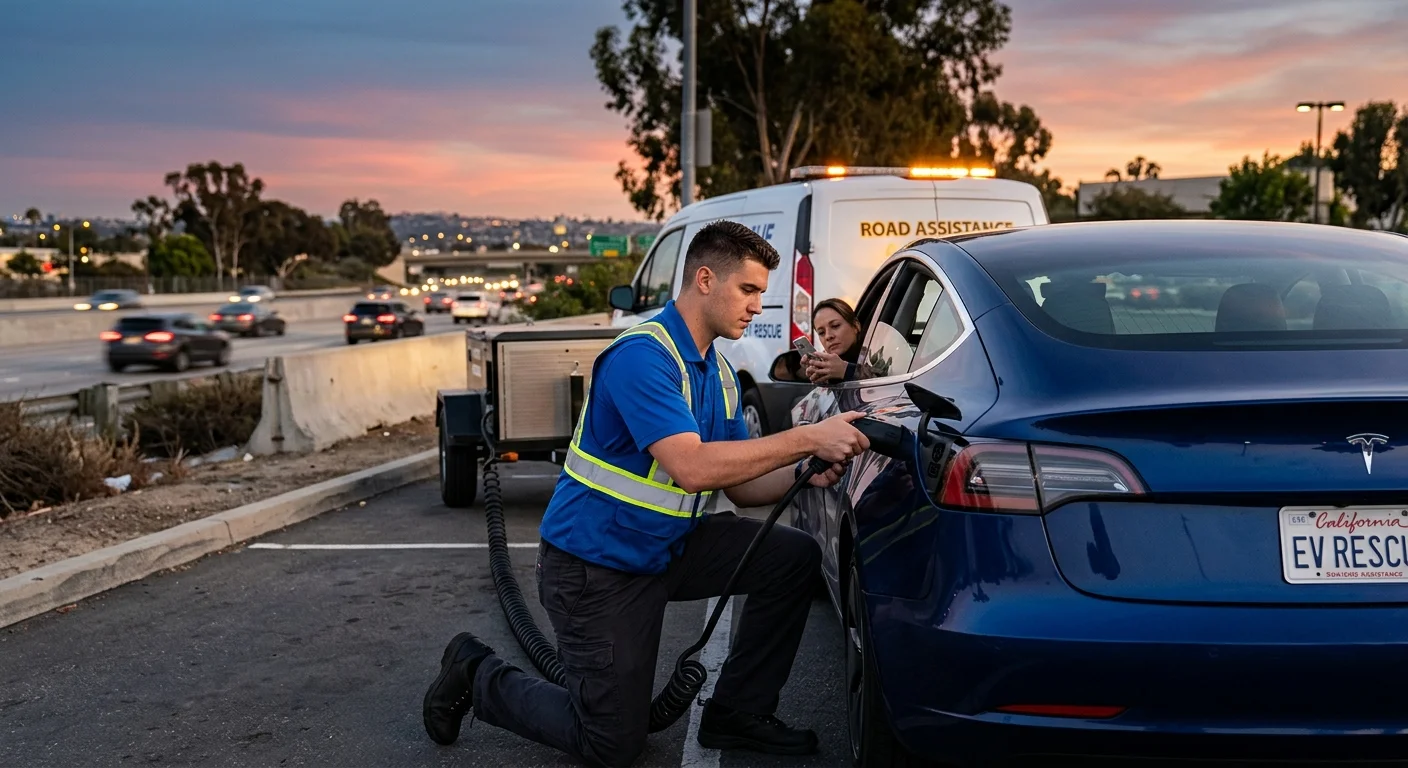
If the high-voltage pack is empty, a Tesla roadside rescue is a separate path. An independent local operator handles that work. Charge Pro TPA only makes the connection. The operator looks at the car, explains the service, quotes you, and does the work.
A 12-volt problem looks different. Doors, screens, and contactors can fail while the pack still holds energy. See Tesla 12-volt failure: when it happens and what owners should do. Use it if the car is silent more than empty.
When a local operator is the better path
Use a local operator when the Tesla app doesn’t offer a fit. Use one when the on-screen terms don’t cover this stop. Confirm the service, the quote, and who you pay before you agree.
Charge Pro TPA serves Tampa Bay as a referral line. We connect you with independent local operators. The pros we connect you with are licensed and insured. We don’t perform the work. We don’t promise when someone arrives. We publish no hours.
Share the Tesla model, the warnings, and the pack status if you have it. Share the exact spot. Say whether the car is in a lot or a garage. A driveway in Carrollwood or Westchase is different from a shoulder of I-4. The operator decides if the request matches the truck.
Operators typically bring a 240-volt Level 2 source to the bumper. They use a native NACS plug, plus CCS or J1772 adapters for other brands. That charge is usually 10 to 20 miles of range. Plan on 15 to 30 minutes of charging time. That’s charging time, never an arrival time. They can also jump or replace a dead 12-volt battery on site.
What you pay moves with distance, time of day, and how much range you need. We don’t publish a figure. The operator quotes before starting.
Compare Tesla’s program, a motor club, and a local truck in Tesla, AAA, or local mobile rescue: the 2026 comparison. For help that isn’t Tesla-branded, see EV roadside assistance.
If you want a local connection
Call when the Tesla is stuck in Tampa Bay. Ask for a mobile EV rescue operator. We don’t promise an operator is available. We don’t publish hours. The operator confirms the job and the quote with you.
Call (813) 536-4545 and we’ll connect you with a local EV rescue operator.