A Tesla that sat through a Tampa week often dies on the 12-volt. The pack can still hold a long trip. Screens, handles, and wake-up computers run on that small battery. After airport parking or a hot driveway sit, the car goes dark first.
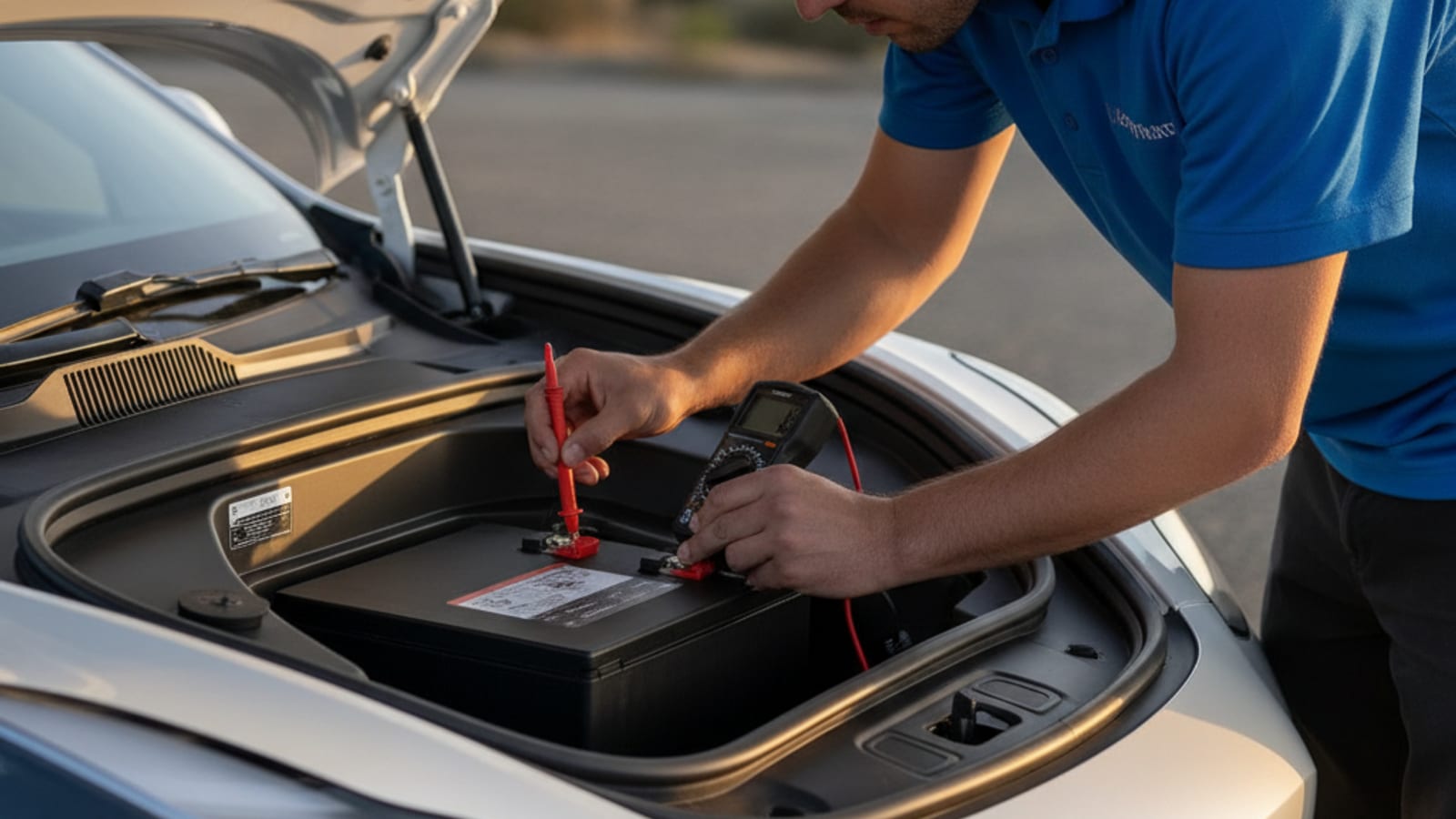
Heat here hits the small battery first
Tampa Bay keeps an air-conditioning season from spring into late fall. A Westchase driveway bakes the cabin after work. So does a Fish Hawk garage, and a street space in St. Petersburg. The traction pack is built for that load. The 12-volt is a much smaller cell. It lives in the same closed-up heat.
Recurrent Auto’s published research is about range, not the 12-volt. An EV loses about 5 percent of range at 90°F. Above 95°F, range loss runs 20 to 30 percent. Near 100°F, it’s roughly 17 to 18 percent, and it varies by model. Heat and AC are the whole range story here. The same heat still cooks a weak 12-volt while the car sits. How Tampa Bay heat and salt air wear down an EV battery covers both systems.
After Helene and Milton in 2024, many Teslas sat longer than planned. Helene drove record storm surge at Tampa Bay gauges. Milton dropped at least 18 inches of rain on parts of St. Petersburg. If saltwater reached the car, follow federal and fire-service guidance. Keep it away from structures and other vehicles until it’s inspected.
A week in a garage is the local pattern
Tampa International Airport EV charging is free at the on-airport garages and the cell phone lot. The airport publishes that. Level 1 J1772 sits on the Economy Garage first floor and in Long-Term Parking. Level 2 is at the Cell Phone Lot. Exact stall counts weren’t confirmed on a primary page. Check the airport parking page before you plan around a number.
An EV left a week in those garages that comes back dead is almost always a 12-volt failure. It’s not a depleted pack. The car can sit on a charger and still wake dark.
Sun City Center, Lakewood Ranch, and Fish Hawk have some of the newest housing in scope. Home 240-volt charging is near-universal there. A Tesla can still die on the 12-volt on those driveways.
Pinellas is the other end of the stock. St. Petersburg and Lealman hold the oldest housing in this metro. Florida Statute 718.113(8) lets a condo owner install a charger in a limited common element or exclusive space. The owner pays for install, power, and insurance. A Tesla that sits through a long event, then won’t wake, is usually the 12-volt.
What that 12-volt is actually doing
A Tesla still has a 12-volt system. Do Teslas have a 12-volt battery walks model by model. There’s no starter motor. The small battery still runs the parts you touch first.
It powers door-handle actuators, latches, the display, and the network modules. It also powers the battery-management relay that lets the pack feed the motors. When the 12-volt is dead, that relay stays open. The pack can sit at a healthy percentage. The car still won’t unlock, light up, or answer the app.
Current Tesla Model Y books describe a lithium-ion low-voltage battery. Jump posts sit behind the open hood. Tesla says a Model Y can’t jump another vehicle. The wires behind the tow-eye cover only release the hood latches. Tesla says those leads can’t charge the low-voltage battery. Disconnect them as soon as the hood unlatches. Other model years use their own book.
How the failure shows up
A slow warning is the kinder version. The Tesla app or cabin screen flags a weak 12-volt or low-voltage battery. The car may still drive. Plan a replacement before the next long sit. There’s no confirmed hours-to-failure window. Treat the warning as urgent and get the battery checked.
The sudden version is the one people fear. You walk up and nothing answers. Handles stay flush. The display stays black. The phone key does nothing. How to tell a Tesla 12V is dead before you call starts with that dark-cabin test.
If you jump the 12-volt and the car wakes with a healthy pack percentage, the small battery failed. The pack didn’t. High-voltage trouble usually looks different. The car still powers on. You get error codes, a range drop, or a limp mode. A fully dark cabin is the 12-volt pattern.
If you’re already on a Tampa Bay road
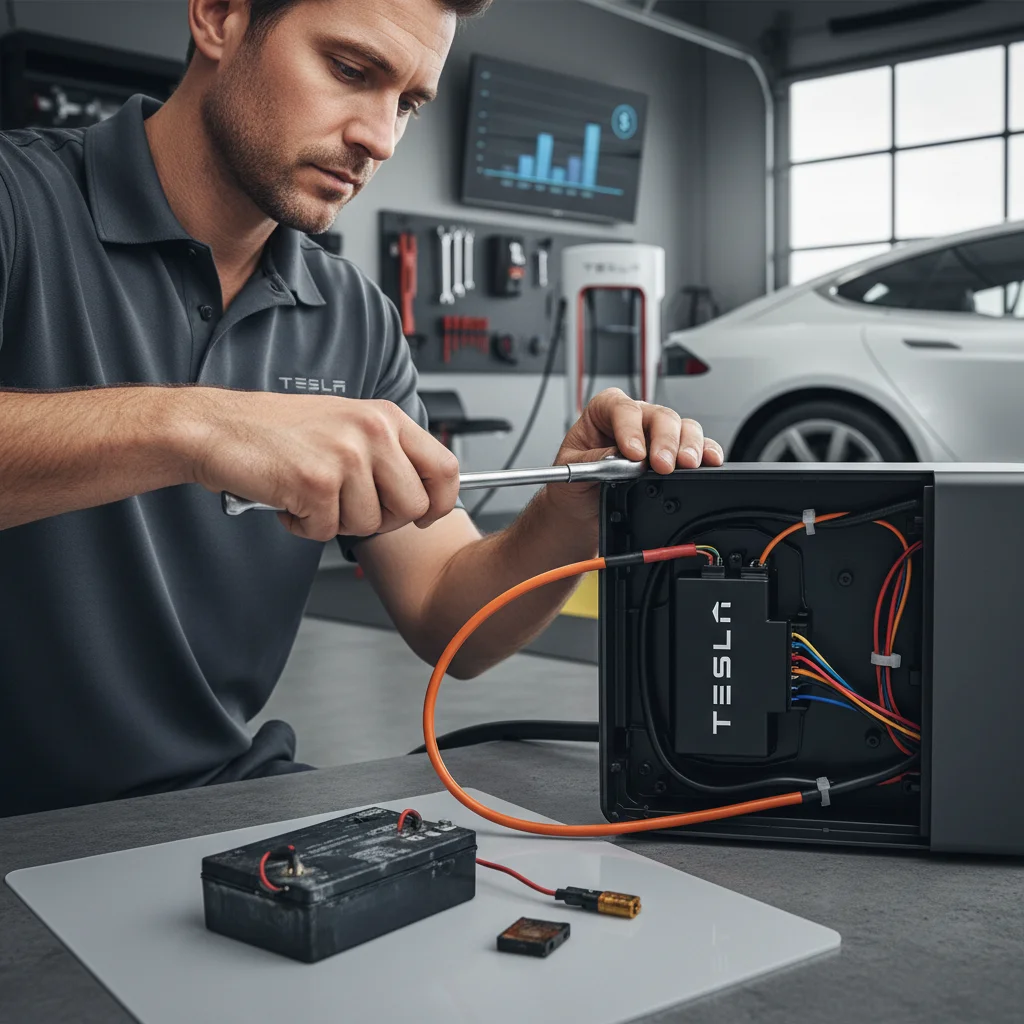
A dead Tesla on a shoulder is a disabled vehicle. Florida Statute 316.194 bars stopping on the paved highway outside a municipality when you can get off it. The same statute exempts a vehicle disabled on the pavement when you can’t move it. Hazards on. Stay out of live lanes.
If the car is in a travel lane or another dangerous place, call 911. Florida Highway Patrol Troop C covers this region on the interstates. FDOT Road Rangers in District 7 patrol I-4, I-75, and I-275, plus the airport interchange. Dial *347.
Road Rangers published services include a 12-volt jump, fuel, tire help, two local calls, and moving a disabled vehicle to a safer spot. Those materials don’t mention charging an EV. Use the free patrol for a jump and for traffic control. Don’t expect a pack charge from them.
The Selmon Reversible Express Lanes are a worse sit. They run about 10 miles on an elevated segmental bridge between Brandon and downtown Tampa. THEA clears every vehicle before each reversal. There’s no local surface shoulder on that elevated stretch. The Sunshine Skyway main span sits 432 feet above the channel. Don’t open a hood in live traffic on either.
Tesla directs owners to request roadside help in the Tesla app. Tesla says out-of-range assistance may be available. It isn’t financially covered. If Tesla’s contractor is delayed, a local operator is the backup. Tesla 12-volt battery jump is that path.
What a local operator can do
Charge Pro TPA is a referral line. We match stranded EV drivers with independent local mobile rescue operators. We don’t hold a trade license for that work. We don’t own trucks or a yard. We don’t employ technicians. We don’t set prices. We don’t promise an arrival window. The operator quotes you before starting and bills you directly.
The pros we connect you with are licensed and insured. They jump or replace a dead 12-volt on site. They also bring a 240-volt Level 2 source when the pack is empty. Typical on-site charging adds 10 to 20 miles of range in 15 to 30 minutes of charging. That’s charging time, never an arrival time. They handle Tesla and every major EV brand.
A jump that wakes the car is a test, not a repair. If the 12-volt has failed, the car can go dark again after the jumper comes off. Replacement is the real fix. Ask the operator or a Tesla service center for today’s parts and labor. What happens when an EV 12-volt battery dies in Tampa Bay covers the next hour.
Frequently asked questions
How do I tell a Tesla 12v battery failure from an empty pack?
A fully dark cabin with a silent phone key is the 12-volt pattern. An empty pack still usually lights the screen and shows zero miles. If a jump wakes the car and the pack percentage looks normal, the small battery failed. If the screens work and range is zero, you need a charge, not a jump.
What should I do if my Tesla won’t unlock after sitting in the heat?
Get to a safe spot first. Then try the Tesla app roadside request. If the hood will open, use that year’s owner’s manual for the low-voltage jump posts. Tow-eye leads only unlatch the hood. They don’t charge the 12-volt. If you can’t do that safely, call for an on-site jump.
Can Road Rangers or Tesla roadside handle a dead 12-volt here?
Road Rangers can jump a 12-volt on the routes they patrol. Their published list doesn’t include charging an EV. Tesla roadside is requested in the app. Out-of-range help may exist, but Tesla says it isn’t financially covered. A local operator can jump or replace the 12-volt on site after they quote you.
If your Tesla is dark anywhere in Tampa Bay, call (813) 536-4545. We’ll connect you with an independent operator who can jump the 12-volt or charge the pack. That operator quotes you before any work starts.