Lakewood Ranch EV charging starts in the garage, not at a highway stall. Census figures for 2019 to 2023 are clear. Only 0.7 percent of homes here predate 1980. A 240-volt circuit is the normal path on these new lots. Heat, I-75, and a Sunshine Skyway run can still empty a pack. The driveway can look fine when you leave.
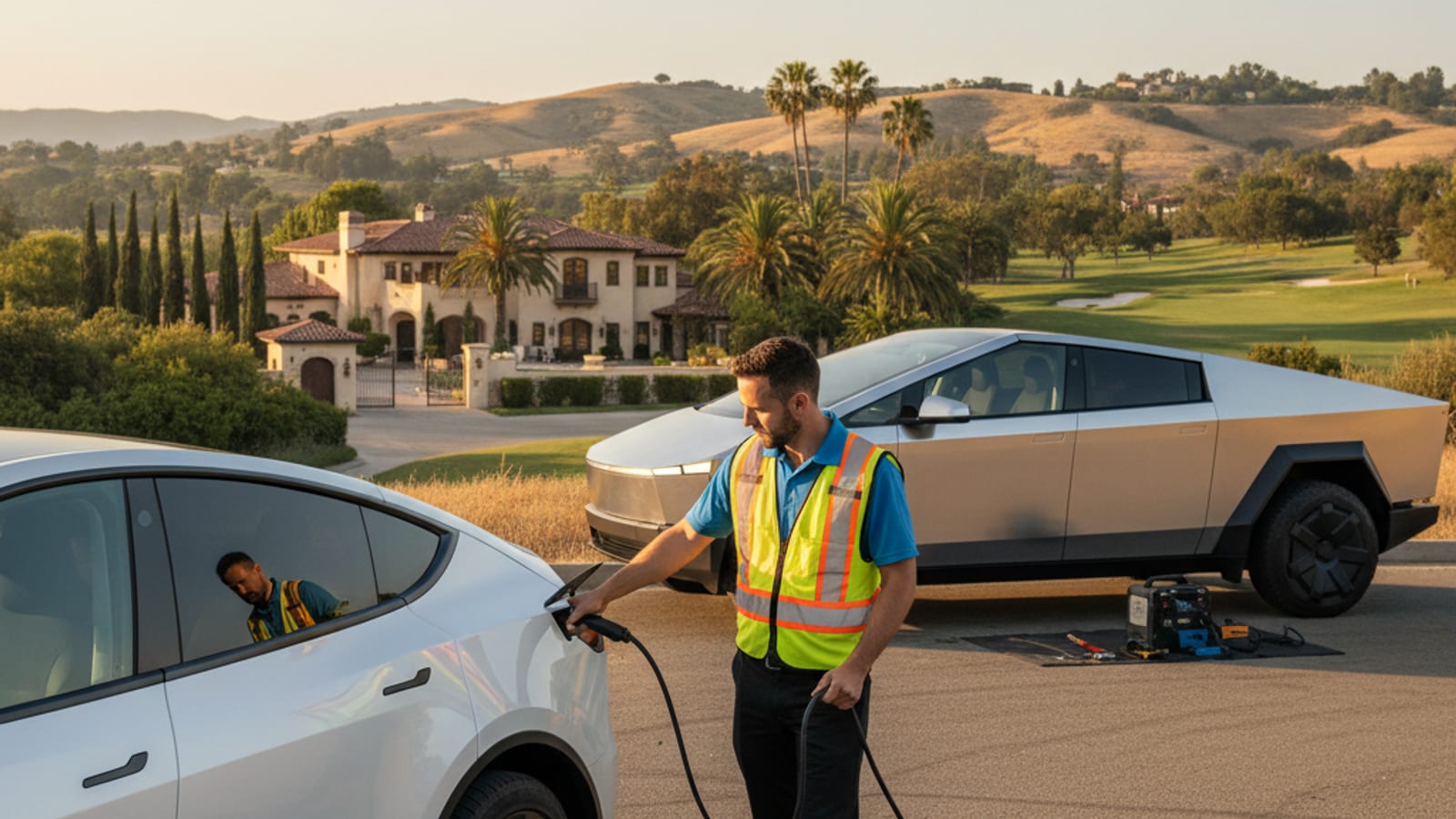
New houses, long south-bay miles
Lakewood Ranch is an unincorporated census-designated place. About 39,434 people live here. The land covers about 46 square miles on the Manatee-Sarasota line. Waterside, Country Club, Central Park, and Del Webb sit inside that plan. Named errands include Waterside Place. They also include the UTC mall on University Parkway. Premier Sports Campus fills weekend lots. The corridors that matter are I-75, SR-70, University Parkway, and Lakewood Ranch Boulevard.
This is a large, newer, affluent master-planned community. Home charging is the usual rhythm. Geography is the other half. You sit far south and inland from the Tampa core. A grocery loop can stay local. A Pinellas day does not. Bradenton, Palmetto, South Bradenton, and Sarasota share the same heat. They share the same Skyway decision too.
Charge Pro TPA is a referral line for Tampa Bay. It matches stranded EV drivers with independent mobile rescue operators. It holds no license and owns no trucks. It employs no technicians. It doesn’t set prices or arrival windows. The operator quotes you before work starts. That operator bills you directly.
Calls from this community tend to look alike. Someone is on a long haul home to a far corner of the Ranch. Someone is sitting on I-75 or University Parkway. Someone is back at the UTC mall with a car that won’t wake. Lakewood Ranch is a long haul from the Tampa core. Give the operator a gate, a cross street, and the corridor. A far corner of the Ranch isn’t University Parkway. A UTC garage isn’t SR-70.
Why a wall charger fits these lots
Age of housing is the useful proxy. Lakewood Ranch’s 0.7 percent pre-1980 share is among the newest in this metro. Fish Hawk and Westchase sit in that same new-build group. Lealman and St. Petersburg still have more than half their homes from before 1980. Those streets often need a panel conversation first. Yours usually starts with spare capacity.
That isn’t a promise your panel is already perfect. It’s a statement about building year. Hire a licensed electrician. Ask for the panel rating and the circuit size. Ask which county pulls the permit. Your lot is in Manatee County or Sarasota County. It isn’t in a city with its own electric desk. Charge Pro TPA doesn’t pull permits. It doesn’t install hardware. If you’re weighing a wall unit against a rescue call, read home 240-volt charging versus a roadside charge.
Level 1 is a cord, not a plan
The travel charger in the trunk is Level 1. It uses a household 120-volt outlet. It adds a few miles per hour. That’s enough for a short hop on Lakewood Ranch Boulevard. It isn’t enough after a hot I-75 day. A large luxury pack on Level 1 can sit through a weekend. Keep the cord for a guest stall or a rare overnight. Don’t make it the plan.
Level 2 is how mornings work here
A Level 2 unit needs a 240-volt circuit, like a dryer. It can add tens of miles per hour. Most packs recover while you sleep. Put it in the garage if you have one. A detached shop works if the wire run is short. The electrician has to size that run. You pay for the charger, the circuit, and the county permit. Florida doesn’t run a statewide home-charger rebate. It also doesn’t run a state EV purchase credit. Any credit lives on a utility page, not a Tallahassee flyer.
Overnight Level 2 is how you buy Skyway margin. Leave with a high state of charge. Don’t treat the bridge as a place to stretch the last bar.
The name on your bill is the only utility that counts
Lakewood Ranch sits in the southern ring of the metro. Peace River Electric Cooperative and Florida Power & Light serve parts of Manatee and Sarasota. Exact boundaries for these streets were not verified on a primary map. Don’t assume Tampa Electric from a Tampa Bay identity. Don’t assume Duke Energy Florida from a Pinellas ad. Read the name printed on your bill. Call that company’s EV contact. Ask what, if anything, they offer for a Level 2 circuit.
Duke publishes a Charger Prep Credit and an Off-Peak Charging Credit in its Florida territory. Those programs don’t automatically follow you south. TECO’s Drive Smart program is written as a non-residential charger rebate. A Ranch homeowner shouldn’t treat it as a personal check. If your utility’s own page doesn’t name a residential rebate, this guide won’t invent one.
Florida enacted an annual battery-electric registration fee under SB 28. It took effect January 1, 2026. Confirm the current amount with the Florida Department of Highway Safety and Motor Vehicles. A larger fee in SB 804 died in committee on March 13, 2026. Budget the enacted bill, not the failed one.
HOAs, Del Webb, and condo law
Most Ranch lots are single-family. Some streets, including Del Webb, sit under an association. Florida Statute 718.113(8) covers condominium chargers. A unit owner may install a station in a limited common element. The same right covers an exclusive parking space. A declaration can’t be enforced to block a properly submitted request. The board can’t deny that request either. The owner still pays for installation, power, maintenance, and insurance. The electricity must be separately metered. That statute is condo law. It isn’t a blanket HOA override. If your community is a homeowners association, read the covenants. Write the board. Don’t copy a neighbor’s pedestal and call it approved.
Heat writes the range story, not hills
The land here is flat and near sea level. You don’t get miles back on a descent. Air conditioning takes them. Recurrent Auto’s published research is the citation to use. An EV loses about 5 percent of range at 90°F. Above 95°F the loss is 20 to 30 percent. Near 100°F it’s roughly 17 to 18 percent. The spread by model is wide. Cite Recurrent by name. Don’t treat a window sticker as gospel in August.
Cabin cooling on I-75 is the daily tax. Precondition while you’re still plugged in at the house. That helps the first miles. It doesn’t cancel University Parkway in stop-and-go. Speed on the interstate compounds it. A calm pace inside the Ranch looks efficient. The highway does not.
Vaisala’s National Lightning Detection Network repeatedly ranks Florida among the most lightning-dense states. Treat this metro as one of the most lightning-prone in the country. Unplug during a cell if you can do it safely. Hurricane Helene hit in late September 2024. It drove record surge at Tampa Bay gauges. Hurricane Milton followed in early October 2024. It dropped heavy rain across the region. It also tore part of the roof off Tropicana Field. Lakewood Ranch is inland relative to Pinellas barrier islands. Low approaches can still flood. Federal and fire-service guidance warns about salt water and EVs. A soaked pack can face a delayed lithium-ion fire risk. Keep the car away from structures and other vehicles. Wait for a qualified shop to inspect it. This page won’t quote an unverified distance or wait time.
Inland air is less salt than a gulf deck. Heat still never really lets up. For wear after years in this climate, see how Tampa Bay heat and salt air wear down an EV battery.
The Skyway is the trip that still runs dry
New drywall doesn’t change the Sunshine Skyway. The I-275 crossing is a cable-stayed span. It gives 432 feet of clearance over the shipping channel. The bridge run is about four miles. There’s no useful place to stop. Florida Highway Patrol closes it when sustained winds hit 40 mph. It also closes when fog cuts visibility below about 100 feet. High-profile advisories often start around 20 mph gusts. That’s local reporting of FHP practice.
Charge at home before you point toward Pinellas. If the pack is already low, wait. If you stall on that deck, you’re in a bad spot. The out-of-charge Sunshine Skyway guide covers where help can meet you. Hazards on. Stay with the car if traffic is moving. Florida Statute 316.194 bars stopping on the paved highway outside a municipality when you can get off. Subsection (2) exempts a disabled vehicle you can’t move. A dead EV on a shoulder fits that exemption. The exemption is legal cover, not comfort.
I-75 past the Ranch is the other long haul. FDOT Road Rangers in District 1 patrol I-75 through Manatee and Sarasota. District 7 covers I-4, I-75, and I-275 in the Tampa core. It also covers the airport interchange. Dial *347 from a mobile phone. Published services include flat-tire help and a jump-start. They also include fuel, water, two local calls, and a move to a safer spot. The Road Rangers materials reviewed for this guide don’t mention charging an EV. Use *347 for a buffer. Use it for a 12-volt jump when that’s the failure. Don’t wait on the free patrol for a traction-pack charge.
Florida Highway Patrol Troop C covers disabled vehicles on these interstates. Florida 511 is the state’s traffic feed. Neither one brings a Level 2 lead to your bumper.
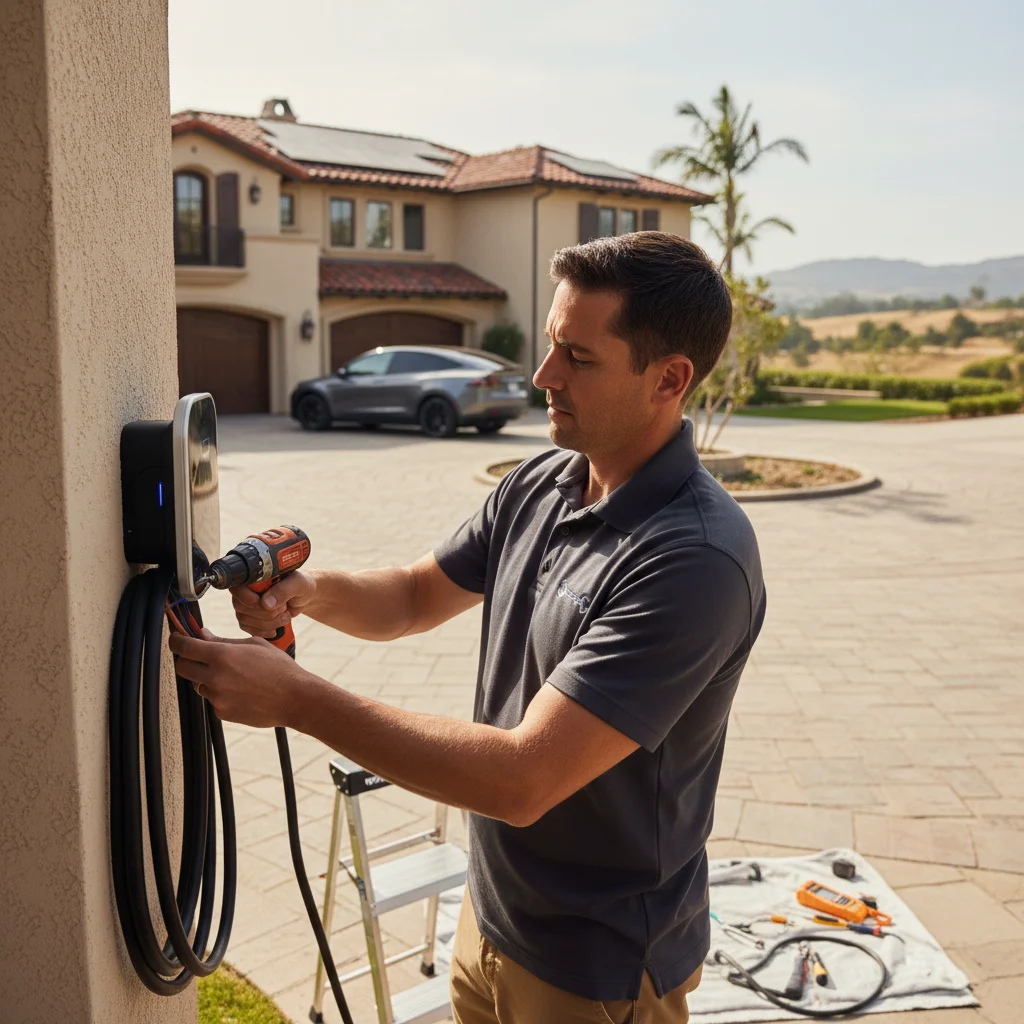
Mall lots, sports parking, and a car that won’t wake
This guide doesn’t publish a port inventory. A live public-charger list for Waterside Place wasn’t confirmed on a primary directory. The same is true for the UTC mall and Premier Sports Campus. Open the in-dash map. Open a charging app before you leave the garage. A stall that existed last month may be occupied. It may be broken. It may be gone. That’s a check. It isn’t a claim that this area lacks charging.
The UTC mall return-to-a-dead-car case is usually the 12-volt. You park. You shop. The cabin sits in heat. Accessory loads drain the small battery. The traction pack can still show a healthy percentage. The car simply won’t wake. Waterside Place produces the same pattern after a long sit. So does Premier Sports Campus. That’s a jump or a 12-volt replacement. It isn’t a hunt for a DC stall.
Tesla uses a native NACS port. Many newer non-Tesla EVs can use Superchargers with an adapter. Older CCS and J1772 cars still need the matching inlet. Confirm your port before you count on a stall. Charge Pro TPA doesn’t operate public hardware.
Empty pack versus a silent 12-volt
People mix the two failures. An empty high-voltage pack means you drove the miles out. A dead 12-volt means the computers never came up. Teslas still rely on that small battery. So do most other EVs. It runs contactors, locks, and the screen. Tampa Bay heat shortens its life. A car that sat at the mall is the classic case. So is a car that sat in a Ranch garage through a hot week.
Operators in this network can jump a 12-volt on site. They can replace one when that’s the fault. They can also bring a 240-volt Level 2 source to the bumper. Native NACS for Tesla. CCS or J1772 adapters for other brands. Typical charging time is 15 to 30 minutes. That usually adds about 10 to 20 miles of range. That’s plug time. It isn’t an arrival time. The operator quotes before starting.
Mobile EV charging is the empty-pack path. Tesla 12-volt jump is the won’t-wake path. Both show up in Lakewood Ranch EV roadside assistance. Say the neighborhood. Waterside isn’t Del Webb. Central Park isn’t Country Club. A gate code saves a wasted loop on private streets. The operator bills you. There’s no shop rate from Charge Pro TPA. There’s no Charge Pro TPA shop. The pros the line connects you with are licensed and insured. The line itself holds no license.
Towing is the last move
A flatbed to a charger adds wait, then another wait. Ask for a mobile charge first if the car is intact. That’s the empty-pack case. If you need a tow, rates are a county matter. Non-consent tows are regulated at the county level in Florida. Hillsborough uses the Tax Collector’s vehicle-for-hire authority. Pinellas uses its ordinance. Manatee and Sarasota set their own rules. Live dollar maximums were not confirmed against current schedules. This page won’t print a figure. Ask the tower for the filed rate before the hook goes on.
Florida Statute 715.07 covers removal from private property. Required signs must say vehicles will be towed at the owner’s expense. Letter sizes are set in the statute. The tower’s name and phone must appear. Storage distance rules depend on county population. A mall or sports lot can tow. Read the signs at UTC and Waterside Place. Photograph them if the car is already gone.
If the EV won’t enter Neutral, wait. You need a driver who knows that brand. Guessing a push or a roll can damage the drive unit. Don’t stand in an I-75 lane to help.
When the house power is out
A wall charger is only as alive as the grid. If the Ranch loses power, Level 2 at home is dark. A generator and a 120-volt cord is an electrician question. It isn’t a roadside one. If you already sit at a low state of charge, you may need to leave. A mobile Level 2 visit to the driveway is the backup. That’s a referral call. It isn’t a utility truck.
Don’t make a habit of parking at zero. Daily charging into the upper portion of the pack is the usual manufacturer guidance. Save a full charge for a known long day. Keep tires at the door-sticker pressure. Soft rubber wastes range in this heat. Install software updates at home. Don’t do that work in a hot mall garage.
On the shoulder, in order
Pull fully out of the travel lane if you can. Hazards on. Stay out of traffic. On I-75, dial *347 if you need Road Rangers. That’s the call for a buffer or a 12-volt jump. Then call for a mobile rescue if the pack is empty. Call if the 12-volt won’t hold. Name Lakewood Ranch, the neighborhood, and the corridor. I-75 isn’t University Parkway. A private gate isn’t the UTC lot.
Stay off the Skyway deck as a pedestrian. Don’t try to push the car. Use Florida 511 for closures. That includes wind holds on the Skyway. If FHP has the bridge closed, don’t add yourself to the queue. Not with a low state of charge.
The local index for this community is EV charging in Lakewood Ranch. Use it when you want the service list. This page is the ownership guide.
Frequently asked questions
Does a new Lakewood Ranch house still need a 240-volt charger?
Yes, if you drive real miles. Level 1 can cover a short local day. A Skyway or I-75 loop wants overnight Level 2. Confirm panel capacity and the county permit. Charge Pro TPA doesn’t run that install.
What do I do if the pack hits zero on I-75 or the Skyway?
Get off the travel lane if you can. You’re a disabled vehicle under Florida Statute 316.194. Dial *347 for Road Rangers if you need a shoulder buffer. Use that same number for a 12-volt jump. Their published list doesn’t include charging the traction pack. For a mobile Level 2 charge, let an independent operator quote on site.
Can mobile rescue help a Tesla and a non-Tesla on these streets?
Operators in the network bring a native NACS plug. They also bring CCS or J1772 adapters. Tesla and the other major EV brands are in scope. The quote comes from the operator, not from Charge Pro TPA.
Lakewood Ranch makes home charging easy because the houses are new. A Skyway run, I-75, and a hot mall sit can still empty a pack. They can also kill a 12-volt battery. If you need a match with a local mobile operator, call (813) 536-4545. You’ll get a quote from the person who shows up. You won’t get an arrival promise from the referral line.