The Kia EV9 that sat between morning drop-off and afternoon pickup is the one that often refuses to wake. The high-voltage pack can still show plenty of range. The 12-volt battery that runs the computers is what went quiet. That’s the usual story when a family three-row EV won’t start in Tampa Bay.
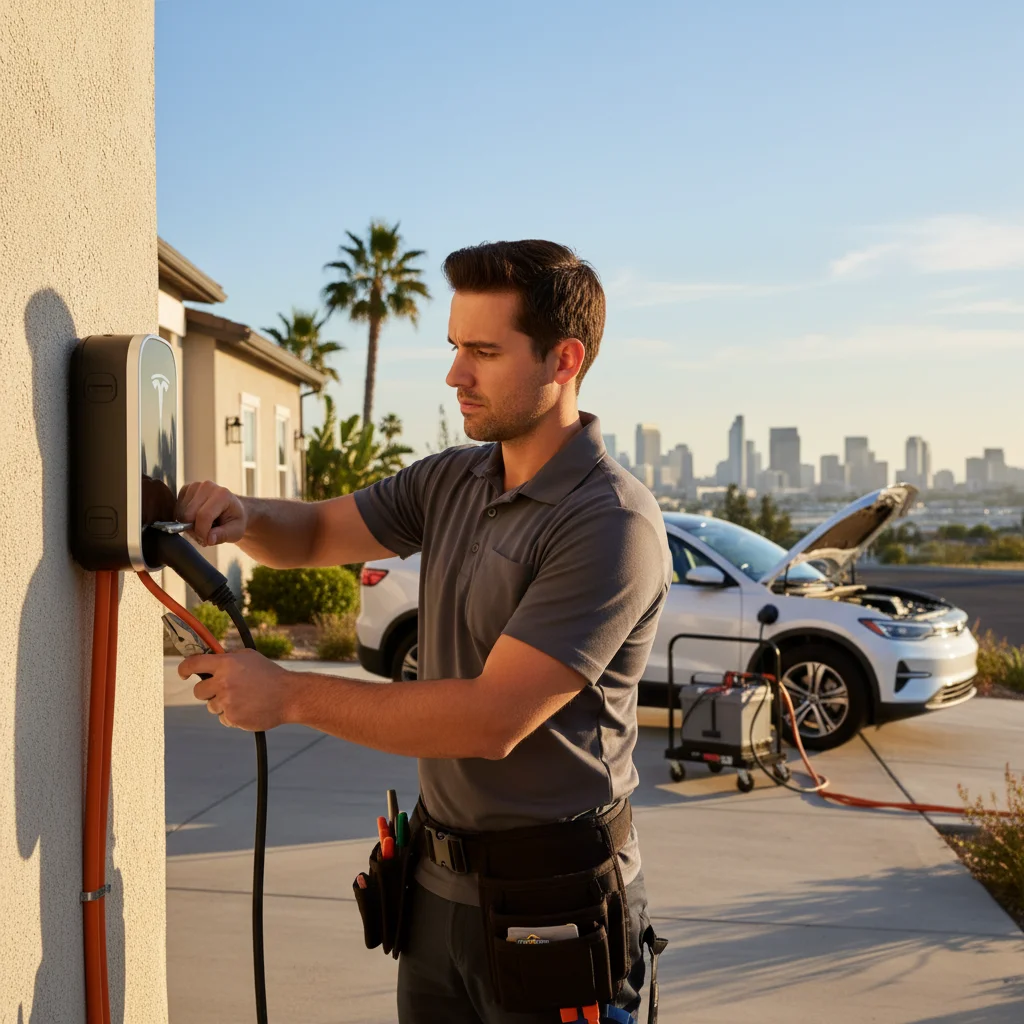
School-run sits are harder on the 12-volt than highway miles
Families in Carrollwood and Fish Hawk park a three-row EV9 for hours between school, practice, and the grocery stop. Westchase and Lakewood Ranch owners do the same on longer suburban loops. While the SUV sits, lock modules, cameras, and Kia Connect keep drawing a little 12-volt current.
Recurrent Auto’s published research finds an EV loses only about 5 percent of range at 90°F. Above 95°F that loss is 20 to 30 percent, with wide model-to-model spread. That’s traction-pack range in heat. The 12-volt lead-acid battery has its own heat problem. Terminals corrode. Capacity falls. The pack can still read full while the computers have nothing left to boot.
The EV9 sits on Kia and Hyundai’s E-GMP platform, the same family as the Hyundai Ioniq 5. That architecture won’t let the 800-volt traction pack engage until the 12-volt system wakes the vehicle-control modules. No 12-volt, no Ready, no Drive.
Read the dash before you assume the pack is dead
Press the start button and watch. A dead 12-volt usually means a full blackout. The cluster stays dark. Door handles may ignore the fob. Walk-away lock fails. The Kia Connect app can’t reach the car. The charge-port light may not blink when you present a cable. A single chime, then silence, is a classic 12-volt fingerprint.
An empty high-voltage pack looks different. Screens often still wake. You get a low-range or plug-in message. You can usually still talk to the car.
If the EV9 starts but shows a low-voltage warning, the 12-volt is weak, not dead. Treat that as a countdown to a no-start on the next long sit. Don’t wait for the next school-break trip to find out.
Tampa International Airport makes the distinction obvious. The airport publishes free EV charging at all on-airport parking garages and the cell phone lot. Level 1 sits in the Economy and Long-Term garages. Level 2 is at the cell phone lot. A week in those garages still produces dark EV9s when the 12-volt fails, even if the pack was topped up. Free garage charging feeds the traction pack. It doesn’t revive a 12-volt that already dropped too low to boot.
Pinellas condo parking has the same sit pattern. Florida Statute 718.113(8) gives a unit owner the right to install a charger in a limited common element or exclusive space. Until that charger exists, the EV9 lives on public charging and long days in a garage. Long days are when auxiliary batteries die.
Turn on 12-volt battery saver while the car still wakes
2024 and newer EV9s include a 12-volt battery save function. It can trickle-charge the auxiliary battery from the traction pack while parked. Enable it under Vehicle, then EV Settings, then 12V Battery Saver.
When it’s on, the car briefly wakes its DC-DC converter if 12-volt voltage dips. That only works if base systems can still boot. If the battery is already too depleted to light the screens, you can’t open the menu, and the saver never runs. Use it as a parked-car habit, not as a rescue.
Turn it on before a cruise week, a storm sit, or a school break when the SUV may not move for days. After Hurricanes Helene and Milton, a lot of Tampa Bay cars sat through surge warnings and long rain. A sitting EV9 with saver off is a dark-dash candidate when you come back.
Jump at the hood, not in the cargo hold
The 12-volt auxiliary battery is behind a trim panel on the driver’s side of the rear cargo area, just forward of the left wheel arch. Fold the third row. Lift the cargo mat. That’s why a hood jump is the roadside move, not a cargo-area swap on the shoulder of I-275.
Kia gives you remote jump terminals under the hood. The positive terminal sits under a red plastic cover in the forward-right corner of the engine bay. The negative is an unpainted chassis bolt or a dedicated ground stud nearby. Confirm the exact ground in your owner’s manual, because build dates vary.
Connect booster cables to those terminals. Don’t fish for the buried battery. Use a quality jump starter or a running donor vehicle. After the EV9 shows life, leave the jumper on for two to three minutes so modules can boot. Then press start.
If you’re not sure of the ground stud, stop. An 800-volt platform isn’t the place to guess. Read how to jump start an electric car without damage, then decide whether a mobile operator should do it.
Other no-start causes worth a look
A dead 12-volt is the common cause. It’s not the only one.
A stale scheduled-departure setting can leave the car unresponsive at a time you didn’t plan. Once it wakes, open EV settings and cancel the schedule.
A charge-port communication fault can follow a failed public charge and a long sit. A brief 12-volt disconnect at the jump terminals sometimes clears it. Follow the manual.
A high-voltage interlock fault can let the car reach Ready and still refuse Drive. That needs a diagnostic scan. Don’t take it onto I-75 hoping it clears.
Software glitches happen. Persistent codes after a successful start still deserve a Kia scan before a Skyway or Suncoast run. Related Kia charge faults show up on the EV6 as well.
If the EV9 dies on the road, not in the driveway
Florida Statute 316.194 lets a disabled vehicle remain on the paved highway only when you can’t get it off the roadway. Ease the EV9 as far onto the shoulder as you can. Stay out of the travel lane.
FDOT Road Rangers in District 7 patrol I-4, I-75, and I-275, plus the airport interchange. Dial *347. The Tampa Bay SunGuide Center is the District 7 traffic desk. Published Road Ranger help includes a 12-volt jump, a tire change, fuel, two local calls, and moving a disabled vehicle to a safer spot. Those published services don’t include charging an EV. Florida Highway Patrol Troop C covers disabled vehicles on the interstates.
The Selmon reversible lanes between Brandon and downtown Tampa run on an elevated median with no local surface shoulder. THEA clears those lanes before each reversal so no stranded car sits through the direction change. If the EV9 dies on the REL, stay in the vehicle with hazards on and wait for official traffic control.
The Sunshine Skyway is worse. The main span sits 432 feet above the shipping channel. If you’re already on the span with a dark dash, stay in the car and call for help.
Hillsborough County and Pinellas County both cap non-consent tow rates. Exact current caps weren’t confirmed against the live schedules, so don’t guess a tow price. Ask the tower, and confirm the county cap, before you authorize a hook. A mobile jump on site often means you never need that tow.
What a local operator actually brings
Charge Pro TPA is a referral line. It matches stranded EV drivers with independent local mobile rescue operators. It doesn’t perform work, own trucks, or set prices. The operator quotes you before starting and bills you directly.
The pros we connect you with can jump or replace a dead 12-volt on site. They handle Tesla and every major EV brand, including the EV9. If the traction pack is actually empty, they can bring a 240-volt Level 2 source with a CCS or J1772 adapter. Typical add is 10 to 20 miles of range in 15 to 30 minutes of charging. That’s charging time, never an arrival time.
For a dark family EV9, start with the 12-volt path on non-Tesla EV rescue. What moves the quote is how far the operator must travel, time of day, and whether you need a jump, a battery swap, or a roadside charge.
After it starts, finish the job
A jump that dies again on the next sit means the 12-volt is finished. In this climate, lead-acid auxiliaries often need replacement long before the traction pack ages out. Book a Kia dealer or an EV-capable shop on your schedule.
If storm surge or salt spray reached the EV9, have it inspected before you drive. Federal and fire-service guidance warns that an EV soaked in salt water can be unsafe later.
Frequently asked questions
How do you jump a Kia EV9 from the hood terminals?
Use the remote jump points under the hood, not the cargo-area battery. Positive goes to the red cover in the forward-right engine bay. Negative goes to the chassis ground in the manual. Keep the jumper on for two to three minutes before you press start.
Will 12-volt battery saver stop a no-start?
It lowers the odds. It can’t run if the 12-volt is already below the boot threshold. Treat it as a parked-car habit, especially between school runs and vacation sits.
Why is the EV9 dark if the main battery is full?
The traction pack and the 12-volt battery are separate. The pack moves the SUV. The 12-volt runs the computers that allow the pack to engage. A dead 12-volt leaves a full pack sitting behind a dark dash. That’s how E-GMP vehicles behave, including the EV9.
If your Kia EV9 won’t start anywhere in Tampa Bay, call (813) 536-4545. A dispatcher confirms your location and connects you with a local operator. The operator quotes before work begins. For the same 12-volt pattern on other EVs, read what happens when an EV 12-volt dies.