A Hyundai Ioniq 5 charge port stuck in Tampa Bay humidity is usually a latch that never unlocked. Unlock the doors first and stop the session in the Bluelink app. If that fails, pull the manual release in the cargo area. It sits on the driver’s side, behind the tail light. Call a local operator only if the pin still won’t let go.
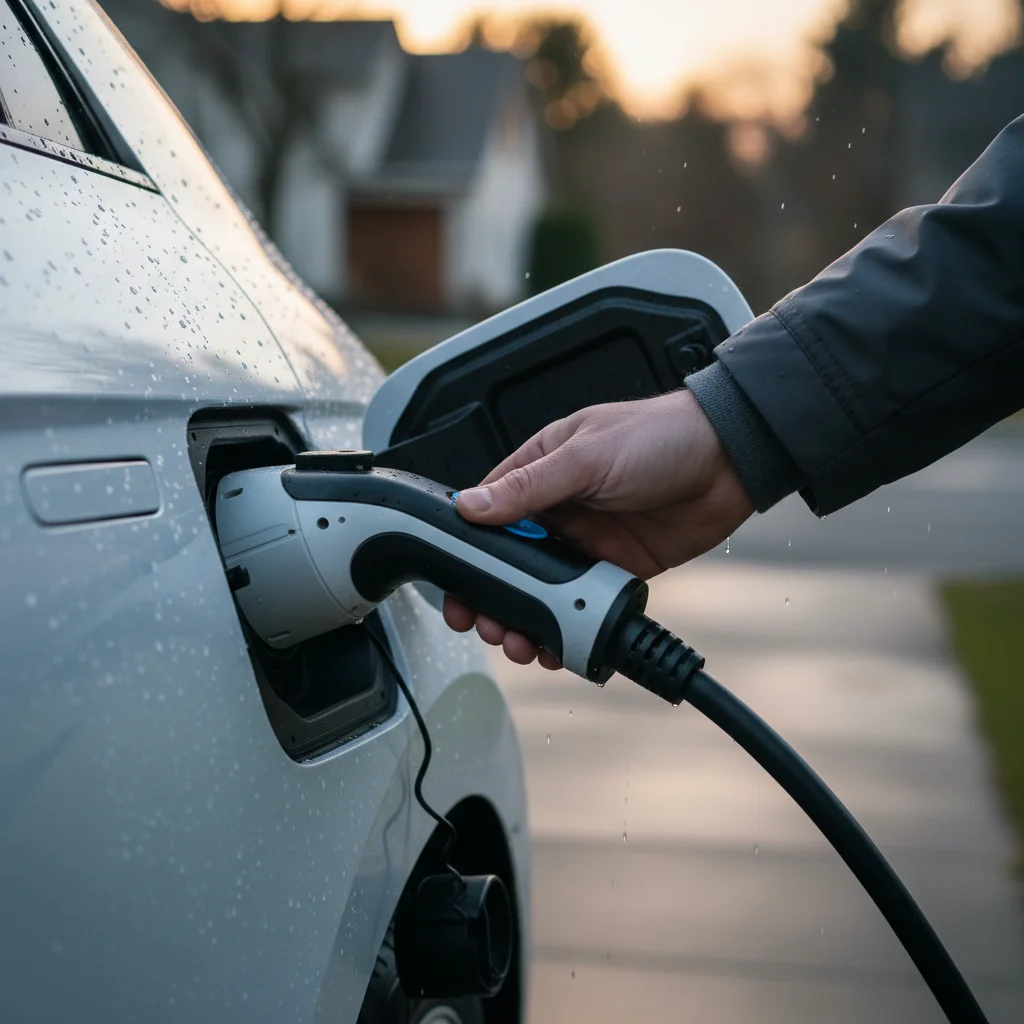
The CCS handle is still in the port. The session looks finished. The release on the handle does nothing. That happens after a wet Clearwater afternoon or downtown Tampa errands. It also happens after a trip through the Tampa International Airport garages. The airport publishes free charging in its on-airport garages and the cell phone lot. A stuck handle there is still a latch that won’t let go.
Try the car and the post before the trunk
Most stuck Ioniq 5 cables are a missed unlock command. The pin never got the retract signal. Don’t start by peeling cargo trim.
Put the car in park. Let it power down if it will sleep. Wait a few seconds. Lock the doors with the fob, then unlock them. Pause between presses so the body computer can catch up. Rapid tapping can freeze the same logic you’re trying to reset.
Open the Hyundai Bluelink app if the phone still reaches the car. End the charging session from there. A remote stop often sends the unlock the post never finished.
Then look at the cabinet. Many units have a stop or end-session control on the screen. Use it and wait. The car and the post keep talking for a few seconds after you think you’re done.
If the handle still sits locked, call the number printed on the station. Read them the station ID on the cabinet. Remote support can force-stop a session from their side. That step frees more pins than a hard tug. Do it before you pull the emergency cable. A post that’s still in a live session can fault if you yank the connector out.
For the broader sequence on any locked EV port, see how you free a charge cable that’s locked in the port.
Why this latch hates humid Tampa Bay air
The Ioniq 5 doesn’t use a simple flap and a dumb pin. A motorized charge door and a separate electromechanical lock both have to finish their jobs. Either one can stall in wet heat.
The lock is a small pin that slides into a notch on the CCS handle. Software drives that pin. It’s supposed to drop when charging starts. It’s supposed to pull back when you unlock, or when the session ends. A messy handshake with a public DC fast charger can skip the retract step. So can stopping the session at the wrong beat. The car still thinks the cable should stay captured. You’re holding a handle that won’t move.
Humidity makes a fussy latch worse. Tampa Bay runs a long air-conditioning season from spring into late fall. Public posts sit in that wet heat all day. Afternoon storms soak cabinets and port mouths. Salt air along Pinellas, from St. Petersburg through the barrier-island approaches, leaves a film on metal and seals. Inland Hillsborough still gets the same wet heat, with less salt on the hardware.
Water in the port is its own problem after the 2024 storms. Hurricane Helene in late September 2024 drove record storm surge at Tampa Bay tidal gauges. Hurricane Milton in early October 2024 dropped at least 18 inches of rain on parts of St. Petersburg. If the port sat open, or the door didn’t seal, moisture can bind the pin. Federal and fire-service guidance is stricter if the car took on salt water. Keep that car away from structures and other vehicles until it’s inspected. For rain and spray in the port, see water in an EV charge port after Tampa Bay rain or spray.
Heat also changes how you use these posts. Recurrent Auto published the range-loss figures to cite. An EV loses only about 5 percent of range at 90°F. Losses rise to 20 to 30 percent above 95°F. They sit around 17 to 18 percent near 100°F. Cabin AC and battery cooling eat miles on I-275, I-75, and the Courtney Campbell Causeway. Drivers then lean on public DC fast charging harder. More sessions at humid posts mean more chances for a handshake to hang.
Pinellas condo and HOA owners feel this more than a driveway in Fish Hawk. Florida Statute 718.113(8) gives a condominium unit owner the right to install a charging station. It has to sit in the limited common element or an exclusive space. A declaration can’t be enforced to block a properly submitted request. The owner still pays for install, power, and upkeep. Many beach and core-condo drivers therefore live on public posts.
Newer master-planned streets in Westchase, Fish Hawk, and Lakewood Ranch have near-universal 240-volt home charging. A home plug still doesn’t help at a public CCS post in Tampa or along US-19.
Vaisala’s National Lightning Detection Network has long placed Florida among the densest lightning states. Tampa Bay is one of the most lightning-prone metros in the country, per Vaisala. A strike or a hard flicker at a site can interrupt a session.
The manual release in the cargo area
If station support can’t see the unit, or the stop doesn’t free the pin, use the trunk override next. Treat it as a mechanical last step, not a first reflex.
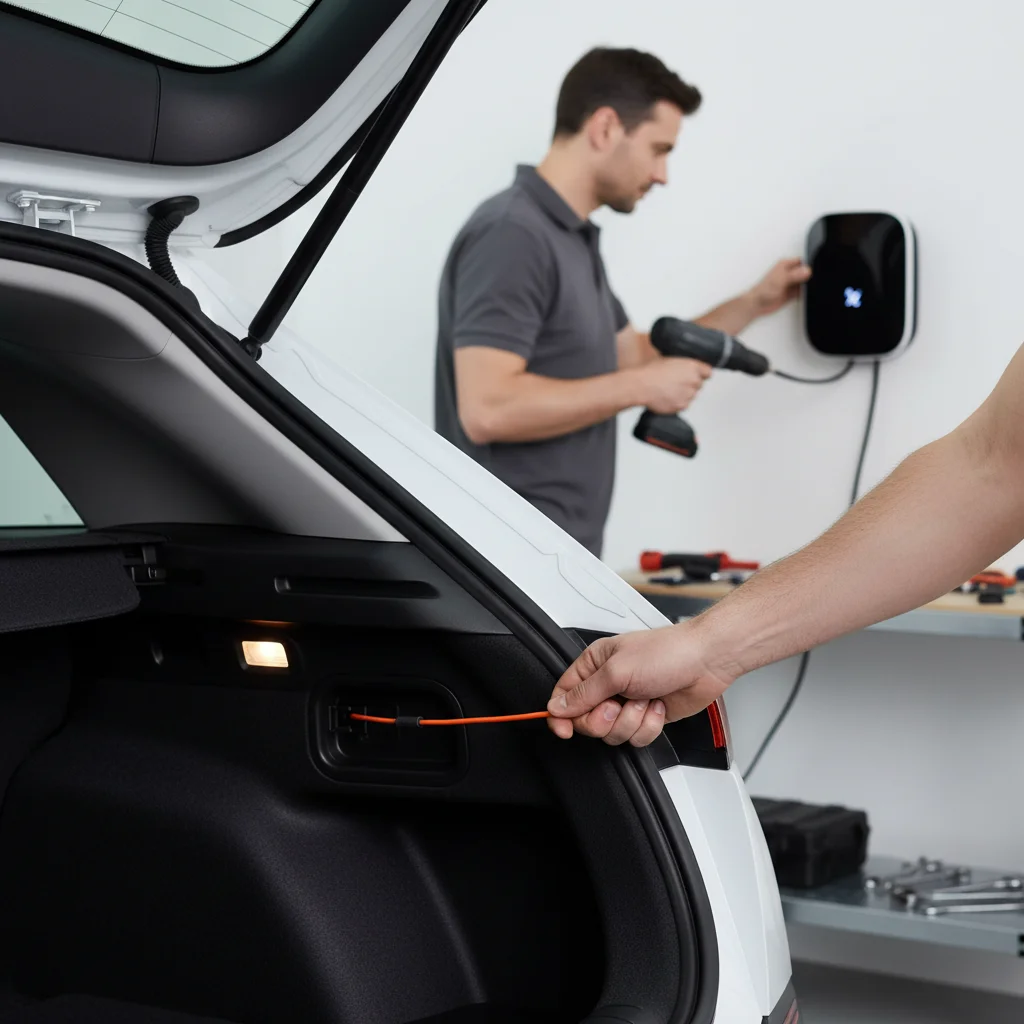
Hyundai put a mechanical pull in the Ioniq 5 cargo area for this failure. It retracts the lock pin even when the car’s software has quit. It can also help when the 12-volt is too weak to drive the actuator. A fully dead 12-volt often blocks the hatch and the fob first.
Confirm the car is unlocked and off. Open the rear hatch. Face the cargo wall on the driver’s side. Look for a small rectangular panel in the liner, almost behind the tail lamp. Pop it with your fingers. A plastic trim tool is kinder than a key if the clip is stubborn. Don’t gouge the liner.
Inside is a short cable, often a loop or a small handle. It may have a high-visibility tab. Pull it toward the center of the cargo area. Use a short, steady pull, not a yank. You want a click or clunk from the charge-port side. That’s the pin coming back. Walk to the port and draw the handle straight out.
Snap the panel home when the cable is free. If you want the diagram for your model year, Hyundai publishes it in the Hyundai Owner’s Manual.
Don’t keep pulling if the cable feels like it’s stretching. Don’t keep pulling if you hear nothing. That’s hardware, not a missed command.
Software hang versus a pin that won’t move
A software hang is the usual story. The actuator is fine. The command never arrived. Fob cycles, Bluelink, and a network force-stop clear most of those.
A hardware bind is different. Grit, corrosion, a bent handle slot, or a failed actuator can hold the pin. That can happen even after a good pull. Tampa Bay doesn’t freeze this latch in ice. It swells seals and packs dust into wet ports. If the emergency cable is rock-hard, or the clunk never comes, stop. Forcing the CCS handle can break the port door. It can also break the pin or the station’s connector.
The motorized charge door can add a second bind. If the door is trying to close on the handle, don’t fight both at once. Get the pin back first.
When a dead 12-volt is the real lock
The charge-port lock is an electrical device. A flat 12-volt battery takes the fob with it. Interior buttons go quiet. The powered release goes quiet too. You can look like you have a stuck cable when the car won’t wake.
If the screens are dark and the locks are dull, treat it as a 12-volt problem. Bluelink that can’t reach the car points the same way. Don’t pry the CCS handle. An operator who knows EVs can jump or replace that 12-volt on site. Then the latch can take a normal unlock command.
The same 12-volt pattern shows up after a sitting car in this heat. If the Ioniq 5 won’t ready after you finally unplug, read what to check when a Hyundai Ioniq 5 won’t start. Session length lives on Ioniq 5 charging time at home, in public, and on the shoulder.
If you’re on a shoulder, not in a lot
A dead or tethered Ioniq 5 on the paved highway is a disabled vehicle. Florida Statute 316.194(2) allows you to remain there when you can’t get off the traveled way. Get as far right as you can. Use hazards. Stay out of the travel lane.
FDOT Road Rangers in District 7 patrol I-4, I-75, and I-275 in the Tampa Bay area, plus the airport interchange. Dial *347. They publish flat-tire help, a 12-volt jump, fuel, and moving a disabled vehicle to a safer spot. The materials reviewed don’t list charging an EV. That’s an observed absence in the printed list. It’s not a claim that Rangers will refuse an Ioniq 5. Florida Highway Patrol Troop C covers disabled vehicles on these interstates.
The Lee Roy Selmon Reversible Express Lanes between Brandon and downtown Tampa are a worse place to sit. THEA’s elevated REL is a roughly 10-mile segmental span in the median. There’s no local surface shoulder on that elevated segment. The direction reverses through the day. Westbound into downtown runs from about 5 a.m. to noon. Then the lanes run eastbound. The lanes are cleared of all traffic before each reversal. If you’re on the REL with a cable you can’t remove, don’t assume a wide shoulder.
The Sunshine Skyway on I-275 is its own problem. The main span sits 432 feet over the shipping channel. There’s a long run with nowhere useful to stop. Florida Highway Patrol closes the bridge at sustained 40 mph winds. It also closes when fog cuts visibility below about 100 feet. Don’t stand on the span to fight a latch. Get to a safe pocket if you can. Then work the fob and the phone, not the trim.
When to stop and call a local operator
Stop DIY if any of this is true. The trunk cable does nothing, or it feels ready to snap. The 12-volt looks dead. The port door is motorized shut on the handle. You can’t see the cargo panel. Station support can’t force-stop the session.
Charge Pro TPA is a referral line. It matches stranded EV drivers with independent local mobile rescue operators. It doesn’t own trucks, and it doesn’t do the work. The operator quotes you before starting and bills you directly. The pros we connect you with are licensed and insured. They bring a 240-volt Level 2 source to the bumper. They use a CCS or J1772 adapter for a non-Tesla like the Ioniq 5. Charging time is typically 10 to 20 miles of range in 15 to 30 minutes. That’s time on the connector. It’s never a promise of when someone arrives. They can also jump or replace a dead 12-volt on site.
That mix is what you want for a latch that won’t let go. A tow doesn’t have to win if the car can unplug and drive. For the Ioniq 5, ask for non-Tesla EV rescue.
If the software tricks and the trunk pull both fail, call Charge Pro TPA at (813) 536-4545. An operator can work the connector and the 12-volt without guessing at the port.
Frequently asked questions
Why is my Ioniq 5 charge port stuck after charging?
The CCS lock pin stayed in the handle after the session ended. That’s usually a missed software command, not a snapped latch. Humid Tampa Bay posts, a messy DC handshake, or a flicker during the session can skip the unlock. Cycle the fob. End the session in Bluelink. Use stop on the cabinet before you touch the trunk cable.
How do I release a stuck Ioniq 5 charge cable myself?
Work the car and the post first. Lock and unlock, stop in the app, then stop on the station. If you’re on a public unit, call the network using the ID on the cabinet. Only then open the rear hatch. Pop the driver’s-side cargo panel behind the tail light. Pull the release toward the center of the trunk. Wait for the click, then pull the handle straight out.
What if the Ioniq 5 latch is stuck because the 12-volt is dead?
The lock needs 12-volt power. A dead 12-volt can freeze the pin and kill the fob together. Don’t pry the CCS handle. That’s a rescue call. The operator restores the 12-volt, then commands the latch. Or they use the mechanical release once the hatch will actually open.