The handle is locked because the car never retracted the latch. That’s why an EV charger stuck in the car sits at a Tampa stall. End the session on the screen first. If the NACS or J1772 connector still won’t move, every major model has a manual release. Use that before you yank the cable.
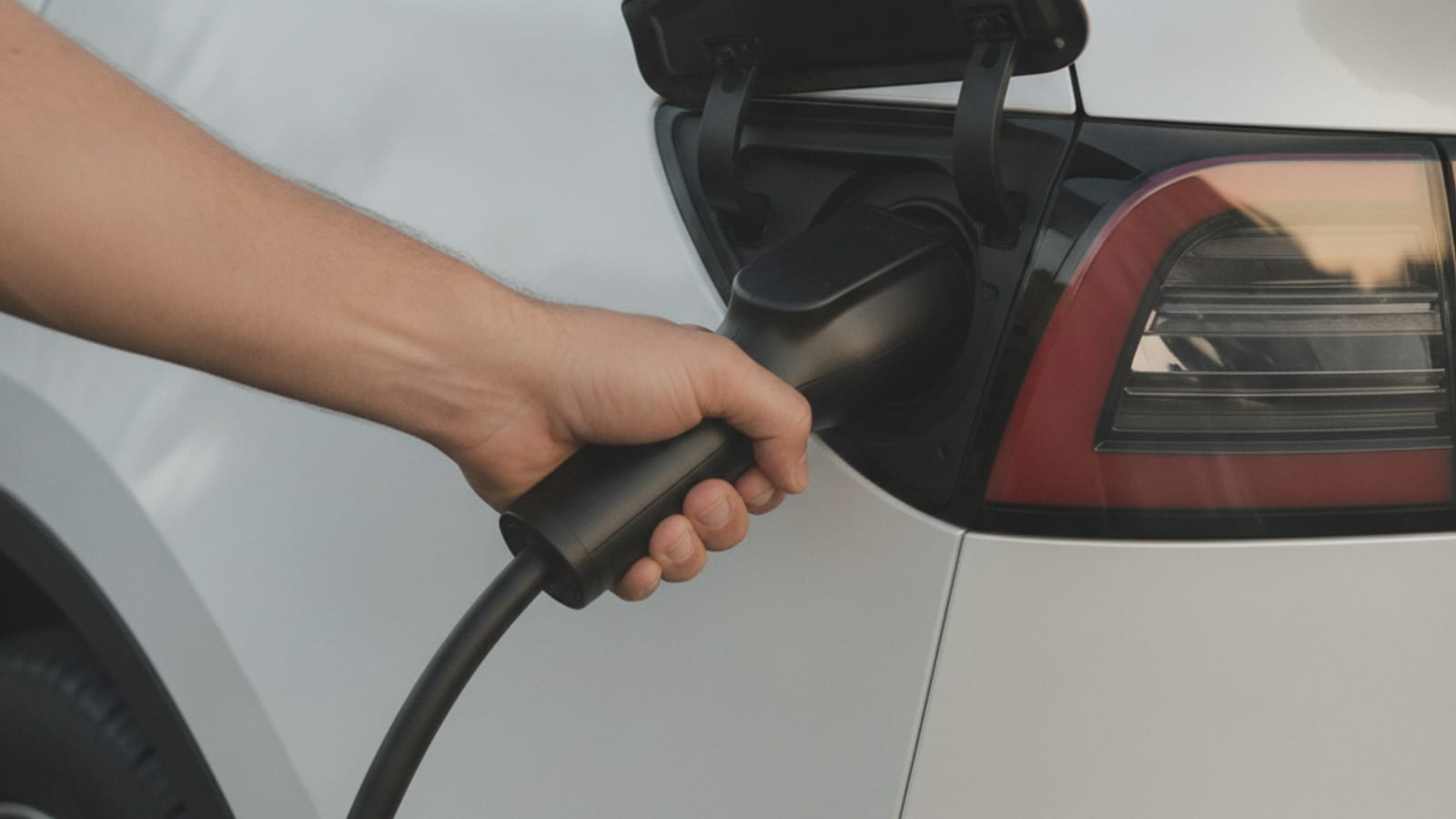
Why the port holds the cable
The latch isn’t a courtesy clip. It keeps a live connector from being yanked mid-session. It also stops a passerby from unplugging you at home. It does the same at a paid stall. A small solenoid lives inside the port. It pulls the latch back when the car ends the session. No command means the handle stays put. No 12-volt power means the same thing.
NACS is what Tesla and a growing set of other EVs use. J1772 is still common on Hyundai, Kia, Chevy, VW, and Ford ports around the bay. Adapters don’t change the lock. The car holds the connector until software says it’s done.
Do this before you hunt for a hidden cable
Stop the session in the car
A public stall can quit delivering power while the car still thinks it’s charging. The lock then stays engaged. On the screen, tap stop charging. Wait until the car confirms the session ended. Then press the handle button. Don’t pull while the car still shows an active charge. If the station screen and the car disagree, trust the car.
Wake the car, then reboot it
A sleeping EV can ignore a release tap. Open and close the driver door. Wait for the screens to come up. For a Tesla, hold both steering wheel scroll wheels until the display restarts. For a Rivian, hold the cruise stalk down until the system reboots. For most other brands, hold the power button until the car cycles. Try the handle again after the reboot.
Treat a weak 12-volt as the lock
The solenoid runs on the 12-volt battery, not the traction pack. Range on the pack doesn’t mean the latch can move. A fading 12-volt leaves the solenoid silent. Tampa Bay heat is hard on that small battery. Recurrent Auto publishes pack range loss in high heat. That research is about the traction pack, not the 12-volt. The 12-volt still lives in the same climate.
If the car is sluggish, start with the 12-volt. Dim screens and fussy doors are the same hint. Jump the 12-volt before you fight the port. Our jump-start walkthrough covers the safe order. After a jump, send the release command again.
Where this actually happens around the bay
This is a stall problem more than a shoulder problem. You’re occupying a charger. The next driver is waiting.
Tampa International Airport is the clearest local example. The airport publishes free EV charging at on-airport parking garages and the cell phone lot. The Economy Garage has Level 1 J1772 stations on the first floor. Level 1 is also in the Long-Term Parking Garage. Level 2 is at the Cell Phone Lot. A car that sat through a trip can come back with a weak 12-volt. The handle then won’t let go. Details live on our Tampa International Airport charging page.
Pinellas condo and HOA parking makes public stalls part of daily life. Florida Statute 718.113(8) lets a condo owner install a charger in their limited common element or exclusive space. The owner bears that cost. Plenty of owners still use shared public posts in the garage. Some use a post down the street. A locked cable there blocks the only charger on that floor.
Westchase, Fish Hawk, and Lakewood Ranch driveways tell the same story. 240-volt home charging is near-universal there. A wall connector locks the handle the same way a public NACS stall does.
You can also freeze a stall at a Supercharger in Tampa. The same thing happens at a shopping-center Level 2 in St. Petersburg or Clearwater. Same lock. Same order of checks. For a wider map of local charging context, start at the Tampa Bay EV charging hub.
Handle latch failures happen too. An older Tesla Mobile Connector can have a tired button. A public cable can have the same wear. The button no longer fully depresses. That’s a cable problem, not a car problem. If another stall is open, try a different handle before you strip interior trim.
The manual release, grouped by where you reach it
Makers know the solenoid fails. There’s a mechanical pull on every major EV. Hold the release while you ease the connector out. Don’t rip trim to get there.
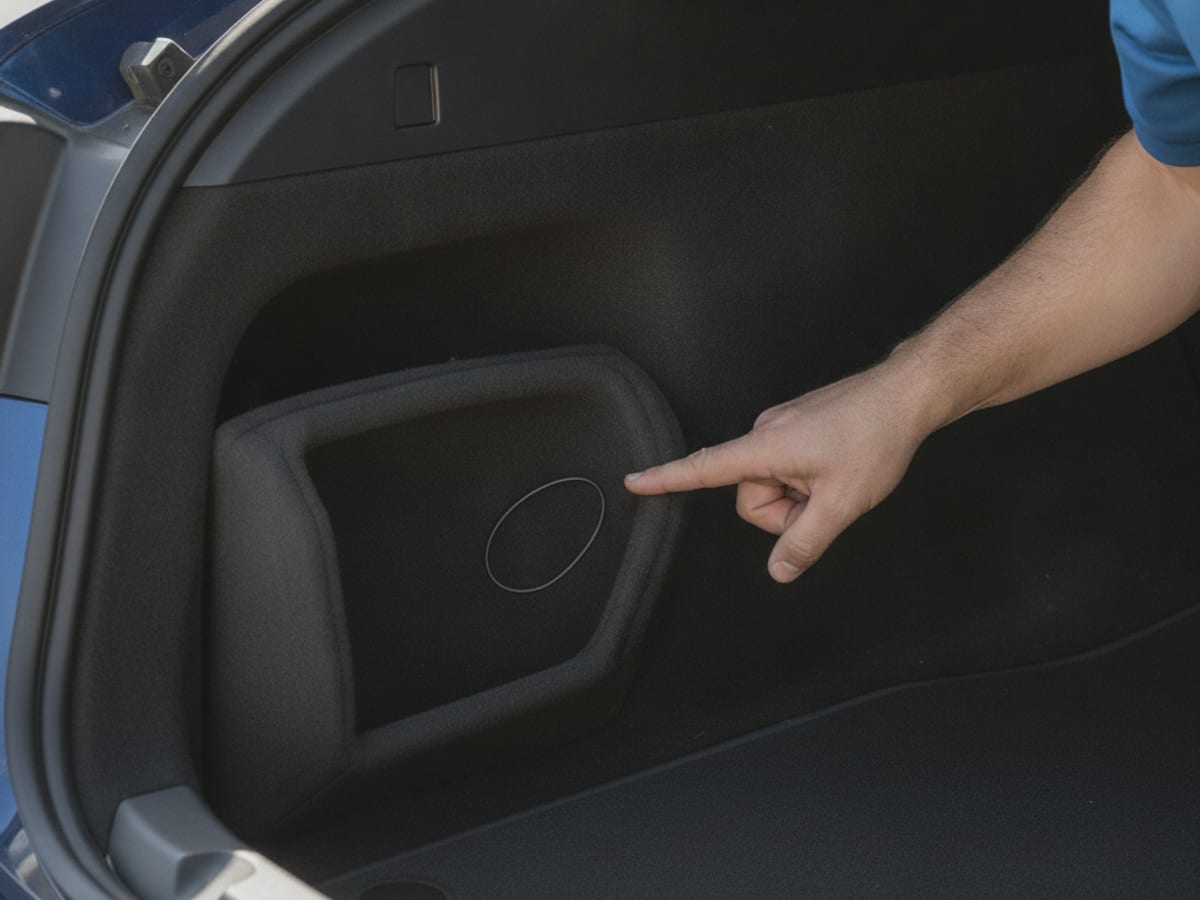
Tesla Model 3 and Model Y: passenger trunk wall
Open the trunk. On the passenger side, peel the carpeted inner trim. Remove the small access panel. Behind it is a plastic tab on a cable. Pull that cable down and hold it. Slide the charge handle out while you keep tension.
Tesla Model S and Model X: hatch trim
Open the rear hatch. On older S and X, look on the driver side. The cable sits behind the taillight area, under a carpeted panel. Pull the release toward you. On 2021 and newer refresh S and X, look in the passenger-side trunk trim. That layout is closer to the Model 3.
Rivian R1T and R1S: under the rear seat
Open the rear passenger door. Lift the rear seat bottom. A service panel hides the cord. Pull it firmly, then remove the handle.
Ford F-150 Lightning and Mustang Mach-E: a tab on the port
Ford put the override on the port housing. Open the charge door. Find a small triangular tab with an unlock icon. It sits near the top or bottom edge. Pull the tab away from the port. Pull the cable at the same time. On a Lightning, FordPass can still send a release if the truck is otherwise quiet. Humidity and a dead 12-volt on the Mach-E have their own walkthrough. See the Mustang Mach-E charge port stuck guide.
Hyundai Ioniq 5, Kia EV6, and Kia EV9: cargo sidewall
In the rear cargo area, on the driver-side sidewall, pop the plastic cover. Press and hold the small button. Pull the charge cable while you hold it. Ioniq 5 owners can follow the dedicated steps in how to free a stuck Hyundai Ioniq 5 charge cable.
Chevrolet Bolt: under the cargo floor
Lift the rear cargo floor. The release cord sits near the 12-volt area. Pull the cord and the handle together.
Polestar 2 and Volkswagen ID.4: trunk hinge or C-pillar
On the Polestar 2, look in the trunk near the driver-side tailgate hinge. The cord sits behind a small trim panel. On the ID.4, lift the cargo cover. Find a labeled pull loop on the passenger side, behind the C-pillar trim.
If the pull does nothing
Confirm the car is actually awake. Try the release a second time. Rock the connector gently side to side. Keep holding the manual pull while you do it. The latch can hang on the handle’s locking lip.
If that fails, stop. Brute force wrecks the port and the cable. Leave the connector in place. Don’t cut the cord. Don’t pry the door with a screwdriver. Walk away from the handle and get help.
A locked stall on private property
A posted shopping-center charger sits on private property. Florida Statute 715.07 lets the owner or lessee have an unauthorized vehicle removed when the signage meets the statute. Hillsborough and Pinellas both cap non-consent tow rates at the county level. Exact dollar caps weren’t confirmed against the live ordinance schedules. Check the Hillsborough County Tax Collector vehicle-for-hire page, or Pinellas Ordinance 19-39, before you argue a number. The posted tow-away sign is the one that matters in the moment.
On an interstate shoulder the rules are different. Florida Statute 316.194 covers a disabled vehicle off the travel lane when you can’t avoid stopping. FDOT Road Rangers in District 7 patrol I-4, I-75, and I-275. They’re reached at *347. Their published help covers jumps, fuel, and tires. They can also move a disabled car to a safer spot. Those materials don’t list charging an EV. A locked public-stall cable is usually a lot problem, not a Road Ranger problem.
Once the handle is out
Plug in again at a quieter stall and run a full session. If it ends and releases cleanly, you likely had a glitched session. If the lock fails a second time, schedule service for the solenoid.
If you needed a 12-volt jump to free the cable, plan a 12-volt replacement soon. The latch told you that battery is fading.
For Tesla help beyond the port, start at Tesla roadside rescue. For other brands, use non-Tesla EV rescue. Charge Pro TPA is a referral line. It matches you with independent local operators. Those operators quote you before they start and bill you directly.
Call (813) 536-4545 if the cable still won’t come out after a clean manual pull. Use that line if the car is too dead to reach the trim, or if you’re blocking a stall and can’t free the handle yourself.