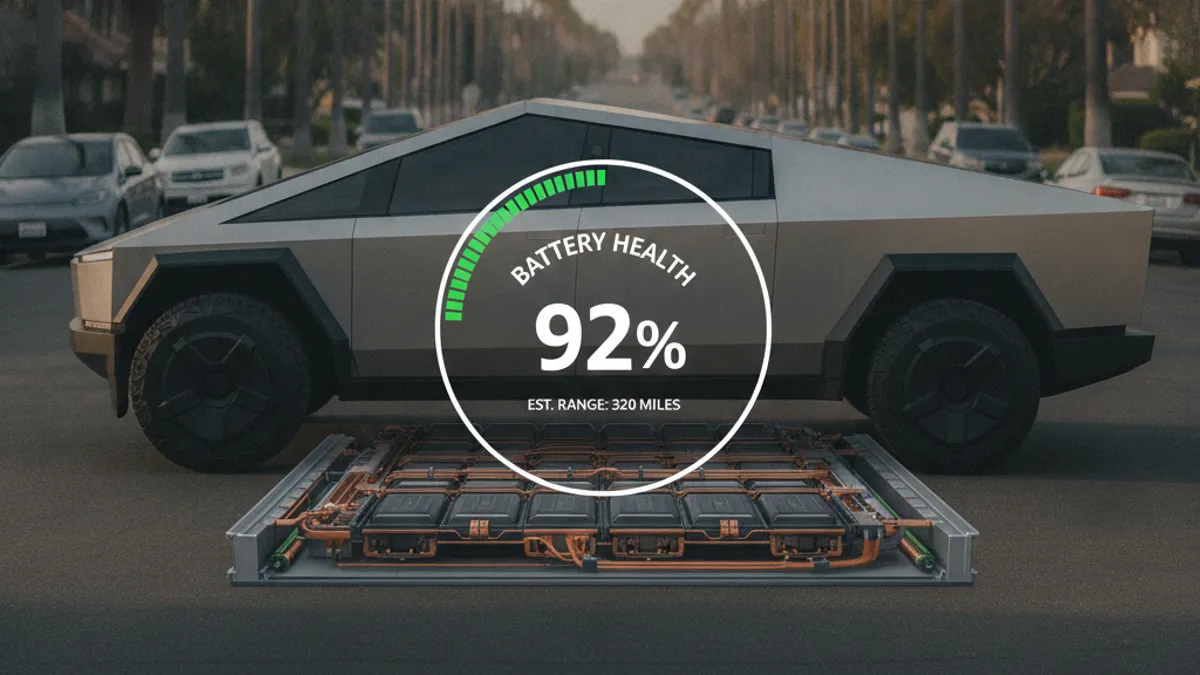
Tesla warrants the high-voltage pack for 8 years, with mileage caps by model. That’s the only published answer to how long Tesla batteries last. Capacity must stay at least 70 percent through that window. Tampa Bay heat is why drivers here still worry. Air conditioning runs from spring into late fall. We couldn’t confirm a Tampa-specific wear table from a primary source.
What Tesla actually published on pack life
It covers the high-voltage battery and drive unit together. Model S and Model X get 8 years or 150,000 miles, whichever comes first. Model 3 and Model Y Standard coverage is 8 years or 100,000 miles. Standard Range Plus uses that same year and mile window. Long Range or Performance Model 3 and Y get 8 years or 120,000 miles. VIN-specific terms in the Tesla app Specs and Warranty still control. That captured warranty PDF doesn’t cover Cybertruck. Warranty miles are coverage, not proven calendar life.
Heat on the dash isn’t pack death
A hot afternoon on I-275 can shrink the number on the dash. That drop is weather and cabin cooling, not a failed pack. Recurrent Auto measured about 5 percent range loss at 90°F. The loss jumps to 20 to 30 percent above 95°F. Recurrent also reports roughly 17 to 18 percent loss near 100°F. That heat effect still varies widely by model. Tampa Bay is flat and near sea level. A hill never gives that spent range back here. Gulf neighborhoods in St. Petersburg still run the compressor all afternoon. Inland Hillsborough often feels hotter once the bay breeze drops. Westchase, Riverview, Valrico, and Plant City sit in that inland heat. Pasco commutes on the Suncoast Parkway carry the same AC load. See How long a Tesla charge lasts in Tampa Bay heat for the daily-range version.
Two batteries wear on different clocks
Every Tesla carries two batteries with different jobs. The floor pack stores the miles that move the car. The 12-volt unit wakes locks, the screen, and the contactors. When the 12-volt dies, the car can look fully dead. The app may still show a healthy traction pack. That 12-volt failure isn’t pack aging at all. Heat here shortens 12-volt life more than owners expect. A Tesla left a week at Tampa International Airport is the classic case. TPA publishes free EV charging at on-airport parking garages and the cell phone lot. Cars that come back silent after a trip are usually the 12-volt. Start with How to tell a Tesla 12V is dead before you call.
Habits that add heat to the cells
Daily charging habits still matter in this heat. Frequent DC fast charging adds more heat cycling than home Level 2. Occasional Supercharging on a trip is normal ownership. Making it your only charge, day after day, is harder on cells. Sitting at 100 percent for long stretches stresses the cells. Tesla’s published daily-charge guidance for most cars is a mid-band window. Confirm the current limit in your model’s manual. Letting a car sit near empty for weeks is the other extreme. A Tesla parked in sun in Carrollwood soaks heat into the floor pack. Shade and a mid-band charge limit match this climate.
Home charging versus public plugs
Westchase, Fish Hawk, and Lakewood Ranch have almost no pre-1980 housing. 240-volt home charging is near-universal on those master-planned streets. Older stock in Lealman and St. Petersburg is a different wiring picture. Pinellas condos and beach HOAs often share parking. Florida Statute 718.113(8) covers a condo owner’s right to install a station. It has to sit in the limited common element or an exclusive space. A declaration can’t be enforced to prohibit a properly submitted request. The owner pays installation, operation, maintenance, insurance, and separately metered electricity. Condo and HOA owners often lean on public charging for daily miles. Tampa Electric serves the City of Tampa and most of Hillsborough County. Duke Energy Florida serves Pinellas County and much of Pasco. North and central Pasco is often Withlacoochee River Electric Cooperative. Home charging at a moderate limit is the gentler daily pattern. Don’t assume TECO or Duke if WREC is on the bill. Read How Tampa Bay heat and salt air wear down an EV battery next.
How to read remaining capacity
Tesla doesn’t show a phone-style battery-health percentage on the dash. Compare today’s maximum rated range to the original rated range. Both numbers live in the car’s settings. A small gap from the original rating is ordinary wear. A large, sudden drop is worth a service visit. That’s more likely a fault than slow aging. Before you buy a used Tesla, ask for the current max range. Compare it to the original rating for that model and year. Ask for VIN-specific battery terms in the Tesla app before you buy.
Pack replacement isn’t a shoulder job
A full traction-pack swap isn’t what a roadside operator does. Pack replacement is a shop and warranty question. Warranty details live in What Tesla’s battery warranty covers for Tampa Bay owners. Out-of-warranty pack questions start in What to know before you replace a Tesla pack. Independent operators we connect you with don’t replace a traction pack on the shoulder. They get you moving with a Level 2 charge or a 12-volt jump. Typical on-site charging adds 10 to 20 miles of range. That takes 15 to 30 minutes of charging time, never travel time. The operator quotes before starting and bills you directly. A Tesla that won’t wake is a Tesla roadside rescue call. FDOT Road Rangers in District 7 patrol I-4, I-75, and I-275. You reach them by dialing *347 from a mobile phone. They publish flat-tire help, a 12-volt jump, fuel, and water. Their published services don’t include charging an EV. Florida Statute 316.194 treats a dead EV on a shoulder as a disabled vehicle.
Frequently asked questions
Do Tesla batteries lose a lot of capacity over time?
Tesla warrants at least 70 percent capacity through the published year and mile window. We couldn’t confirm a Tampa-specific wear table beyond that. A sudden drop is a service issue, not ordinary aging.
Does Supercharging ruin a Tesla pack?
Occasional Supercharging on a trip is normal Tesla ownership. Using it as the only daily charge adds more heat cycling than home charging. Mix in slower home charging when you can.
Does Tampa Bay heat shorten Tesla pack life?
Sustained heat stresses lithium-ion chemistry in any climate. Recurrent Auto’s published figures describe daily range loss, not pack death. This metro’s long AC season is the local stress. Follow Tesla’s charge-limit guidance and park in shade when you can.
If your Tesla won’t wake in Tampa Bay, that’s a rescue call. Charge Pro TPA matches you with independent local mobile operators. We don’t own trucks, and we don’t set prices. Call (813) 536-4545 to reach the referral line.