An EV charger that keeps tripping the breaker isn’t a random glitch. The circuit can’t carry that Level 2 load as wired. In older St. Petersburg and Lealman homes, that’s the usual story. Census figures show 51.5 percent of St. Petersburg housing went up before 1980. In Lealman, 56.6 percent of housing is that old too. Those services were never planned for hours of Level 2 charging.
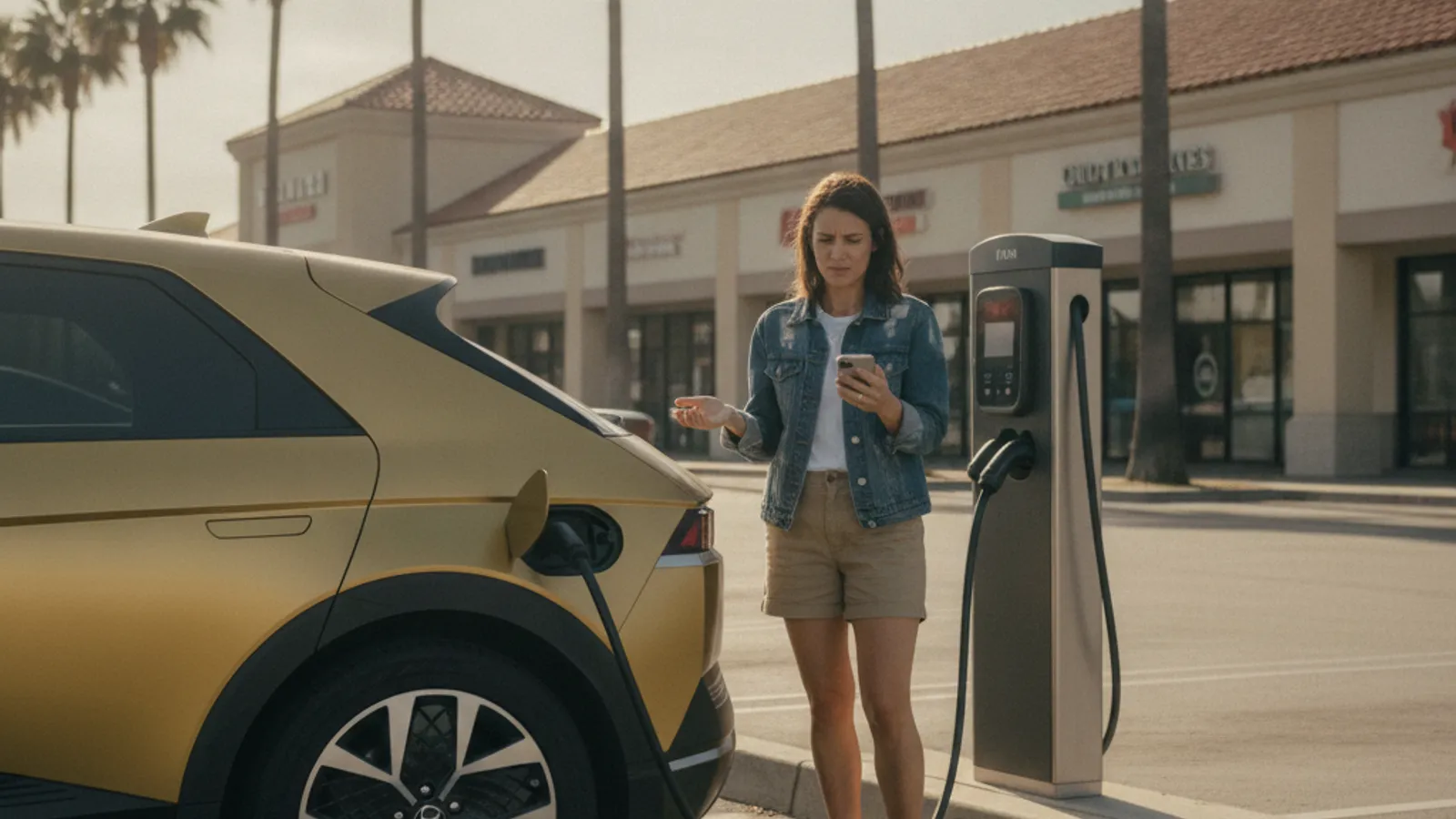
Pre-1980 Pinellas panels and a Level 2 load
Unlike a dryer that cycles, a Level 2 charger holds a heavy draw for hours. A shared garage circuit can already be near its limit. Add a freezer or a shop tool, and the breaker opens. St. Petersburg and Lealman still hold a large share of that older housing.
Newer master-planned tracts look nothing like that. Census figures put pre-1980 housing at 1.0 percent in Westchase. Fish Hawk sits at 0.8 percent, and Lakewood Ranch at 0.7 percent. 240-volt home charging is near-universal in those communities. If your house predates 1980, don’t copy a Westchase neighbor’s setup.
A St. Petersburg or Lealman address is usually a Duke Energy Florida account. Tampa Electric covers Tampa, most of Hillsborough, and only parts of Pinellas. Confirm the utility name on your bill first.
Charge Pro TPA refers help. It doesn’t rewire houses.
We’re a referral line for stranded EV drivers. We match you with independent local mobile operators. We don’t hold an electrical license, own trucks, or employ technicians. We don’t pull permits or install chargers. A licensed electrician owns any panel or circuit work. This guide helps you describe the trip pattern clearly. The pros we connect you with can add curb range while you wait.
Time the trip before you guess the cause
One pop after a storm can be a coincidence. A trip on every plug-in is a pattern. Write down when it opened and what else was running. That log is what the electrician needs.
The handle flips the moment the plug seats
Think ground fault, a wet receptacle, or a bad EVSE. Don’t keep resetting the same breaker after it trips. The breaker is protecting the circuit from a real fault.
It holds, then dumps after a stretch
That delay usually points at an overloaded circuit. The circuit is too small, or it’s sharing load. A dedicated circuit sized for the charger’s amperage is the usual repair. That’s electrician work, not a car setting.
It only happens after rain, wash-down, or sprinklers
Humidity and salt air get into outdoor receptacles across Pinellas. Hurricane Helene pushed record storm surge into Tampa Bay in late September 2024. Hurricane Milton hit in early October 2024. It dropped at least 18 inches of rain on parts of St. Petersburg. Moisture inside a NEMA 14-50 can trip a GFCI for real. Dry the outlet and the connector before you retry. If it trips again, call a licensed electrician.
Two ground-fault systems on one receptacle
Most Level 2 EVSE units already watch for a ground fault. Plug-in installs often land on a GFCI receptacle too. That stacks two ground-fault watchers on one circuit. The EVSE sends a small test current to ground to confirm an earth path. An external GFCI can read that current as a fault. Electricians often hardwire the station so it isn’t sitting on a GFCI outlet.
When the wall unit or cable is the problem
A small panel is the usual suspect in Lealman and older St. Pete. The wall EVSE can still develop an internal fault. The portable cable that shipped with the car can too. It then trips the breaker every time it tries to deliver full power. Try a different charger on the same outlet if you can do it safely. If the second unit holds, the first unit is the likely culprit. If every charger opens the same breaker, look at the house wiring.
What the pattern usually means
| Pattern | Likely cause | Whose job |
|---|---|---|
| Trips at plug-in, every session | Ground fault, moisture, or a bad EVSE | Electrician, or test another EVSE first |
| Opens after minutes of charging | Undersized or overloaded circuit | Electrician |
| Only with another load running | Shared circuit | Electrician |
| Only after rain, surge, or sprinklers | Moisture in the outlet or connector | Dry it, then electrician if it repeats |
| One cable trips, another doesn’t | Faulty charging equipment | The charger maker, or a replacement |
What you’re safe to check
Reset the breaker one time and watch what it does. Look for water, rust, or corrosion on the outlet and the plug. Write down the other loads on that circuit. Don’t open the panel to inspect wiring yourself. Don’t keep flipping the breaker hoping it holds.
Credits, condos, and the wait on a real fix
An electrician has to see the panel, the run, and the charger rating. That work follows the electrician’s schedule, not yours. Duke Energy Florida serves Pinellas County and much of Pasco. Duke’s Charger Prep Credit is a one-time credit toward Level 2 wiring upgrades. The credit applies to homes and to businesses. It doesn’t cover the charger hardware or permit fees. Confirm current rules on Duke’s program page before you count on it. Duke also runs an Off-Peak Charging Credit. Confirm the live amount with Duke.
Tampa Electric serves Tampa and most of Hillsborough, plus parts of Pinellas and southern Pasco. TECO’s Drive Smart program is aimed at commercial and public chargers. A named residential home-charger rebate wasn’t found on TECO’s primary EV pages. North and central Pasco drivers are often Withlacoochee River Electric Cooperative members.
Florida Statute 718.113(8) covers condo EV charging stations. A unit owner may install one in their limited common element. An exclusively designated parking space counts too. A declaration can’t block a properly submitted request. The board can’t deny it when the paperwork is right. The owner still pays installation, operation, maintenance, insurance, and separately metered electricity. You still need a licensed electrician. No verified typical price for this repair turned up for the metro. Get a written quote before any work starts.
For the panel itself, read panel upgrades for a home EV charger. For install versus a curb charge, see home charger install versus a roadside rescue.
Keep range on the car while the circuit is open
You don’t have to sit on an empty pack during the wait. Independent operators we refer bring a 240-volt Level 2 source to the bumper. They use a native NACS plug for Teslas. Non-Tesla EVs get a CCS or J1772 adapter. Typical charging time adds about 10 to 20 miles of range. That’s in 15 to 30 minutes of charging. That’s session time, never an arrival time. The operator quotes you before work starts and bills you directly. Charge Pro TPA doesn’t set prices and doesn’t own the equipment.
If overnight Level 2 is down, mobile EV charging is the bridge. Home 240-volt charging versus a roadside charge helps you size the curb session. A regular 120-volt outlet may trickle some range back. See what a Level 1 charger is, and why it isn’t enough here.
Frequently asked questions
Is it safe to keep resetting a breaker that trips on the charger?
No. If it trips more than once or twice, stop. Call a licensed electrician.
Can a bad EV charging cable trip the breaker?
Yes. An internal fault in the cable or EVSE can trip a healthy circuit. Test another charger or outlet when you can do that safely.
Does Charge Pro TPA install or repair home EV chargers?
No. We’re a referral line, not an electrical contractor. For a breaker problem, you need a licensed electrician. For a mobile charge while you wait, call Charge Pro TPA at (813) 536-4545. We’ll connect you with an operator who quotes before starting.