Your EV charging stopped at a random percentage after a hot Tampa drive. Cabin AC and pack heat usually cut that session short. That’s the battery protecting itself, not a setting you forgot.
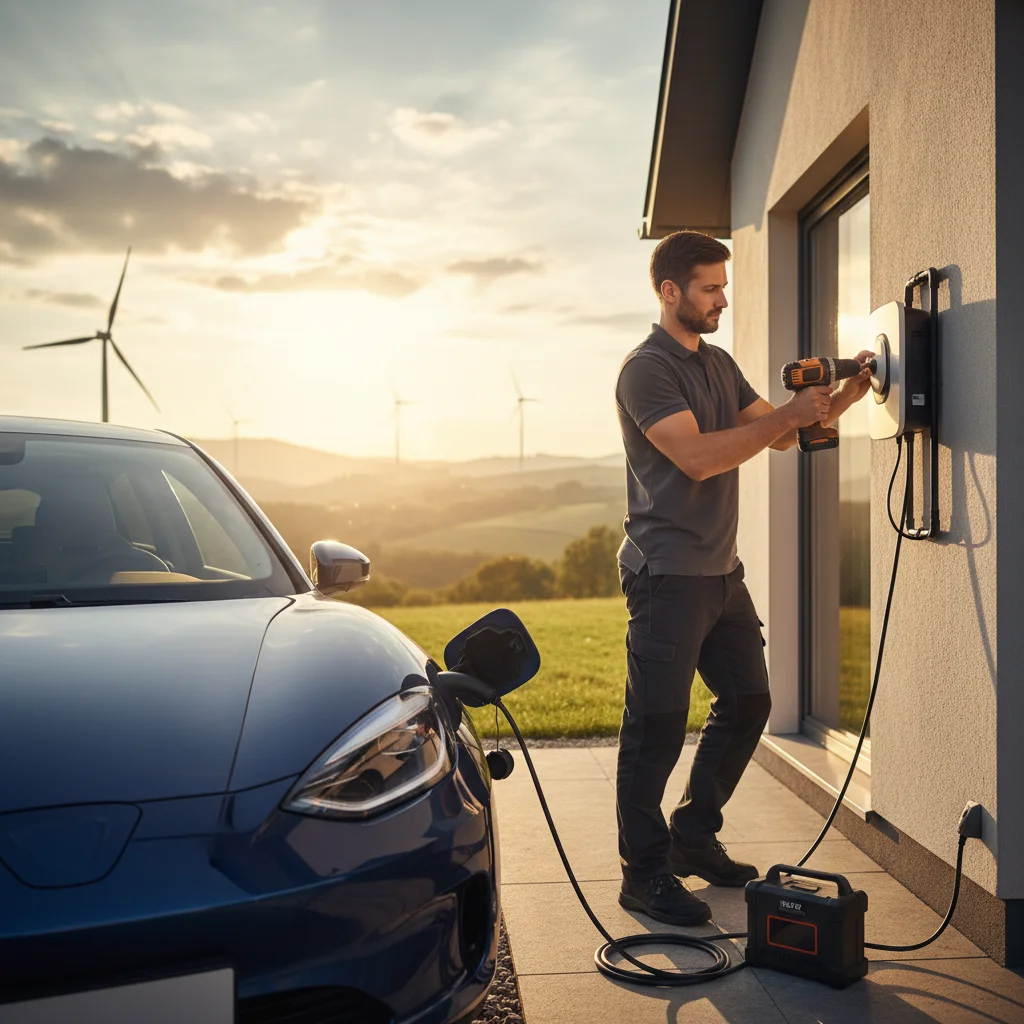
Same percent every time is a limit you set
Open the app or the center screen before you chase heat. Most EVs let you cap daily charging around 70 to 90 percent. That cap protects pack health on ordinary Tampa Bay days. A full charge is for a longer trip. If every session ends on that same number, you set it. Random stops land at different percents with no matching setting.
Heat and AC cut charges across Tampa Bay
Tampa Bay’s air-conditioning season runs from spring into late fall. The pack is already working hard before you even plug in. Charging adds heat on top of the drive and the cabin cooling. The battery management system watches temperature, not the dash percent.
Recurrent Auto publishes the range-loss numbers that match this climate. An EV loses about 5 percent of range at 90°F. Loss rises to 20 to 30 percent above 95°F. Near 100°F, Recurrent reports roughly 17 to 18 percent, and models vary. Those figures describe driving range, not a charger fault. The same heat is what pauses a charge mid-session.
This metro is flat and near sea level. Grade never gives range back here. Heat and AC are the whole local range story. After I-75 toward Wesley Chapel, the pack is already warm. The Veterans Expressway through Citrus Park does the same thing. A run on I-4 toward Plant City loads the pack the same way. A DC fast stall right after that drive can slow, then stop. The percent looks random because each trip’s heat is different.
A cool garage start isn’t a sun-soaked start
A car that cooled in a Westchase garage starts a session in better shape. The same car in a Town ‘n’ Country sun lot starts already hot. Westchase, Fish Hawk, and Lakewood Ranch are newer master-planned housing. Census figures put them among the newest stock in this metro. 240-volt home charging is near-universal on those streets. Overnight Level 2 there often starts with a cooler pack.
Pinellas condo parking is a different start. Florida Statute 718.113(8) lets a unit owner install a charger. It has to sit in their limited common element or exclusive space. Until that station exists, many Pinellas drivers charge in public heat.
A post-flight plug at Tampa International Airport can hit the same pause. On-airport garage and cell-phone-lot charging is published as free. A pack that’s hot from the drive can still stop early.
Utility programs don’t override pack temperature
Tampa Electric serves Tampa, most of Hillsborough, and parts of Pinellas and southern Pasco. Duke Energy Florida serves Pinellas County and much of Pasco. North and central Pasco drivers are often Withlacoochee River Electric Cooperative members. Don’t call TECO or Duke for a WREC meter. Duke publishes an Off-Peak Charging Credit for residential charging windows. Confirm those windows with Duke before you plan around them. Afternoon charging can still overheat a pack, credit or not. TECO’s Drive Smart program is a commercial and public charger incentive. None of those programs tell the BMS to ignore heat.
Cabin AC on a public stall
Leaving climate control on during a public charge is common here. I-275 between Tampa and Pinellas bakes the cabin on a slow day. The car keeps cooling while the pack is already warm. The BMS can then pause at whatever percent you happened to have.
Fast charging makes more heat than Level 2
A DC fast charger pushes power quickly, and that makes heat. Neighboring stalls can share a cabinet and split output. If random stops happen only on public DC, try Level 2. If home Level 2 finishes and DC doesn’t, blame the stall. A cable that says connected and never starts is a different stall fault. See public charger connected but not charging for that version. Overnight charging in Carrollwood or Temple Terrace is your control test. If that session always completes, the car’s limit isn’t the story. A hot afternoon stall that dies early is temperature and station load.
Checks that actually help
Confirm the charge limit in the app and on the screen. Note whether the pack felt hot when you plugged in. See if the stops cluster on hot afternoons with AC running. Compare a home Level 2 session with the public DC stall. Let the car sit after a highway run before you plug in. Fifteen to twenty minutes of rest often sheds enough heat. Shade, or an early morning session, avoids the worst cabin-AC load. That’s patience, not a repair.
If stops happen on cool mornings in shade, heat is a weak explanation. Then look at a weak 12-volt battery. The 12-volt keeps the charging computer awake through a session. A fading 12-volt can kill charging in a way that looks random. Start with what happens when an EV 12-volt battery dies in Tampa Bay. Heat and salt air also wear the pack over years. For slower pack wear, see our Tampa Bay heat and salt air battery care guide.
When a short session leaves you without range
A paused charge can leave less range than you planned. See how long a Tesla charge lasts in Tampa Bay heat for that daily math. If you’re already low, get off the travel lane. Florida Statute 316.194 covers a disabled vehicle on the highway. You may remain when it’s impossible to get off the pavement. Use a shoulder or a safe lot. The Selmon reversible lanes have no local surface shoulder on the elevated segment. Don’t plan to wait out a charge pause there.
FDOT Road Rangers in District 7 patrol I-4, I-75, and I-275. Dial *347 from a mobile phone. Published services include tire help, a 12-volt jump, and fuel. They can also bring water, make two local calls, and move you. Those materials don’t mention charging an EV. Florida Highway Patrol Troop C handles disabled vehicles on the interstates. None of that puts electrons in the pack.
Charge Pro TPA is a referral line, not a shop. We match stranded drivers with independent local operators. We don’t own trucks and we don’t employ technicians. We don’t set prices and we don’t promise an arrival time. The operator quotes you before starting and bills you directly. The pros we send bring a 240-volt Level 2 source to the car. They use a native NACS plug for Tesla. Non-Tesla EVs get a CCS or J1772 adapter. Charging time typically adds 10 to 20 miles in 15 to 30 minutes. That’s charging time, never an arrival time. They can also jump or replace a dead 12-volt on site.
If the session left you short, mobile EV charging gets a charge to the bumper. Our EV running low on battery guide covers stretching a partial charge. Call Charge Pro TPA at (813) 536-4545 when you need that match. The operator, not this line, does the work.
Frequently asked questions
Why does my EV charging stop at a random percentage?
The battery management system is watching pack temperature, not a fixed percent. Cabin AC and a hot Tampa Bay drive raise that temperature before you plug in. The stop follows heat, so the number on the dash changes with the trip.
Does an early heat stop hurt the battery?
No. The system is protecting the pack. Letting it cool, then finishing later, is the safer path. Forcing a full charge on a hot pack is what the BMS blocks.
Could a random stop mean something is actually wrong?
Yes, if it happens in cool weather, in shade, and on every charger type. A weak 12-volt is the usual non-thermal cause. Have that checked if the pattern doesn’t follow the heat.