A Cadillac Lyriq that won’t start in Tampa Bay is usually the 12-volt. Heat, a long sit, and post-storm drain do the damage. The Ultium pack can still show plenty of range. The auxiliary battery that boots the car is what failed.
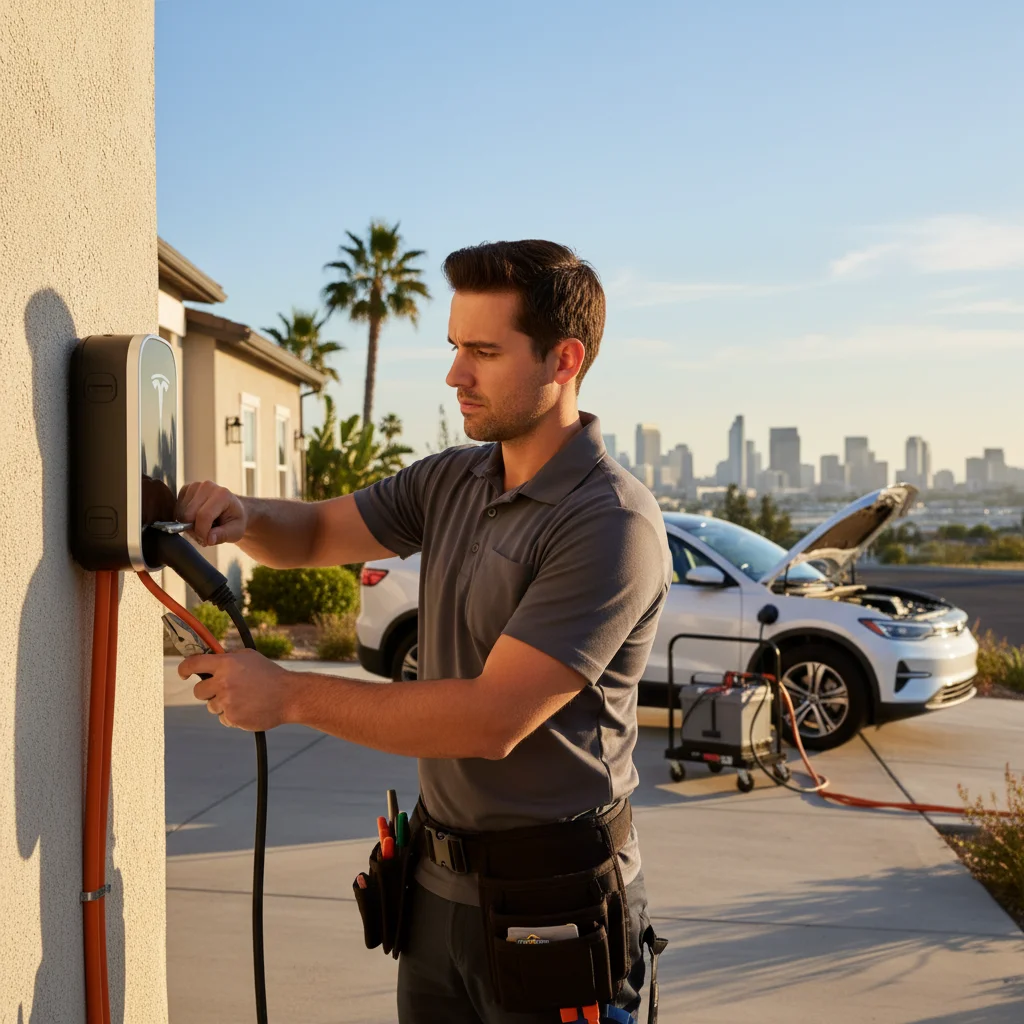
Heat, sitting, and post-storm drain
Tampa Bay runs a long air-conditioning season from spring into late fall. Recurrent Auto’s published range work is the figure to cite. An EV loses about 5 percent of range at 90°F. Loss jumps to 20 to 30 percent above 95°F. Near 100°F, Recurrent sees about 17 to 18 percent loss. Recurrent notes that the effect varies widely by model. That same heat sits on the Lyriq’s 12-volt in the frunk.
The traction pack drives the motors, and the 12-volt runs everything else. Locks, screens, and the modules that bring high voltage online all depend on it. If that small battery dies, the car stays dark. A full Ultium pack doesn’t save a dead 12-volt.
Lakewood Ranch, Fish Hawk, and Westchase have some of the newest housing here. Pre-1980 homes are about 0.7, 0.8, and 1.0 percent there. 240-volt home charging is near-universal in those communities. A Lyriq can still refuse to start after a hot weekend in the garage. It was plugged in, and the 12-volt sagged anyway. Heat and salt air also wear the pack over time. Tampa Bay EV battery care covers that slower damage.
Pinellas and the beaches have a large condo and HOA population. Florida Statute 718.113(8) covers condo charger installs. A unit owner may install one in a limited common element or assigned space. The board can’t deny a properly submitted request. The owner still pays install, operation, and separately metered power. Condo and HOA owners in Pinellas and the beaches often live on public charging. A car that sits for days often wakes with a dead 12-volt.
Hurricane Helene in late September 2024 drove record storm surge at Tampa Bay gauges. St. Petersburg faced a forecast 5 to 8 feet of surge. Pinellas barrier islands from the Dunedin Causeway through Tierra Verde were closed. Hurricane Milton in early October 2024 largely spared Pinellas a second catastrophic surge. It still dropped at least 18 inches of rain on parts of St. Petersburg. Ruskin, Apollo Beach, and Gibsonton sit in evacuation zones with low-lying Pinellas. Cars that sat through those outages often come back with a drained 12-volt.
Vaisala ranks Florida among the most lightning-dense states in the country. Count Tampa Bay as one of the most lightning-prone metros, per Vaisala. A nearby strike or a brief outage can interrupt a charge session. Ultium modules sometimes hang the next morning after that kind of cut.
Federal and fire-service guidance warns about EVs soaked in salt water. A soaked pack can fail later, even after the car looks dry. Keep a flooded Lyriq away from structures and other vehicles until it’s inspected. Don’t treat a flooded no-start as a simple jump.
Tampa International publishes free EV charging in airport garages and the cell phone lot. A Lyriq left for a week that won’t wake is almost always the 12-volt. Tampa International Airport EV charging walks through those garages.
How to read a Lyriq that won’t go Ready
The Lyriq’s pillar-to-pillar display is about 33 inches on the diagonal. When that screen is black, start with the 12-volt. Don’t assume you drove the pack to empty.
A dark cabin and a silent fob point to a dead 12-volt. Doors that still unlock with a dim screen usually mean a low 12-volt. A screen that boots, then dies, often means a module boot loop. A normal screen with a “Service EV System” warning is an Ultium fault. Service High Voltage Charging System means the same kind of stop. The myCadillac app can still show charge while Ready stays locked out.
Other brands follow the same 12-volt failure pattern. The high-voltage pack is often fine, and the computers never wake.
If the app shows a true empty pack, that’s a different job. Out-of-charge recovery brings a 240-volt Level 2 source to the bumper. Operators use a CCS adapter on GM cars like the Lyriq. A roadside charge typically adds 10 to 20 miles in 15 to 30 minutes. That’s charging time on site, never an arrival time.
The Escalade IQ sits on the same GM Ultium family. Cadillac Escalade IQ won’t start covers the same 12-volt path on that SUV.
Checks in the driveway before you call
Pop the frunk with the fob if it still has charge. The 12-volt sits toward the driver’s side under a plastic cover. Use the interior release while the 12-volt still has a trickle of charge. If the 12-volt is fully dead, the frunk latch is electric. The owner’s manual describes an emergency frunk release cable. It runs along the driver’s-side frunk floor behind the front bumper cover. Confirm that path in your own manual before you pull anything.
Jump points sit on a dedicated bar in the frunk, not on the battery posts. The positive post has a red cap, with a chassis ground bolt nearby. Connect a quality jump pack to those points. Wait 60 to 90 seconds, then press start. Connecting straight to the battery posts is the wrong move on this car.
Read how to jump start an electric car without damage if you’re unsure about polarity. A wrong clamp on an Ultium car can wreck a module.
If the 12-volt looks healthy and Ready still fails, try a full power cycle. Disconnect the negative 12-volt terminal and wait a full two minutes. Reconnect, listen for relays, then try a normal start. That clears a stuck BMS or body-control hang. Those hangs show up after a long park or a cut-off charge. A failed over-the-air update can do the same thing. It doesn’t fix failed hardware, so persistent warnings belong at a Cadillac dealer. Don’t force a charge session on a car throwing active Ultium faults.
If the Lyriq died on a Tampa Bay road
Stay off the travel lane and get onto the shoulder if you can. Florida Statute 316.194 covers stopping outside a business or residence district. Get the car off the paved travel lane when that’s possible. A disabled EV on the shoulder is covered when you couldn’t avoid stopping there.
FDOT Road Rangers in District 7 patrol I-4, I-75, and I-275. They also cover the airport interchange on that same beat. A stranded motorist reaches them by dialing *347 on a mobile phone. Published services include a 12-volt jump, fuel, and tire help. They can also make two local calls and move a disabled vehicle. The materials we reviewed don’t list charging an EV. A 12-volt no-start on I-275 may still get a jump from that patrol. An empty pack still needs a mobile charge. Florida Highway Patrol Troop C covers disabled vehicles on those interstates. Florida 511 is the state’s traffic-information system.
The Selmon Expressway’s reversible lanes run about 10 miles between Brandon and downtown Tampa. They’re an elevated median bridge with no local surface shoulder. THEA clears those lanes of all traffic before each reversal. A Lyriq that dies on the REL is a high-risk stop. Use Road Rangers or Troop C to get to a safer spot first.
The Veterans Expressway and the Suncoast Parkway are all-electronic Turnpike roads. The Suncoast is a long, fast Pasco run with widely spaced exits. North and central Pasco power is often Withlacoochee River Electric Cooperative. Don’t assume a Pasco driveway is on TECO or Duke. That utility split doesn’t change a 12-volt no-start. It still changes who you call later about home charging.
The Sunshine Skyway’s main span sits 432 feet above the channel. It’s about 4 miles of bridge with no place to stop. A no-start after the Skyway in Palmetto or Bradenton is usually the 12-volt. Tampa Bay is flat and near sea level, so grade never gives range back. Heat and air conditioning are the whole range story here.
What a local operator can do on a Lyriq
Charge Pro TPA is a referral line for stranded EV drivers in Tampa Bay. It matches you with independent local mobile rescue operators. It doesn’t own trucks, employ technicians, or hold a trade license. It doesn’t set prices or promise an arrival time. The operator quotes you before work starts and bills you directly.
Non-Tesla EV rescue is the path for GM Ultium cars, including the Lyriq. The pros we connect you with jump or replace a dead 12-volt on site. They can also bring a 240-volt Level 2 source to the bumper. On a Lyriq they use a CCS adapter. They handle Tesla and every major EV brand. The pros we connect you with are licensed and insured.
If a private lot tows the car, county caps apply. Hillsborough sets non-consent tow caps through the Tax Collector’s vehicle-for-hire authority. Pinellas County Ordinance 19-39 sets the same kind of cap. Confirm the live posted schedule with the county before you pay. A specific dollar figure wasn’t confirmed against the current ordinance.
Frequently asked questions
How do you jump a Cadillac Lyriq?
Open the frunk with the interior release or the fob. Find the jump bar under the driver’s-side frunk liner. Clip the jump pack to the red-capped positive post. Clip the negative to the nearby chassis ground bolt. Wait 60 to 90 seconds, then press start, and skip the battery posts themselves.
Can a Lyriq refuse to start with a full Ultium pack?
A stuck BMS can block Ready even when the app shows a full pack. Disconnect the 12-volt negative for two minutes, then reconnect. If warnings return, you need a dealer scan, not another jump.
Why does the 33-inch screen go dark?
That display runs on the 12-volt system, not the traction pack. A dead 12-volt leaves the screen, locks, and computers with no power.
For a Cadillac Lyriq that won’t start, call Charge Pro TPA at (813) 536-4545. We’ll connect you with a local operator who quotes before work starts.