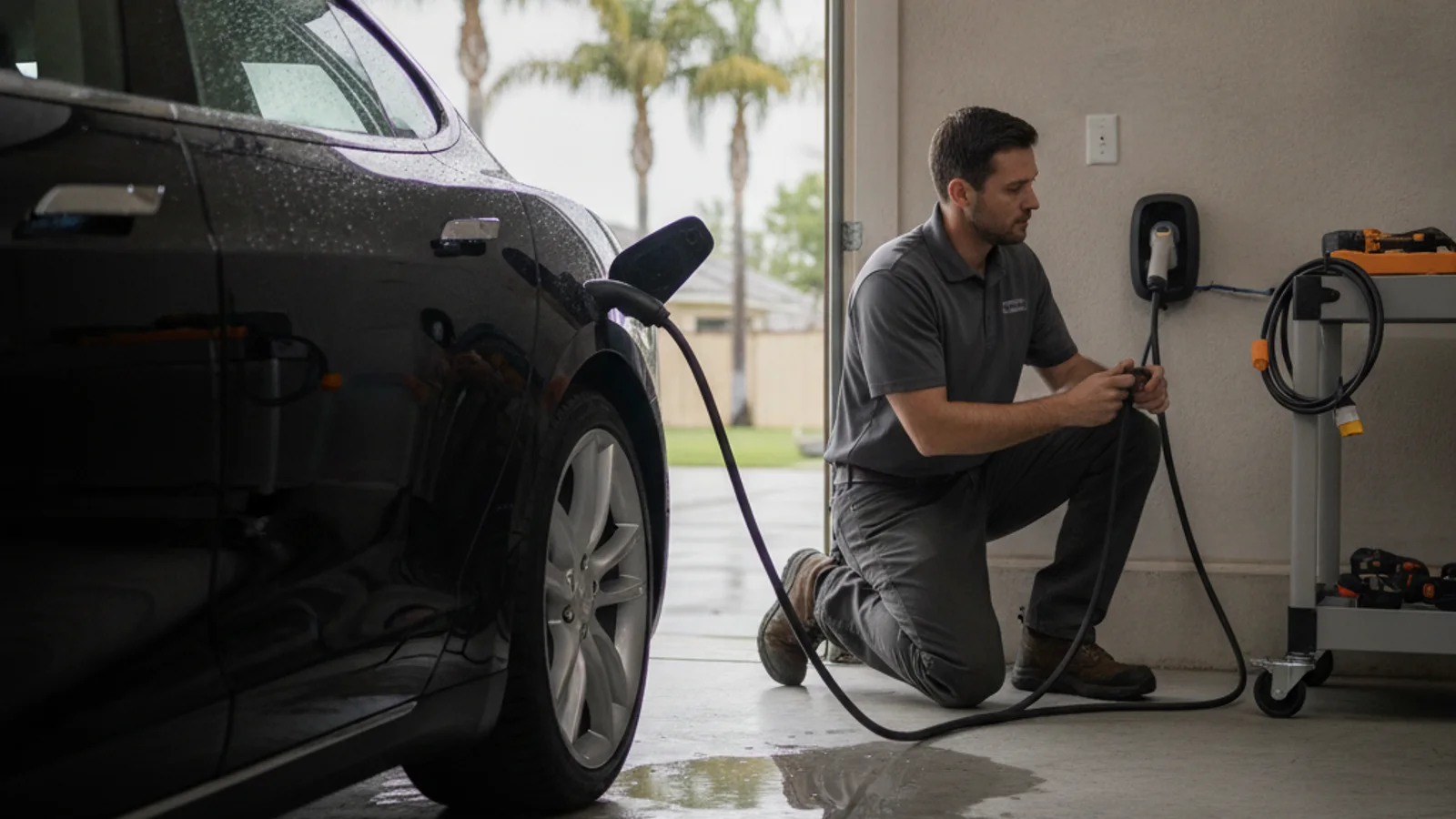
A Tampa Bay driver who plugs in after a storm and finds the port wet is seeing a common pattern. Florida is among the most lightning-dense states in the country. Storms drop rain on a parked car every week in summer. Surge from Helene and Milton in 2024 pushed salt water into cars that sat in flood zones. A wet charge port will not charge. The fix is to dry the port before you plug in.
Why water in the port is a problem
Most EV charge ports use a small signal pin to handshake with the charger. Water on the pins breaks the signal. The car and the charger both think there is a fault. The charge session does not start. The dashboard may show connected but not charging. The driver has to dry the port before the charge will start.
A driver who tries to force a charge on a wet port can damage the pins or the connector. The right move is to dry the port first.
For the broader connected-but-not-charging pattern, see our public charger not charging guide.
What to do when the port is wet
The first move is to dry the port. A clean microfiber towel works. A driver who plans for the wet port keeps a small towel in the trunk. Wipe the port and the connector dry before you plug in. Wait a few minutes for the pins to dry if the storm was heavy.
The second move is to wait. A charge session that will not start after drying may need a few minutes for the system to reset. Unplug, wait, plug in again. The handshake should start.
The third move is to call a referral line if the charge still will not start. Charge Pro TPA is a referral line. It matches stranded EV drivers with independent local operators. The operator brings the right gear and can recommend next steps. The operator does not tow.
For the broader charger-not-working pattern, see our Cost and coverage explainers.
What a saltwater event looks like
Hurricane Helene drove record storm surge at Tampa Bay gauges in late September 2024. Pinellas barrier islands from the Dunedin Causeway through Tierra Verde were closed. Hurricane Milton dropped at least 18 inches of rain on parts of St. Petersburg in early October 2024 and damaged the Tropicana Field roof.
A car that sat in saltwater during Helene or Milton may have a damaged high-voltage system. NHTSA publishes saltwater-EV guidance. A car with saltwater intrusion should not be charged. A flatbed to a dealer is the right answer. Confirm with NHTSA and your insurance before moving the car.
For the broader storm pattern, see our mobile EV charging vs home battery explainer.
What to tell the operator on the call
State the model, year, and trim. Say whether the port is wet or whether the car sat in saltwater. Say whether the charge session started and stopped, or never started. Share the nearest cross street. The operator uses that to bring the right gear and quote before work starts.
Charge Pro TPA is a referral line. It matches stranded drivers with independent local operators. It does not own trucks, employ crews, set prices, or promise an arrival time. The operator quotes you before starting work and bills you directly.
When to make the call
Call from a safe spot the moment the charge will not start. Call from home if the car sat in saltwater. Stay with the car if it is safe to do so.
Charge Pro TPA connects Tampa Bay drivers with local operators. Call (813) 536-4545 and we will match you with an independent EV rescue operator who works your part of Tampa Bay.