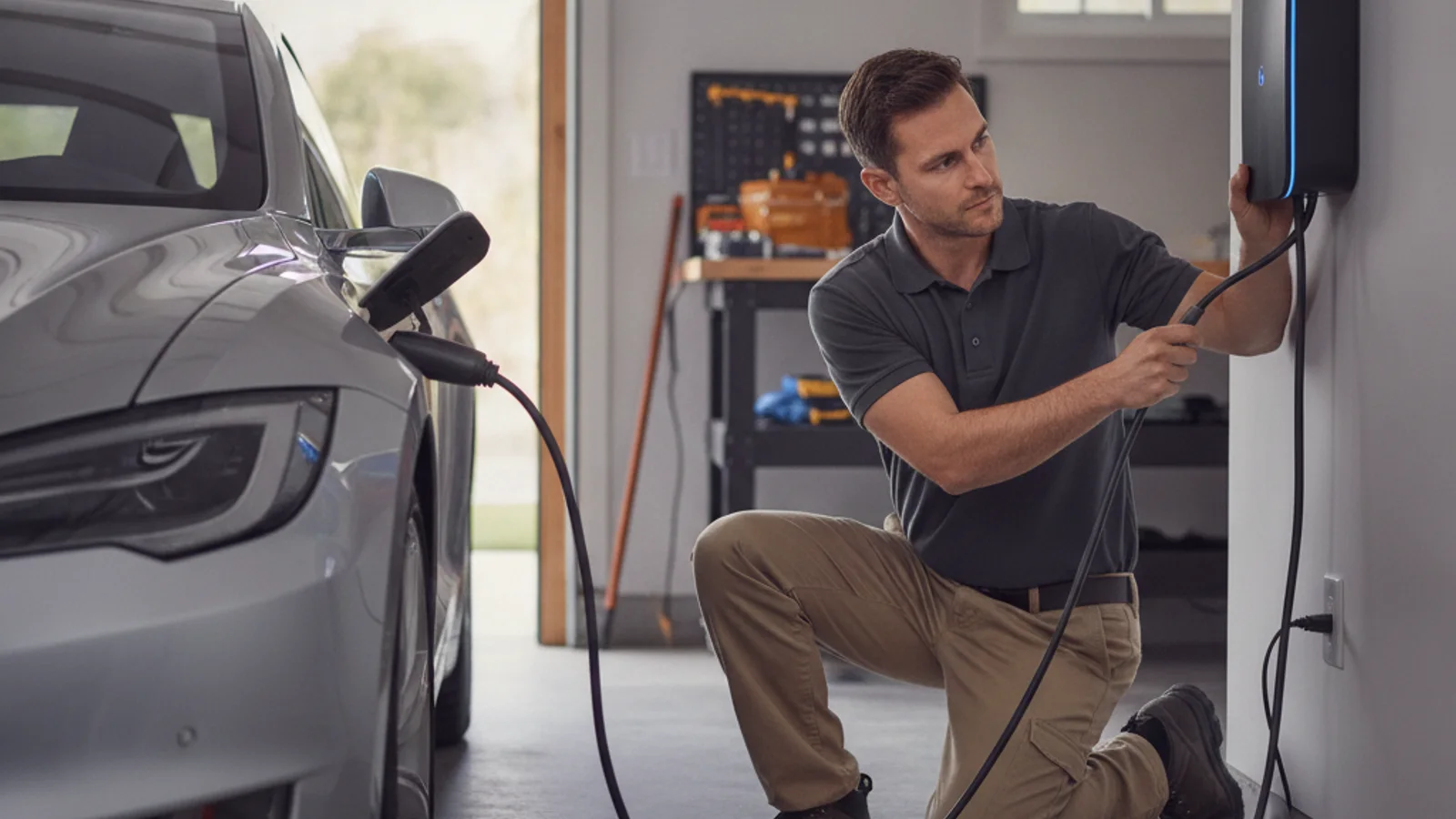
A Tampa Bay driver who plugs into a public charger and sees the screen say connected but not charging has a few minutes of patience, then a decision. The charger may need a reset. The cable may not be seated. The car may need a wake-up cycle. If none of that works, the next step is a mobile operator who can bring a 240-volt Level 2 source to the car or jump the 12-volt.
Why connected but not charging happens
The most common cause is a cable that is not fully seated. Unplug, inspect the connector for debris or damage, and plug again. The second most common cause is a charger that needs a reset. Some chargers have a reset button. Some need a power cycle from the host. The third cause is a 12-volt that is too low to start the charge session. The car’s contactors need power from the 12-volt to close. If the small battery is marginal, the car shows connected but does not pull current.
For the wider 12-volt pattern, see our Tesla 12V failure symptoms guide. The pattern is the same across most modern EVs.
What condo and HOA drivers should know
Florida Statute 718.113(8) covers condo unit owners and chargers. A condo unit owner may install a charging station in a limited common element or designated space. The board cannot deny a proper request. The owner pays and the charger is separately metered. That is the law. A driver who lives in a condo and charges on a public post because the board has not approved a private install should know the law exists.
A driver who has a private condo install and sees connected but not charging is having an equipment problem, not a legal one. Check the cable, check the charger, check the 12-volt. Call a mobile operator if none of that works.
For the wider charger-not-working pattern, see our Cost and coverage explainers.
When to stop waiting and call
A driver who has tried a reseat and a reset and waited five minutes should stop waiting. The next step depends on the situation. If the car is at home and the 12-volt is marginal, call for a 12-volt jump. If the car is on the road and the pack is low, call for a mobile Level 2 charge. The operator brings the right gear for the job.
Charge Pro TPA is a referral line. It matches stranded EV drivers with independent local operators. It does not own trucks, employ crews, set prices, or promise an arrival time. The operator quotes you before starting work and bills you directly.
What a connected-but-not-charging rescue looks like
For a 12-volt problem, the operator brings a lithium jump pack and clips the small battery directly. The car wakes. The driver retries the charger. If the charger is the problem, the operator can top up the pack with a 240-volt Level 2 source and the driver can drive to a known-good charger.
For an empty pack, the operator brings a 240-volt Level 2 source. Typical added range is 10 to 20 miles from 15 to 30 minutes of charging. That is charging time, not an arrival time.
For the broader mobile-charge view, see our mobile EV charging vs tow guide.
What to say on the call
State the model, year, and trim. Say whether the cabin is fully dark or if the screen still shows a range number. Say what the charger display shows. Share the charger address or the nearest cross street. The operator uses that to bring the right gear and quote before work starts.
When to make the call
Call from a safe spot the moment you decide to stop waiting. Call from home if the 12-volt is marginal. Call from the road if the pack is low. Stay with the car if it is safe to do so.
Charge Pro TPA connects Tampa Bay drivers with local operators. Call (813) 536-4545 and we will match you with an independent EV rescue operator who works your part of Tampa Bay.