Hurricane Helene drove record storm surge at Tampa Bay gauges in late September 2024. Pinellas barrier islands from the Dunedin Causeway through Tierra Verde were closed. Hurricane Milton dropped at least 18 inches of rain on parts of St. Petersburg in early October 2024 and damaged the Tropicana Field roof. Power stayed out for days in places that did not flood. A car that sat in a hot garage through a multi-day outage often will not wake when the lights come back. The 12-volt battery ran down. A mobile operator with a lithium jump pack wakes the car in minutes. A home battery backup does not help with that problem unless it is also a 12-volt maintainer, which most are not.
What a home battery actually does
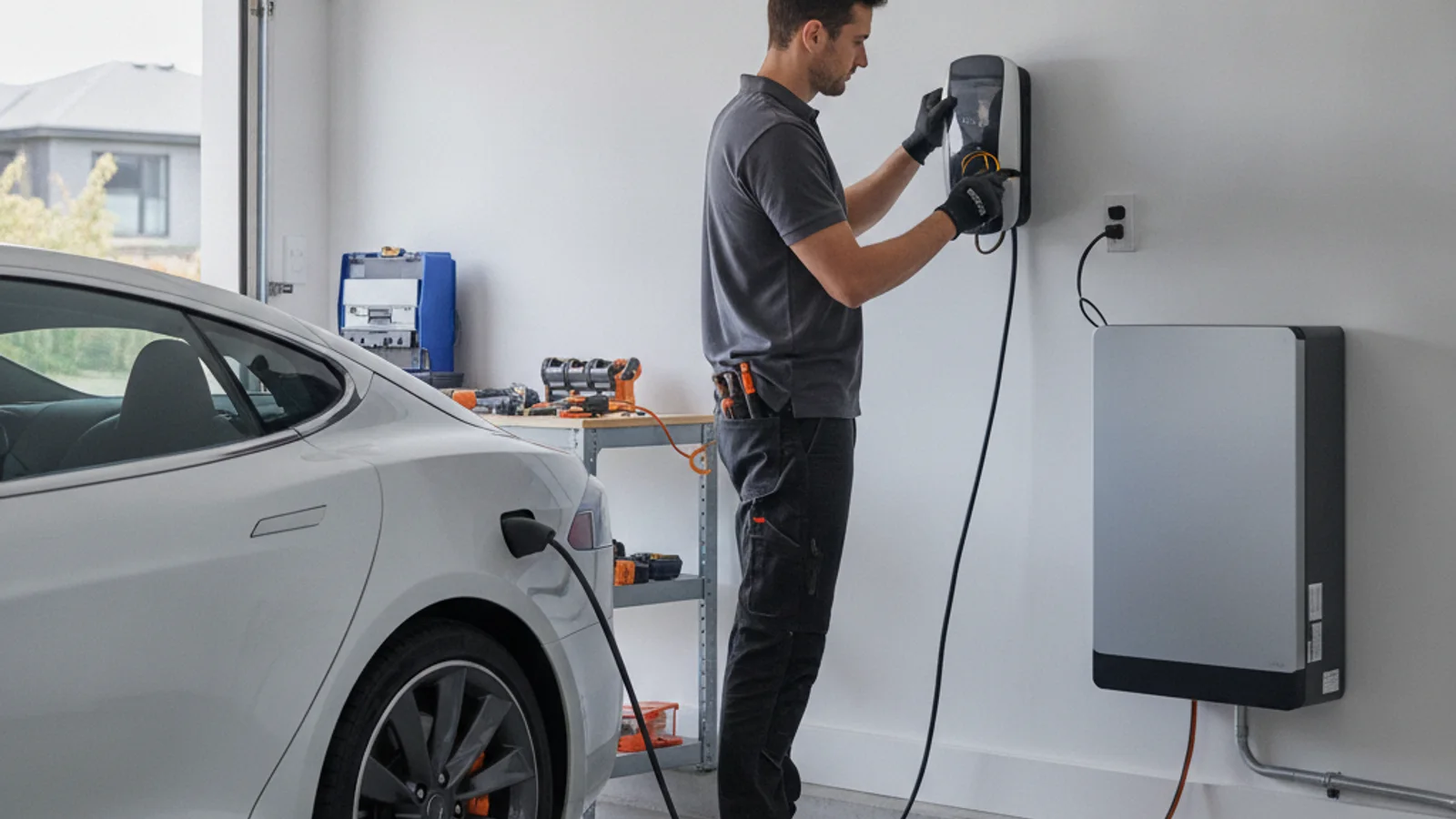
A home battery, like a Tesla Powerwall or a similar installed system, runs your house circuits during an outage. It can run a fridge, some lights, and a few outlets for hours. It does not, by itself, charge an EV. Some home batteries can be configured to export power to an EV charger, but that requires specific equipment and a working home charger. A car sitting in a garage with a dead 12-volt is not the same problem as a car that needs a charge.
The 12-volt battery on a Tesla, Mach-E, or ID.4 is a small lead-acid or lithium pack that runs the wake-up circuit. Heat ages it. Sitting in a hot garage ages it faster. Sitting through a multi-day power outage with the car unable to charge itself from the wall drains it. When the power comes back, the driver turns the key and the car is dark. That is a 12-volt problem, not a traction-pack problem.
What a mobile operator actually does
A mobile operator brings a lithium jump pack designed for the 12-volt on your car. The pack clips to the small battery under the hood, in the frunk, or under a rear seat depending on the model. The operator confirms the chemistry. Lead-acid and lithium 12-volt batteries want different jump profiles. The car wakes in seconds. The operator does not replace the 12-volt on site. A replacement is a different job and the operator may offer to tow to a shop if the battery is shot.
For an empty traction pack, the operator brings a 240-volt Level 2 source. Typical added range is 10 to 20 miles from 15 to 30 minutes of charging. That is charging time, not an arrival time. The driver adds enough range to reach a nearby charger or to drive home once the power is back.
Why the storm matters for the 12-volt
Tampa Electric, TECO, serves the City of Tampa, most of Hillsborough, and parts of southern Pasco and Pinellas. Duke Energy Florida serves much of Pinellas and parts of Pasco. Both utilities had multi-day outages in places after Helene and Milton. A car that sat in a TECO or Duke outage area for three to seven days ran on its 12-volt the whole time. Sentry Mode, cabin overheat protection, and the app all wake the small battery. By the time the power is back, the 12-volt is dead or close to it.
Florida is among the most lightning-dense states in the country. Vaisala’s lightning data confirms the pattern. Storms cut power even when they do not bring a hurricane. A driver who plans for a multi-day outage should plan for a 12-volt jump, not for a pack charge.
For the wider storm pattern, see our Cost and coverage explainers. For the dead-battery walkthrough, see the Tesla 12V failure symptoms guide.
What a home battery can and cannot do during an outage
A home battery can keep a fridge cold. It can keep a phone charged. It can run a few lights. It cannot, by itself, jump a 12-volt battery on a car sitting in a dark garage. Some installed systems can be configured to export power to a hardwired EV charger. That is a different setup and not what most home batteries include by default.
If a driver wants a true EV backup plan, the steps are different. A 12-volt maintainer plugged into a working outlet is the cheapest way to keep the small battery topped off during an outage. A generator that runs the home charger is the next step. A mobile operator with a lithium jump pack is the third step, used after the fact.
What to say on the call
State the model, year, and trim. Say whether the cabin is fully dark or if the screen still shows a range number. Say how long the power was out and where the car sat. The operator uses that to bring the right gear and quote before work starts.
Charge Pro TPA is a referral line. It matches stranded drivers with independent local operators. It does not own trucks, employ crews, set prices, or promise an arrival time. The operator quotes you before starting work and bills you directly.
When to make the call
Call from a safe spot the moment the power comes back and the car will not wake. Call before the next named storm if the 12-volt is more than three years old. Stay with the car if it is safe to do so.
Charge Pro TPA connects Tampa Bay drivers with local operators. Call (813) 536-4545 and we will match you with an independent EV rescue operator who works your part of Tampa Bay.