Your EV just quit on SR-60 in East Hillsborough. Treat it as a disabled vehicle on a state road. Don’t hunt for a public plug from a live lane. Get every tire off that lane first. Keep people out of traffic. Then arrange a mobile Level 2 charge so the car can roll.
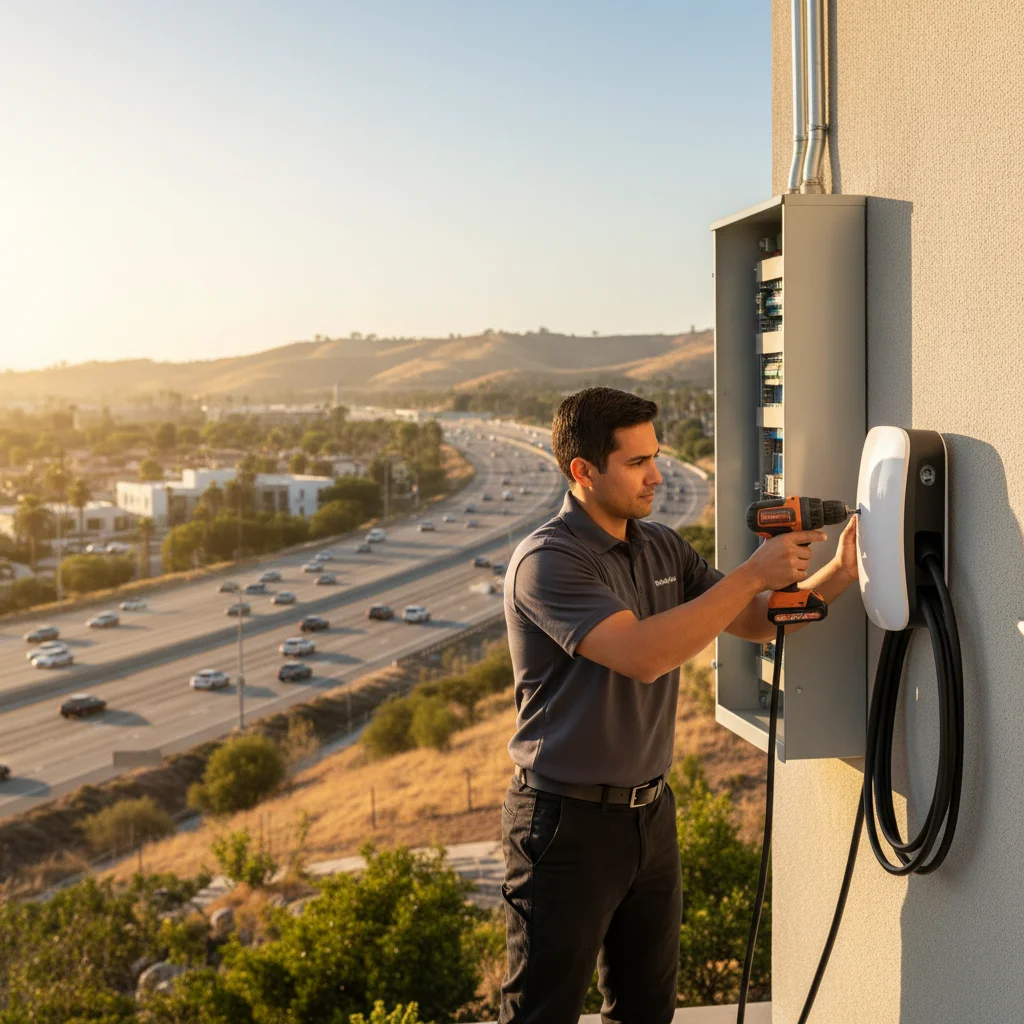
SR-60 as East Hillsborough’s spine toward I-4
This stretch of SR-60 is the east-county spine toward Plant City and the I-4 gateway. People use it when they’re bound for Plant City, Valrico, or that interstate join. Brandon sits on the Tampa side of the same surface route.
It isn’t I-4. It isn’t the Lee Roy Selmon Expressway. The Selmon’s Reversible Express Lanes run on a roughly 10-mile elevated bridge between Brandon and downtown Tampa. Tampa Hillsborough Expressway Authority reverses those lanes through the day. They’re westbound into downtown from about 5 a.m. to noon, then eastbound. THEA clears every vehicle before each reversal. There’s no local surface shoulder on that elevated segment. A dead EV there is a worse bind than SR-60. This page is the at-grade spine. You can usually put the car fully out of the travel lane. Do that before you open a charging app.
Charge Pro TPA is a referral line. It matches stranded EV drivers with independent local mobile rescue operators. It doesn’t run a truck, own equipment, or employ technicians. It doesn’t set prices or promise when someone will arrive. It publishes no business hours and holds no license. The operator quotes you before any work starts. The operator bills you directly.
East Hillsborough’s newer growth includes Fish Hawk, where 0.8 percent of housing was built before 1980. Those homes often have 240-volt charging in the garage. Tampa Electric serves the City of Tampa and most of Hillsborough County. A TECO home plug still doesn’t help a car that can’t roll. You need range to leave the shoulder first. Bloomingdale sits with Fish Hawk in East Hillsborough’s suburban belt.
Heat takes the range. Grade doesn’t give it back.
Tampa Bay is flat and near sea level. Grade never returns range on this corridor. You won’t recoup miles on a descent that isn’t there. Heat and air conditioning are the whole range story.
Recurrent Auto publishes the range-loss figures worth citing. An EV loses only about 5 percent of range at 90°F. Loss runs 20 to 30 percent above 95°F. It’s roughly 17 to 18 percent near 100°F. The hit varies widely by model. Don’t treat the dash estimate as a morning promise after a hot afternoon.
Tampa Bay’s air-conditioning season runs from spring into late fall. East Hillsborough sits inland of the bay. The compressor works longer than a short hop inside Tampa. You can leave the house with a full pack. You can still be in trouble on a late run toward Plant City.
Vaisala’s National Lightning Detection Network has long put Florida among the most lightning-dense states. Treat Tampa Bay as one of the most lightning-prone metros in the country, on Vaisala’s data. If a cell is on you, stay in the car. Don’t wait it out on the painted line.
Federal and fire-service guidance covers soaked EVs. A pack that took salt water can face a lithium-ion fire days later. Keep a flooded pack away from structures and other vehicles until it’s inspected. That’s a surge problem on the bay and the barrier islands. It’s less the story on this inland spine. If this car took on floodwater, a roadside charge isn’t the inspection.
Get the car legal and out of the lane
Florida Statute 316.194 covers stopping outside business or residence districts. Subsection (1) bars stopping on the paved or main-traveled part of a highway. It applies when you can get the car off that pavement. Subsection (2) exempts a vehicle disabled on that pavement when you can’t avoid leaving it there. A dead EV on the shoulder is a disabled vehicle under (2). You’re not parked to shop. You’re disabled. Act like it.
Ease right as soon as the car will still steer. Hug the edge, whether that’s a painted line, a guardrail, or a grass strip. Don’t sit in a through lane to pick a plan. Hazards go on while you’re still rolling if you can. That gives the next driver time to see you.
If you’ve stopped on the right, get out on the passenger side. The driver’s door puts you between the car and live traffic. Stay behind the right rear corner. Don’t walk the shoulder looking for a better gap. Don’t cross SR-60 on foot.
Stay with the vehicle. This isn’t a downtown block with shade and a sidewalk. Waiting in the car beats a walk in heat and traffic.
Call 911 if you’re blocking a lane. Call if you’re in a curve you can’t see through. Call if anyone is standing in the road. Give the direction of travel. Give the last place you passed. Brandon, Valrico, and Plant City all help. A mile marker is better if you can read one. Share a phone pin if that’s all you’ve got.
Florida 511 is the state’s traffic-information system. It won’t add a single mile of range. It can tell you whether the road behind you is already stacked up.
Nearby help that is not a charge
FDOT Road Rangers in District 7 patrol I-4, I-75, and I-275 in the Tampa Bay area. They also cover the airport interchange. They work through the Tampa Bay SunGuide Center. A motorist reaches them by dialing *347. Published free services include flat-tire help, a jump-start, and fuel. They also cover diesel or water, two local calls, and moving a disabled vehicle to a safer spot.
Their published list includes fuel, a jump-start, and tire help. It doesn’t include charging an EV pack. The free state patrol can jump a 12-volt battery. That still leaves an empty high-voltage pack empty.
That split matters on this spine. If you’ve already joined I-4 at Plant City, *347 is the interstate patrol number. On SR-60 itself, don’t treat a Ranger as your charge plan. Florida Highway Patrol Troop C covers the Tampa Bay region for disabled vehicles on the interstates. For a dead EV on SR-60, 911 remains the public-safety call.
Empty pack or a dead 12-volt
These two failures feel the same from the driver’s seat. The car is a brick. Screens may be dark. Doors may act strange. The cause isn’t the same. The fix isn’t the same.
If you were driving and the range hit zero, you’re looking at an empty traction pack. You need kilowatts into the charge port. A truck that only carries 12-volt jump cables won’t fix that.
If the car sat, then wouldn’t wake, think 12-volt first. Heat wears those small batteries. Operators in this network can jump or replace a dead 12-volt battery on site. They handle Tesla and every major EV brand.
Tell the person who calls you back which one you think it is. Say whether the car was rolling when it quit. Say whether the high-voltage range was already on the floor. Say whether you have door or screen trouble with range still showing. That changes what the operator brings to the bumper.
For a true empty pack, out-of-charge recovery is the match. For the hardware at the car, mobile EV charging is the Level 2 stop. How a mobile EV charging truck works walks through the visit. It isn’t a tow.
What the operator actually does on the shoulder
Independent operators bring a 240-volt Level 2 source to the car. Tesla hookups use a native NACS plug. Non-Tesla EVs use a CCS or J1772 adapter. The usual result is 10 to 20 miles of added range. That’s after 15 to 30 minutes of charging. That window is charging time. It isn’t a promise about when someone arrives.
Ten to twenty miles is enough to get off the shoulder and to a place you choose. Don’t treat it as a full fill. Don’t plan a long I-4 run across the Polk County line on that bump. Once you have that range, pick a direction with purpose. West takes you toward Brandon and Tampa. East takes you toward Plant City and I-4.
Open your charging app after the car will roll. If it shows a station you can actually reach on the added miles, use it. If it doesn’t, stay with the mobile-charge plan. EV roadside assistance in Valrico covers this commute from the town side. Mobile EV charging on SR-60 after a stall is the companion for the charge itself.
Get the quote before they plug in. If the number isn’t clear, don’t start.
A tow should be the last move
A wrecker is for a car that can’t take a charge. It’s also for a crash, or a pack that won’t accept power. An empty pack that will still take Level 2 doesn’t need a hook first.
If someone already called a tow, pause before you sign. Non-consent tow rates in Florida are capped at the county level. Hillsborough County sets those maximums through the Tax Collector’s vehicle-for-hire authority. You’re in Hillsborough on this spine. A specific dollar figure wasn’t confirmed against the live schedule for this page. Confirm the current cap with the Tax Collector before you pay. The tower must file its rates with local law enforcement. It must post the same schedule at the storage site.
Florida Statute 715.07 covers removal from private property. If you limp into a shopping lot and die, the owner can have the car pulled. Required signs use light-reflective letters not fewer than 2 inches high. They must say vehicles will be towed at the owner’s expense. “Tow-away zone” must appear in letters not fewer than 4 inches high. The tower’s name and current phone go on the sign, mounted 3 to 6 feet above ground. In a county of 500,000 or more, storage must sit within a 10-mile radius of removal. Hillsborough qualifies. Don’t leave an unsigned car in a lot and walk off for a rideshare.
What to say when an operator calls you back
You want a location a stranger can drive to. “East Hillsborough” isn’t enough. “SR-60 eastbound toward Plant City, right shoulder, past Brandon” is enough. Add the last cross street if you saw one. Add a mile marker if it’s in view.
Give year, make, model, and color. Say Tesla or not. That picks NACS versus a CCS or J1772 adapter before they roll.
Give the pack state. Still rolling at a sliver of percent is one job. Fully shut down is another. A 12-volt brick with stubborn doors is a third.
Give the road. Narrow shoulder, rain, lightning, or a crest you can’t see over: say it. Public safety can use that. The operator can use it too.
Charge Pro TPA serves Tampa Bay. East Hillsborough is inside that area. The match is with a local independent operator, not a brand-owned crew.
If you’re on SR-60 right now
Stay in the car, or tight to it on the safe side. Keep hazards on. Don’t stand in the lane. Don’t accept work you haven’t heard quoted.
When you’re ready to be matched with an independent operator, call (813) 536-4545. That’s the referral line. The operator quotes you before starting. They bill you directly.
Frequently asked questions
What do I do first if the EV dies on SR-60 toward Plant City?
Get fully out of the travel lane. Turn on hazards. Exit from the passenger side if you’re on the right shoulder. Stay with the car. Call 911 if you’re in a live lane or a blind curve. Then arrange a mobile Level 2 charge. Florida Statute 316.194 treats a dead EV that can’t move as a disabled vehicle.
Can an operator charge the car on the SR-60 shoulder?
Yes. Independent operators in this network bring 240-volt Level 2 to the bumper. They use NACS on Tesla and a CCS or J1772 adapter on other EVs. Typical added range is 10 to 20 miles after 15 to 30 minutes of charging. That’s charging time, not travel time to you. Get the quote before they plug in.
Who else can I call on this stretch besides a mobile rescue?
Call 911 for a disabled vehicle in a dangerous spot. If you’ve already reached I-4, FDOT Road Rangers District 7 are reachable at *347. Their published services include a 12-volt jump and fuel, not EV charging. Florida 511 is for traffic information only. Hillsborough tow caps exist through the Tax Collector. Confirm those rates there, not from a door sticker.