A Tesla that won’t unlock after a long sit is usually a dead 12-volt. That shows up after a week in Tampa International Airport parking. It also shows up in still home garages across Tampa Bay. You’re not jumping the traction pack under the floor. You’re waking the small battery that runs handles, latches, and the screen.
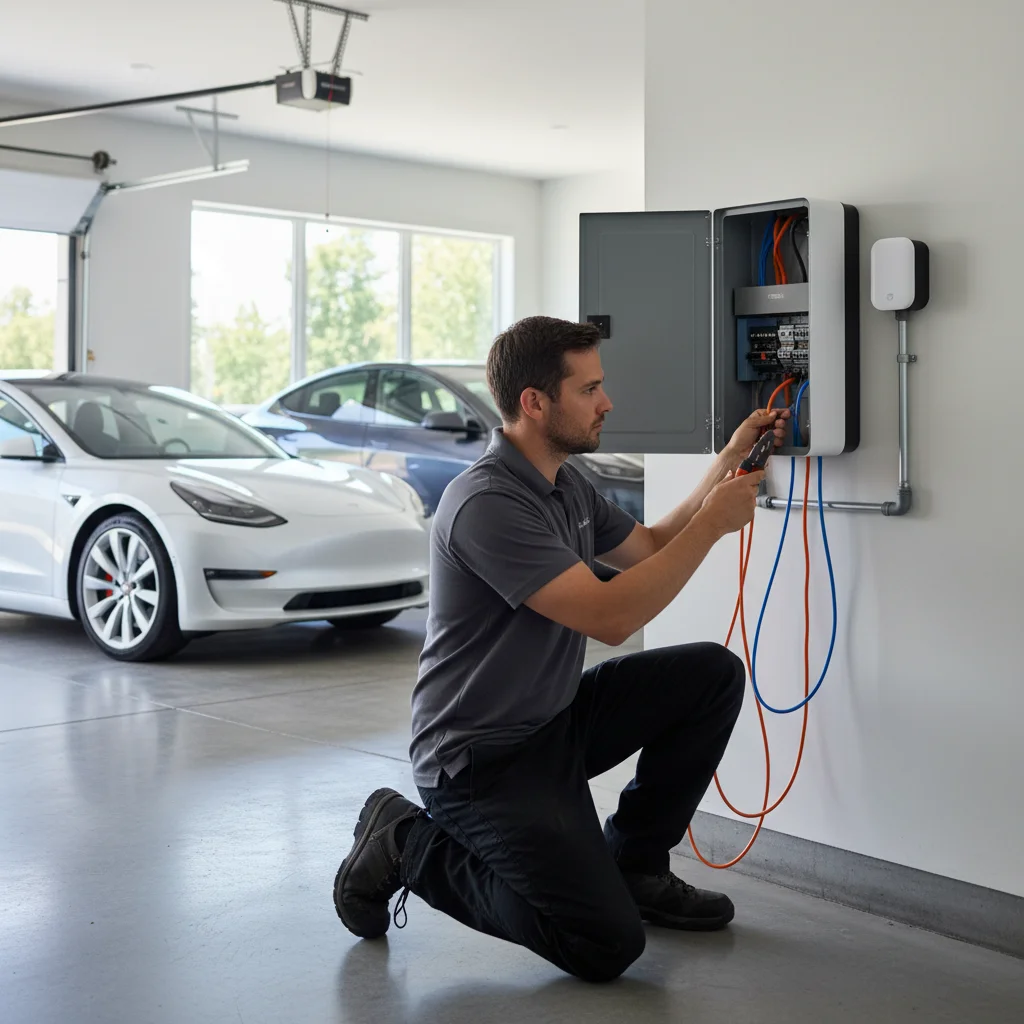
How to tell it’s the 12-volt
A Tesla runs two electrical systems. The high-voltage pack moves the car. No consumer jumper can charge that pack. The 12-volt wakes the computers, door handles, lights, and frunk latch. When that battery is flat, the car acts fully dead. The app times out. The key card fails. The screen stays black.
- Black screen, dead app, dead key card: start with the 12-volt.
- Car unlocks and shows a low-range warning: that’s the pack. A jump won’t fill it.
- Dim exterior lights or a flickering cabin lamp: 12-volt again.
Slow boots and random warnings before a sit are a tell. Read the Tesla 12V warning signs post for the pattern. A jump can wake the car. The battery may still need a shop swap.
A Tesla jump doesn’t refill the 12-volt like a long gas-car drive. Tesla’s DC-DC converter does that from the pack. It runs once the car is awake or plugged in. After a successful jump, plug in or drive. Don’t park it dark and hope. For battery location by model, see Do Teslas have a 12-volt battery.
Why TPA parking and home garages do this
Leave a Model Y in airport parking for a trip. Tampa International Airport publishes free EV charging in its garages. The cell phone lot has charging too. Level 1 J1772 sits on the first floor of the Economy Garage. More Level 1 is in the Long-Term Parking Garage. Level 2 is at the Cell Phone Lot. SkyConnect runs from the main terminal to that garage. The pack can still have range when you return. The 12-volt can still be dead.
That’s the unlock-and-wake failure. You walk in from SkyConnect and the app never finds the car. Handles stay frozen. After a long sit at TPA, start with the 12-volt. The Tampa International Airport EV charging post covers those garages in more detail.
The same pattern hits a closed home garage. A Tesla that sits all week can drain the 12-volt. Tampa Bay heat speeds that up. Newer tracts in Westchase, Fish Hawk, and Lakewood Ranch usually have 240-volt home charging. Older housing in Lealman and St. Petersburg often doesn’t.
Condo owners in Pinellas have another wrinkle. Florida Statute 718.113(8) covers condo chargers. A unit owner may install one in an exclusive space or limited common element. A board can’t block a properly submitted request. Until that charger exists, the car may live on public charging and long garage naps.
If the car sat in storm surge from Hurricane Helene or Hurricane Milton, stop. Federal and fire-service guidance warns that a saltwater-soaked EV can be unsafe later. Don’t jump it in a driveway.
Model 3 and Model Y: use the bumper first
The 12-volt lives under the frunk floor on both cars. Tesla also put jump posts behind the front tow-eye cover. Use that cover when the hood won’t move.
Tow-eye posts when the frunk is sealed
Find the small rectangular cover on the lower driver’s side of the front bumper. Pry the notch with a fingernail or a flat screwdriver. Go gently. Inside is a red positive post. A chassis ground sits next to it. That’s the primary jump point when the latch has no power.
Frunk terminals if the hood is already open
Lift the frunk carpet and the foam pad. The 12-volt battery is under that pad. The positive post has a red plastic cap. The negative is black. Those terminals work if you can already reach them.
Model S and Model X: the posts moved
Older Model S cars hide the 12-volt under the frunk mat. That’s the pre-2021 layout. Many Model X cars use it too. Lift the mat. Pull the foam insert. Look for the labeled terminals.
On refreshed Model S and Model X from 2021 on, Tesla moved the jump posts. Look for a red positive post behind a small cover. It’s on the driver’s side of the frunk, near the firewall. Use a chassis ground on that same side.
If you’re unsure of the year, check Tesla’s support site. Don’t clamp a random under-hood bolt.
Jump it with a portable pack
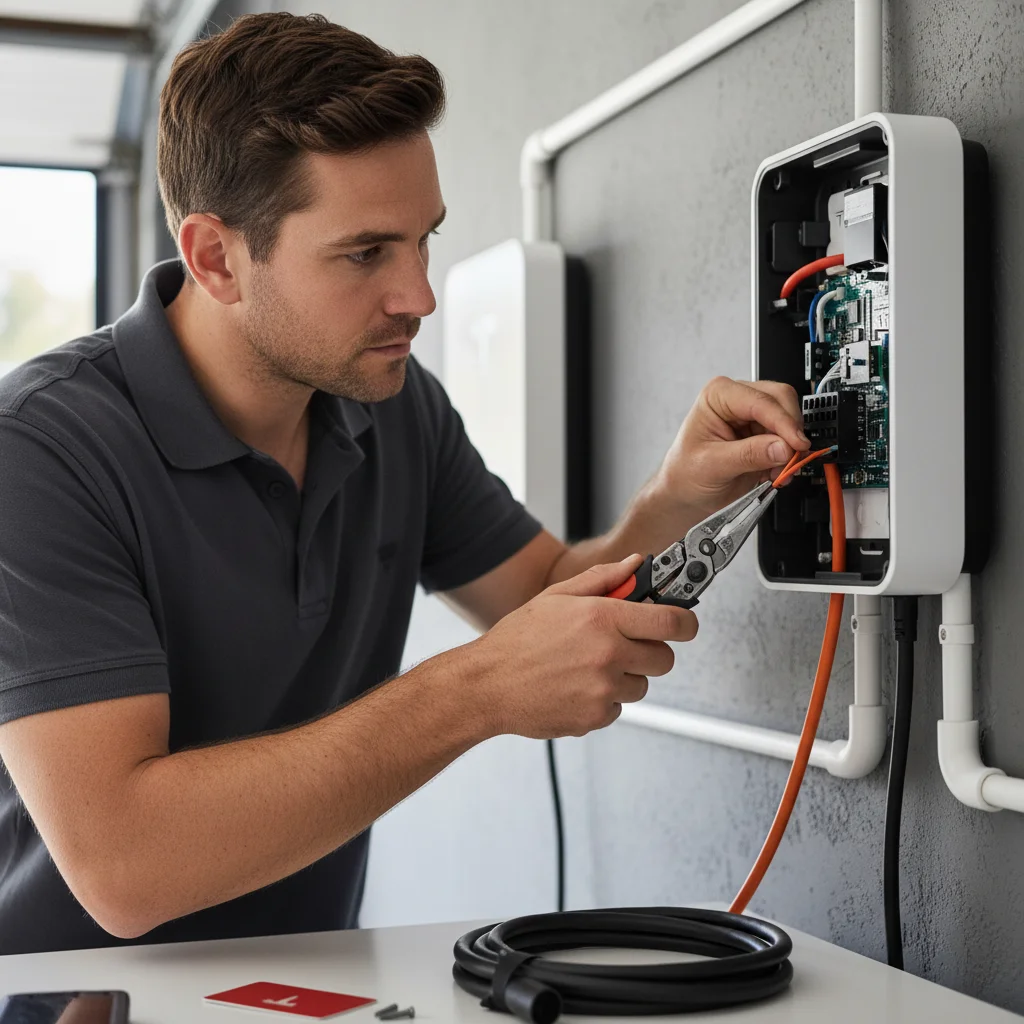
Use a portable lithium jump starter. Never use another Tesla as a donor. Tesla tells owners not to jump other vehicles from their 12-volt posts. That can damage the donor car’s electronics. We spelled that out in Can a Tesla jump-start another car.
- Set a charged pack by the bumper and confirm the charge lights.
- Pop the tow-eye cover on a Model 3 or Y. On an S or X, open the frunk first if that’s where your posts live.
- Clamp red to the red post. Seat it firmly. A loose clamp sparks.
- Clamp black to unpainted chassis metal. On the tow-eye opening, use the dedicated ground.
- Switch the pack on if it has a switch. Give the computers a short wait to see voltage.
- Try the key card or the door handle. The screen should start to light.
- Once the car is awake, disconnect black first, then red.
- Plug in, or drive, so the converter can refill the 12-volt.
If the car is dark and locked, you still need a way in. Use the manual locked-out steps.
If you can’t open the frunk
A dead 12-volt starves the frunk latch motor. Model 3 and Model Y drivers should use the tow-eye posts first.
Model S and Model X posts often sit inside the frunk. You may need the manual release before you can see them.
Model S manual release
Pull loops sit in the front wheel wells, behind access panels. On older Model S cars, reach through the driver’s side liner. Find the small flap. Pull the yellow or orange loop. You may need two pulls. The first pops the primary latch. The second releases the secondary.
Model X manual release
The loop is often orange. It sits a short way behind the front of the liner. Pull firmly. The frunk should rise a little.
Tesla has moved these loops across model years. If the liner you see doesn’t match, search your year on Tesla’s support site.
Salt air around the bay eats those cables. After Helene, Pinellas barrier islands from the Dunedin Causeway through Tierra Verde were closed. Milton dumped heavy rain on parts of St. Petersburg. If a release cable feels frozen rather than stiff, don’t yank. You can snap it. That’s a tow, not a driveway fix.
Heat, utilities, and a parked Tesla
Tampa Bay runs a long air-conditioning season from spring into late fall. Recurrent Auto published the heat numbers. An EV loses about 5 percent of range at 90°F. Losses run 20 to 30 percent above 95°F. The 12-volt still cooks in a closed garage while the car sleeps.
TECO serves the City of Tampa and most of Hillsborough. It also covers parts of Pinellas and southern Pasco. Duke Energy Florida serves Pinellas and much of Pasco. Withlacoochee River Electric Cooperative serves northern and central Pasco outside the Dade City area. Those utilities can talk home charging. They don’t jump a Tesla in a garage.
If you’re on a Tampa Bay shoulder
A dead EV on I-275, I-75, or I-4 is a disabled vehicle. Florida Statute 316.194 covers that stop. You may stay on the pavement when you truly can’t get off it. Get as far right as you can. Stay out of the travel lanes.
FDOT Road Rangers in District 7 patrol those interstates and the airport interchange. Dial *347 from a mobile phone. Their published services include fuel and a 12-volt jump. They don’t list charging an EV. If the pack is empty, that patrol isn’t a mobile charger.
The Selmon reversible lanes run between Brandon and downtown Tampa. The elevated stretch has no local surface shoulder.
When to stop DIY
Stop if you can’t reach the tow-eye posts or the wheel-well loops. Stop if the car wakes and dies again within minutes. That’s a battery that needs diagnosis, not another clamp. See how to tell a Tesla 12V is dead. Stop if you’re on a tight garage ramp or a live shoulder. Stop if you’re not sure which post is which. The wrong connection can damage body computers.
The operators we connect you with handle Tesla 12-volt jumps on site. They can jump or replace a dead 12-volt. They work Tesla and every major EV brand. They quote before they start. They bill you directly. Charge Pro TPA doesn’t own trucks and doesn’t do the work. Request help on the Tesla 12-volt battery jump page.
A jump won’t fill an empty traction pack. If the car unlocks with a real range warning, you need a charge. Operators can bring a 240-volt Level 2 source to the bumper. That’s charging time at the car, never an arrival promise.
If you need a local Tesla 12-volt jump
A Model 3 that ignores the app after a TPA trip is this job. So is a Model Y that sits dark in a Town ‘n’ Country garage. Wake the 12-volt first. Then plug in so the converter can hold the charge.
Call (813) 536-4545 and we’ll connect you with a local operator. The operator quotes before starting. You pay that operator directly.