When an EV in Zephyrhills won’t wake after sitting, EV roadside assistance is the call. This inland Pasco city lives on short hops and long parking. Retirees and winter residents leave cars still for days. Heat then drains the 12-volt while the traction pack still looks fine. The other stall is a US-301 or SR-54 run that ends short. Charge Pro TPA is a referral line. It matches you with an independent operator who quotes before any work starts.
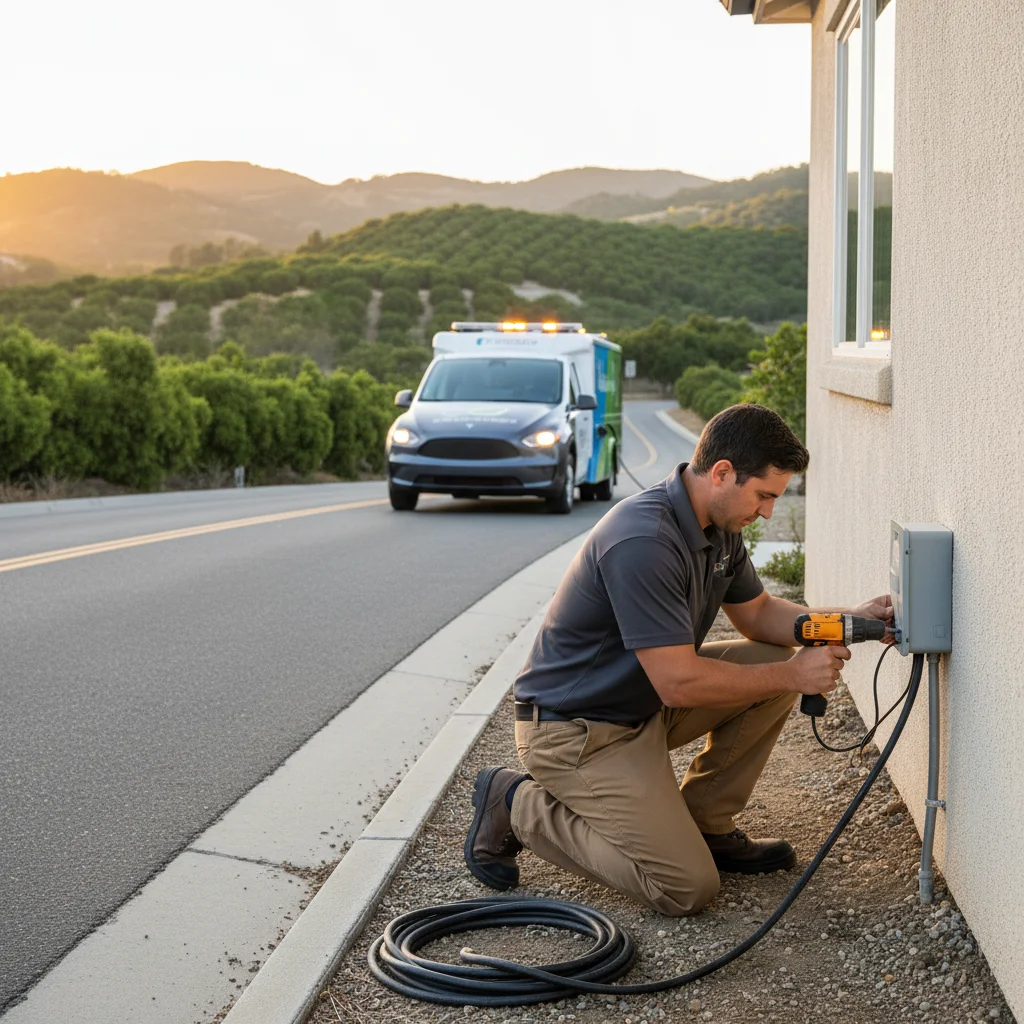
Sitting cars and a 12-volt that won’t wake
Zephyrhills covers 9.581 square miles of flat inland Pasco. Census Population Estimates for 2024 put the city at 22,304 people. ACS 2019-2023 counted 18,471 residents in the same place. That mix includes a large retiree and winter-resident population. Cars sit between grocery runs, downtown errands, and visits. A parked EV that won’t wake is often the 12-volt, not an empty pack.
The 12-volt runs computers, contactors, and door latches. When it sags, the car looks fully dead. Lights stay off, and the app may not connect. You can’t shift into drive or use the screens. The high-voltage pack can still hold plenty of miles. That’s why a jump or a 12-volt swap on site often restores the car. Read what happens when an EV 12-volt dies if you want the sequence. The same split applies to Tesla and to every other major EV brand.
Only 19.3 percent of local housing was built before 1980, per ACS 2019-2023 figures. Newer homes can more often take a 240-volt circuit. That still doesn’t protect a car that sits. A Level 2 plug won’t wake a 12-volt that’s already dropped. Heat is the other factor on these inland lots. Recurrent Auto published the heat effect on EV range. An EV loses about 5 percent of range at 90°F. Loss climbs to 20 to 30 percent above 95°F. It sits around 17 to 18 percent near 100°F. Cabin AC on a Pasco afternoon does the rest.
Which utility serves your street wasn’t confirmed on a live map. Duke Energy Florida serves much of Pasco. Withlacoochee River Electric Cooperative serves northern and central Pasco, except the Dade City area. Tampa Electric reaches parts of southern Pasco. Check the name on your bill before you call a utility program. Don’t assume TECO or Duke from a Tampa mailing address.
US-301, SR-54, and the Tampa run
Gall Boulevard and Eiland Boulevard handle in-town movement. US-301 and SR-54 carry the longer legs. Drivers run west toward Wesley Chapel or south toward Tampa. Plant City sits to the southeast of the same grid. Land O’ Lakes and Dade City sit on other sides of this grid. Those miles are flat, and grade never gives range back. Heat and AC set the budget instead. A winter resident may drive short loops all week. One Tampa errand can still empty the pack. The stall often isn’t downtown, and it’s on the way back. It’s still short of Silverado, Abbott Square, or Link’s Crossing.
If the car still rolls, get fully off the travel lane. Florida Statute 316.194 covers stopping on a highway outside a municipality. A disabled vehicle is an exception when you can’t avoid leaving it. A dead EV on a shoulder fits that disabled-vehicle language. Stay out of the travel lane if you can.
If you’re on I-75 or I-275, call FDOT Road Rangers in District 7. Reach them at *347 from a mobile phone. Their published help includes a jump-start, a tire, and fuel. They can also move a disabled car to a safer spot. The free state patrol carries fuel and can jump a 12-volt battery. Its published services don’t include charging an EV. Florida Highway Patrol Troop C covers disabled vehicles on the interstates. Florida 511 is the state traffic feed.
A Suncoast Parkway stall is a different geometry. That road is a long Turnpike run with widely spaced exits. Our Suncoast Parkway empty-EV guide covers that corridor.
Downtown lots, the airport, and parked EVs
Historic downtown Zephyrhills still draws short trips. The spring-water heritage is part of why people visit and stay. The airport and skydiving center pull weekend traffic that parks for hours. A car that sat through a hot afternoon can refuse to wake. That can happen even with miles still on the display. That’s the 12-volt story on these parked cars. You don’t need an empty pack to be stuck. You need a control battery that dropped too far. If the car won’t unlock, don’t force the charge port. Wait for an operator who knows the brand. Tesla, Ford, Hyundai, Chevy, and Rivian all still need that low-voltage pack. It closes the high-voltage loop before the car will drive. A Tesla 12-volt jump on site is often the whole job.
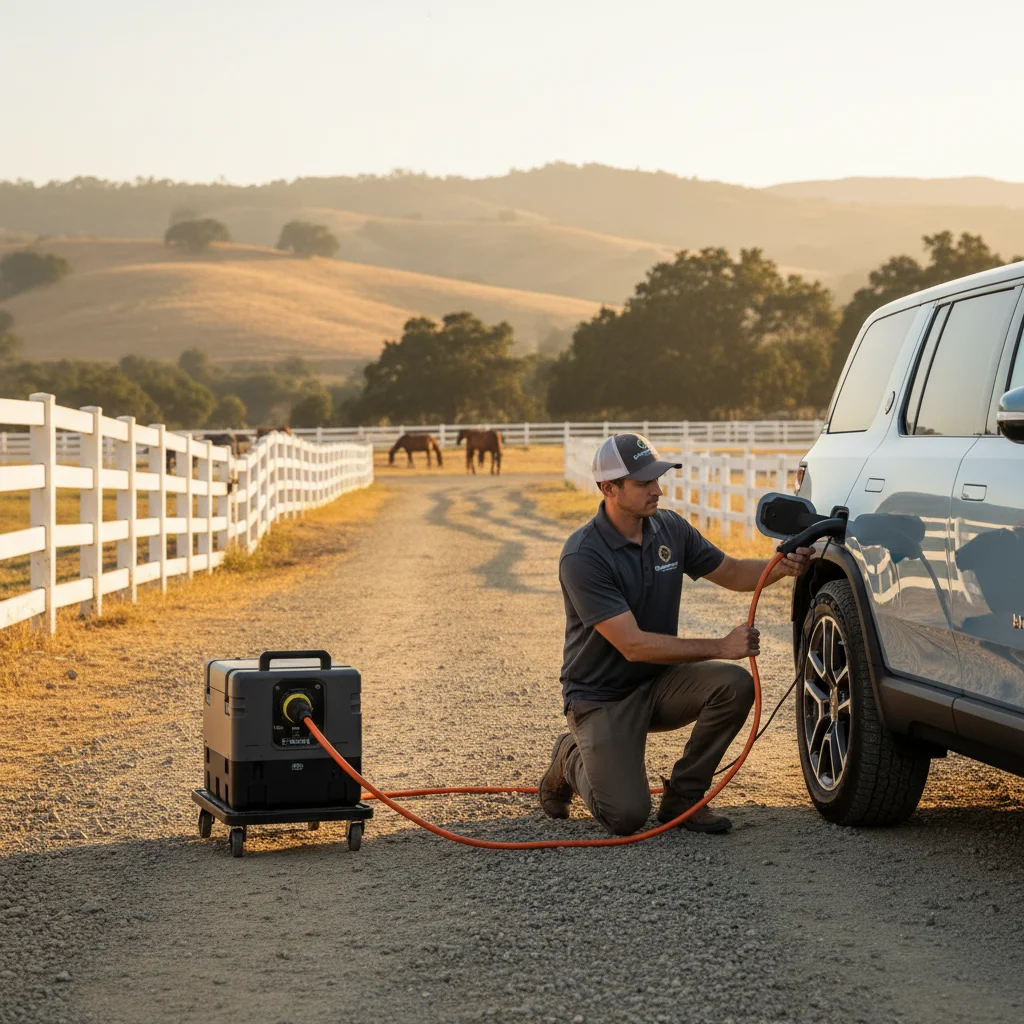
What the operator brings
Charge Pro TPA doesn’t own trucks and doesn’t send employees. The brand holds no trade license of its own. Independent local operators do the work at the car. The pros we connect you with are licensed and insured. The operator quotes you before starting and bills you directly. They typically bring a 240-volt Level 2 source to the bumper. Tesla cars take a native NACS plug. Other EVs use a CCS or J1772 adapter. That charge typically adds 10 to 20 miles of range. Plan on 15 to 30 minutes of charging time. That clock is charging time, never an arrival time. They can also jump or replace a dead 12-volt on site. Tesla and every major EV brand are in scope.
Mobile EV charging is the empty-pack version of the same visit. Tell the dispatcher which one you think you have. Screen on or off, range remaining, and whether doors still open all help the match. Don’t guess at a public charger you haven’t confirmed. Name the lot, the corridor, or the neighborhood. Downtown, Silverado, Abbott Square, and Link’s Crossing each change how a truck approaches.
Charge on the spot, or wait for a tow
A tow is the last move, not the first. Compare that choice in mobile charge or a tow. Flatbeds that can move an EV safely aren’t on every truck. After the tow you still need a working charger or a shop. County non-consent tow caps exist in Florida, set locally. Hillsborough County posts them through the Tax Collector’s vehicle-for-hire authority. Pinellas County sets the same kind of cap by ordinance. Pasco’s current posted maximums weren’t confirmed for this page. Confirm the live schedule with the county before you authorize a non-consent tow. Florida Statute 715.07 governs private-property tows and required signage. It also limits how far a tower can store the car. Exact amounts aren’t published here because the live ordinance figures weren’t verified.
A mobile charge keeps the car where it died. You get enough range to reach home or a public charger you already trust. The operator names the price before the cable goes in. You can accept the quote, or you can decline it.
Who to call from the driveway
Stay with the car if it’s safe. Keep the hazards on and stay clear of passing traffic. Point the wheels away from the travel lane. Then make the call from a safe spot. Charge Pro TPA matches the message to a local independent operator. Call (813) 536-4545 to reach the referral line. The operator quotes before any charging or jump starts.