A dead EV in St. Petersburg needs help at the bumper. EV roadside assistance in St. Petersburg is a mobile 240-volt charge, or a 12-volt jump, at the car. A tow can wait until those options fail. Charge Pro TPA is a referral line. We match stranded drivers with independent local operators. Those operators come to the car. They quote you before they start, and they bill you directly. The usual jobs here start on condo streets. A car that sat overnight may not wake. A thin gauge at the Sunshine Skyway approach is the other classic stall.
This peninsula city isn’t a new-garage suburb
St. Petersburg is the older, denser city on the Pinellas peninsula. It covers 61.8 square miles of flat ground. The Census ACS 2019-2023 count is 260,646 people. The 2024 Census estimate is 267,102. Downtown, Old Northeast, Kenwood, and Grand Central don’t drive like a new inland subdivision. Gateway, Snell Isle, and Tierra Verde add their own mix of lots and bridges. A lot of the housing is apartments and condos. More than half of it, 51.5 percent, was built before 1980. That older stock is a poor fit for a 240-volt home circuit. Many residents live on public charging. They don’t have a wall unit in a private garage.
Heat does the rest of the damage. Tampa Bay is flat and near sea level. Grade never gives range back here. Air conditioning runs from spring into late fall. Recurrent Auto’s published research finds an EV loses only about 5 percent of range at 90°F. Loss then runs 20 to 30 percent above 95°F. It runs roughly 17 to 18 percent near 100°F. The effect varies widely by model. On 4th Street, 34th Street, Gandy Boulevard, and US-19, you’re also sitting at lights. Idle AC on a peninsula afternoon spends range you thought you still had.
I-275, I-375, and I-175 feed downtown with little room to linger. US-19 is the stoplight spine along the west side. The Pinellas Bayway runs out toward the beaches. None of those roads climb. They just spend battery.
The Skyway is the stall this city is known for
The Sunshine Skyway begins here. I-275 leaves downtown and reaches the toll plaza. Then you’re on a four-mile bridge with no place to stop. The cable-stayed main span sits 432 feet above the shipping channel. Florida Highway Patrol closes that span when winds reach a sustained 40 mph. It also closes when fog cuts visibility below about 100 feet. A high-wind advisory for high-profile vehicles is typically issued around 20 mph gusts.
If your pack is already low at the approach, turn around while you still can. Hoping the far side will save you is how people get stuck over the channel. If you’re already on the span and the car is dying, stay with the vehicle. Treat it as a disabled car. Florida Statute 316.194 lets a disabled vehicle sit on the traveled way when you can’t get it off. Road Rangers and Florida Highway Patrol Troop C handle the traffic picture. The operators we connect you with still have to meet you somewhere they can legally stop. For the bridge-specific steps, read Out of charge on the Sunshine Skyway.
Gandy Boulevard is the other bay crossing people underestimate. It’s shorter than the Skyway. It’s still water, wind, and little useful shoulder in spots. Don’t enter either crossing on a warning light and a guess.
Condos and apartments: the plug often isn’t in your space
A large share of St. Petersburg EV trouble isn’t a highway stall at all. It’s a car that sat in a condo garage. It’s an apartment lot, or a street space near the St. Pete Pier. The driver planned to finish a public charging session. That session didn’t complete. Morning comes and the car won’t go.
Florida Statute 718.113(8) gives a condominium unit owner the right to install an EV charging station. It has to sit within their limited common element, or an exclusively designated parking space. A declaration or covenant can’t be enforced to prohibit it. The board can’t deny a properly submitted request. The owner bears the cost of installation, operation, maintenance, insurance, and separately metered electricity. That statute exists because many condo documents never planned for a charger in the common lot. It doesn’t mean your building already wired one. If you rent, you’re still living on public charging. If you haven’t installed in your own space yet, you’re in the same boat.
When a public session fails, mobile EV charging at the bumper is often the practical move. A tow from a private lot is a different problem. Florida Statute 715.07 covers removal of vehicles from private property. Signage has to meet letter-size and height rules. It also has to name the tower and a current phone number. Pinellas has more than 500,000 people. In those counties, a towed vehicle must be stored within a 10-mile radius of removal. Pinellas County caps non-consent tow rates by ordinance. That’s Ordinance 19-39, Code of Ordinances Chapter 122, Article II.5, §122-42. Hillsborough County sets its own caps through the Tax Collector’s vehicle-for-hire authority. The live dollar maximums were not confirmed against the current posted schedule. Don’t budget a number from a blog. Confirm the cap with the county before you pay.
Downtown, Tropicana Field, and the parked-car case
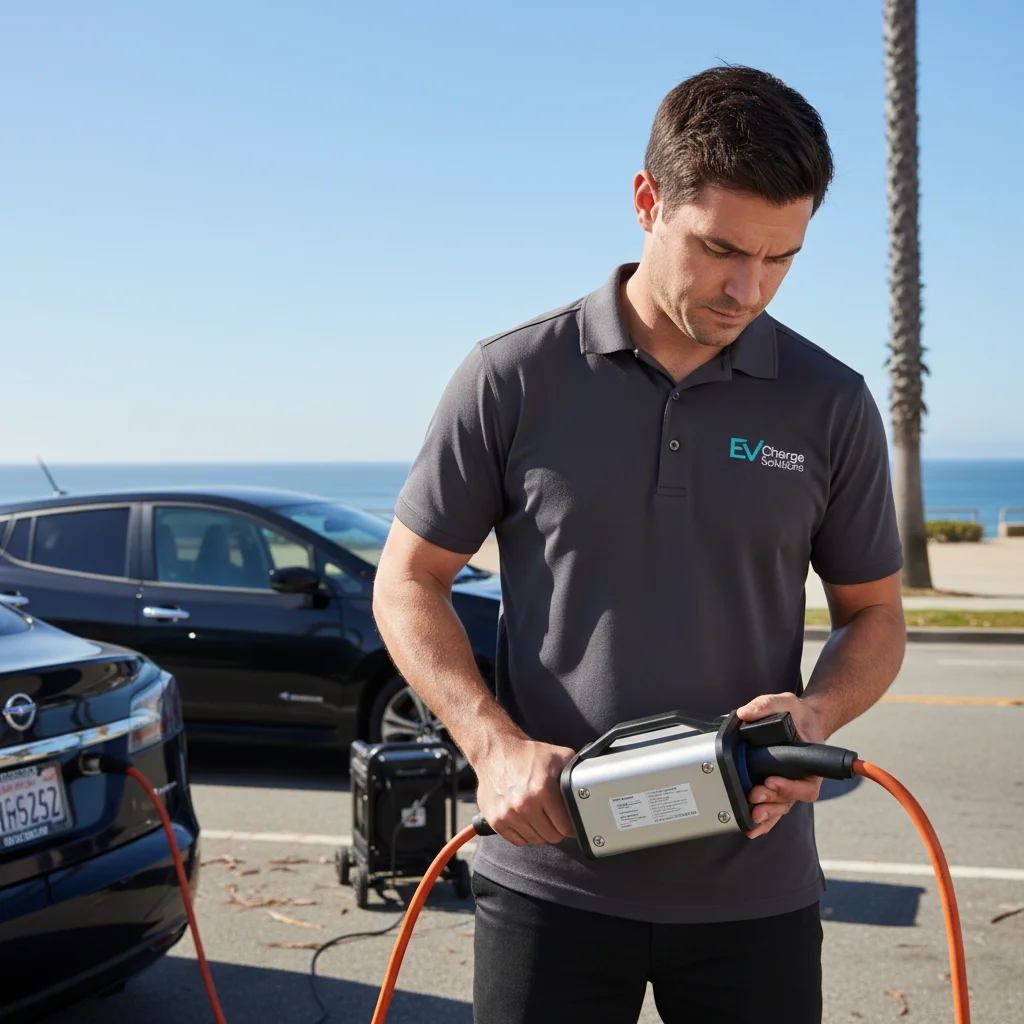
Tropicana Field is a landmark people drive to, then leave a car under for hours. Hurricane Milton in early October 2024 tore part of the roof off that building. It also dropped at least 18 inches of rain on parts of St. Petersburg. Game and show parking still packs the same lots. A pack that looked fine at arrival can be a problem at exit if you arrived already low. A 12-volt that sat in heat can refuse to wake even when the traction battery is fine. If you’re stuck after a game or a show, stranded EV at Tropicana Field covers that parked-car stall.
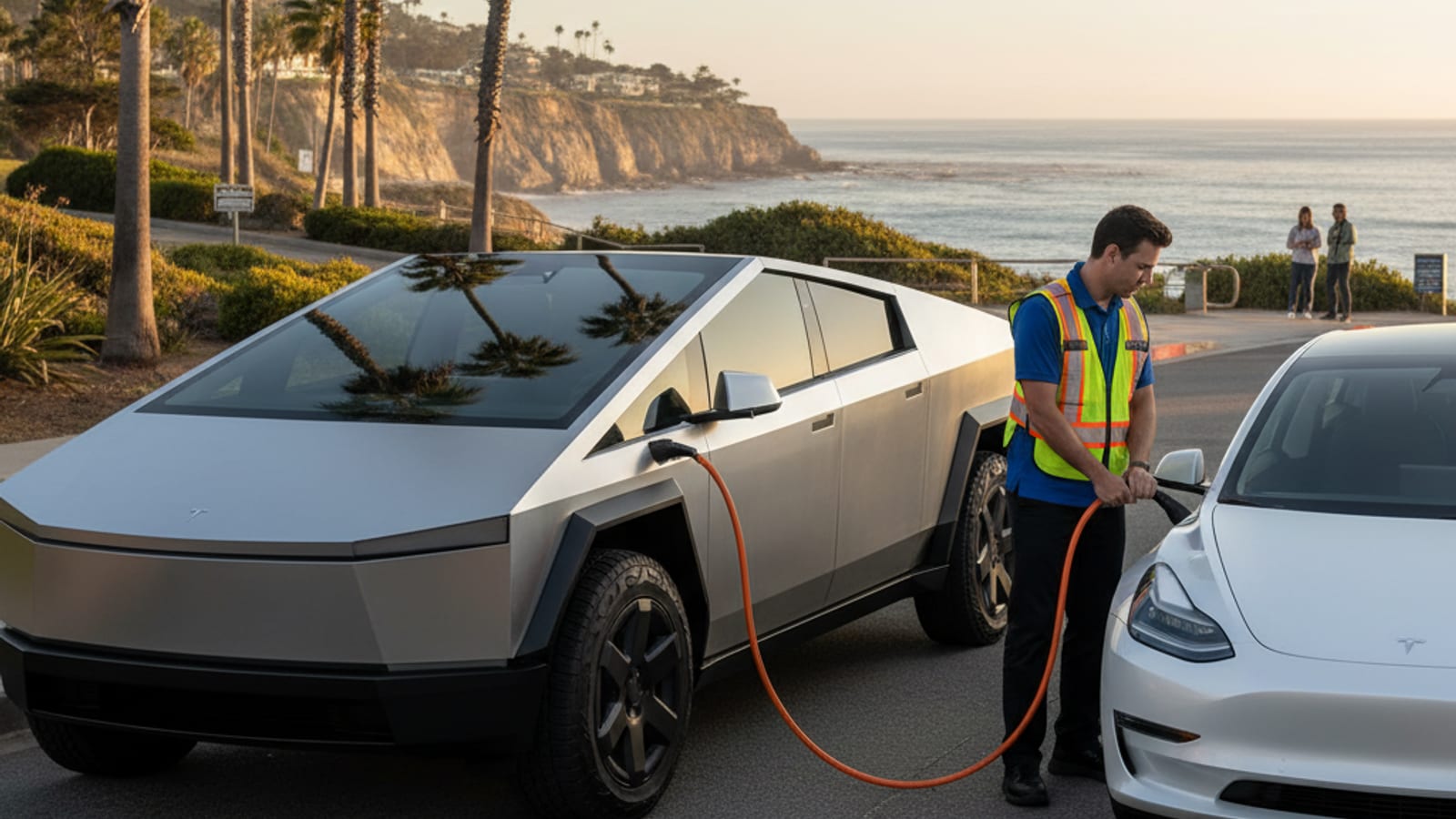
Downtown St. Petersburg draws visitors who don’t have a home plug on this side of the bay. So do the Salvador Dali Museum, USF St. Petersburg, and the Pier. Old Northeast and Snell Isle add street parking and older houses. Kenwood and Grand Central mix small lots with tight streets. Gateway sits against the I-275 weave. Tierra Verde sits on the way to the Skyway and the barrier islands. The operators we send work those streets the same way they work a shoulder. They bring 240-volt Level 2 power to the charge port. They can also jump the 12-volt on site.
Tesla drivers on this peninsula have a sibling walkthrough. See A Tesla that won’t start in St. Petersburg when the car is silent, locked, or showing a low-voltage warning.
What roadside help actually includes
EV roadside assistance in this city isn’t a gas-can call with an adapter tossed in. The operators in the network bring a 240-volt Level 2 source to the car. Teslas take a native NACS plug. Other EVs take a CCS or J1772 adapter. The job is a rescue charge, not a fill-up. In 15 to 30 minutes of charging, they typically add 10 to 20 miles of range. That window is charging time. It isn’t an arrival time. We don’t publish arrival times, and we don’t promise them.
They also jump or replace a dead 12-volt battery on site. That’s a different failure than an empty pack. The 12-volt wakes the computers. It unlocks the charge port. It closes the contactors on the high-voltage system. If it dies, the car can look totally dead with a pack that’s still full. Heat in a peninsula parking garage wears those small batteries. Sitting for days with cabin overheat protection or sentry-style features running will drain them too.
Non-Tesla brands stall the same way. Ford, Chevy, Hyundai, Kia, Rivian, BMW, Mercedes, Volkswagen, and the rest still need a 12-volt to boot. Non-Tesla EV rescue is the path when the badge isn’t Tesla.
Charge Pro TPA doesn’t hold a trade license, own trucks, or employ technicians. We don’t set prices. The operator on scene quotes you, then bills you. That’s the whole model. The St. Petersburg city page is the local hub if you want the peninsula map without this article’s narrative.
How a mobile charge actually goes
You call and give a real location. Name the downtown garage, the 34th Street curb, the Gandy shoulder, or the Tierra Verde driveway. Be specific. Name the make and model. Say whether the car is silent, showing a low-pack warning, or refusing to unlock.
We pass that to an independent operator. That operator calls you, quotes the work, and only then rolls. When they arrive, they connect their 240-volt source to your port with the right plug. You stay with the car while it takes a short Level 2 charge. The goal is enough range to reach a charger you trust, or home if home is close. Then you unplug and leave.
If the 12-volt is the problem, they jump it first. Sometimes the car then takes a charge. Sometimes it needs a replacement 12-volt on site. The operator tells you which one you’re looking at before they start that work.
If rain or bay spray left water in the charge port, don’t force a connection. Peninsula storms wet ports all the time. Dry what you can see, and let the operator inspect it. After a saltwater soak, treat the pack as a hazard. Federal and fire-service guidance warns it can be unsafe around structures and other cars until it’s inspected. Don’t park a flooded EV in a tight garage and hope.
Road Rangers, FHP, and the free patrol’s limits
If you’re on I-275, the Skyway approach, or another limited-access road, start with safety. Get the car as far right as you can. Keep the hazards on. Occupants out on the safe side if traffic is close.
FDOT Road Rangers in District 7 patrol I-4, I-75, and I-275 in the Tampa Bay area. You reach them by dialing *347. They work with the Tampa Bay SunGuide Center. Published services include flat-tire help, a jump-start, and fuel. They also list diesel or water, two free local calls, moving a disabled vehicle to a safer spot, and traffic control. The materials we reviewed don’t mention charging an EV. That’s an observed absence, not a claim that Rangers refuse EVs. The free state patrol carries fuel and can jump a 12-volt battery. Its published services don’t include charging an EV. Florida Highway Patrol Troop C covers disabled vehicles and incidents on the interstates. Florida 511 is the state’s traffic feed if you need closure information.
Use Road Rangers for the shoulder and the traffic. Use a mobile operator for the pack. Don’t sit in the traveled lanes while you scroll for a stall you can’t reach from where you are.
Heat, surge, and a low pack during an evacuation
Hurricane Helene in late September 2024 drove record storm surge at Tampa Bay tidal gauges. St. Petersburg faced a forecast of 5 to 8 feet of surge. Pinellas barrier islands from the Dunedin Causeway through Tierra Verde were closed. A large part of this city sits in a hurricane evacuation zone. Leaving on a low pack during an evacuation is a local failure mode, not a hypothetical.
Hurricane Milton in early October 2024 largely spared Pinellas a second catastrophic surge. It still dumped at least 18 inches of rain on parts of St. Petersburg. Flooded streets, wet ports, and cars that sat through the storm show up after events like that.
Lightning is another peninsula fact. Vaisala’s National Lightning Detection Network repeatedly ranks Florida among the most lightning-dense states. Tampa Bay is one of the most lightning-prone metros in the country, attributed to Vaisala. Don’t treat a charger pedestal or a rescue truck as a lightning shelter. If a cell is on top of you, wait it out in a building.
Duke Energy Florida serves Pinellas County. In 2025 it launched a Charger Prep Credit toward the wiring for a Level 2 charger. It also launched an Off-Peak Charging Credit for residential off-peak charging, and Fleet Advisory. Confirm current credit amounts and time windows with Duke before you count on them. Those programs don’t help you on a Skyway shoulder. They only change how you charge at home, if you have a place to install.
Florida doesn’t run a state EV purchase rebate or tax credit. Utility programs are the incentive layer here. Confirm yours on Duke’s current pages. Don’t treat a blog as the live tariff.
Towing should be the last move
Many EVs shouldn’t be flat-towed. Motors and reduction gears can take damage if the wheels spin without the right mode. A flatbed is the usual safe tow when the car truly can’t move. It’s still the last resort on this peninsula. Private-lot tows also trigger Pinellas rules on signage, storage radius, and posted rates.
If the car will take a short charge, that’s usually the cleaner path. If it won’t go into Neutral, or the 12-volt won’t stay alive, then you’re in tow territory. Don’t let a random wrecker drag it on two wheels.
Neighbors on the same peninsula
St. Petersburg doesn’t sit alone. Pinellas Park is the next city north. It’s built around US-19, Gandy, Park Boulevard, and 49th Street. Lealman is older still. ACS 2019-2023 puts 56.6 percent of Lealman’s housing as built before 1980. That’s the oldest share in this research set. It’s a proxy for how hard a 240-volt install can be on small lots. Seminole sits toward the Gulf beaches along Seminole Boulevard and Park Boulevard. Gulfport is on the south side. Strandings on US-19, 54th Avenue, and 34th Street often start in St. Pete and continue into a neighbor, or the other way around.
Charge Pro TPA refers drivers across Tampa Bay. We don’t roll a branded fleet out of one yard.
Empty pack versus a dead 12-volt
These two failures get mixed up constantly. An empty high-voltage pack usually still lets the car talk to you. You’ll see a low-battery warning, a reduced-power message, or a turtle-mode icon. The 12-volt is what keeps the screens alive. When that small battery dies, you get silence. Door handles may not present. The charge port may not release. The car may not go into Neutral for a tow.
A jump on the 12-volt can bring the computers back. If the traction pack is actually empty, you’ll then need the Level 2 rescue charge. If the pack is fine, the jump may be the whole job. If the car starts, then dies again a few minutes later, the 12-volt is likely weak. It needs replacement, not another jump.
Parked-car drain is common in this heat. Cabin overheat protection, cameras, and scheduled preconditioning all nibble at the 12-volt. Over days they nibble at the pack too. A visitor who left a car at a downtown garage for a long weekend sees this often. A driver who plugs in every night sees it less.
What to do in the first minutes
Put the hazards on. Move off the traveled lane if you can. If you’re on I-275 or the Skyway, dial *347 for Road Rangers. Read the dash before you assume the pack is empty. Don’t keep flooring an empty traction battery. Call for a mobile rescue if you need a charge or a 12-volt jump. Stay with the car on a bridge or a freeway shoulder. On a condo lot, watch for tow signage. Don’t leave the vehicle unattended if a tower could hook it.
Keep your phone charged. A dead EV and a dead phone on Gandy is a worse night than either one alone.
Frequently asked questions
What EVs can get a mobile rescue in St. Petersburg
The operators we connect you with handle Tesla and every major EV brand. They bring a native NACS plug for Teslas. They carry CCS or J1772 adapters for everyone else. Model S, 3, X, Y, and Cybertruck are in scope. So are Ford, Chevy, Hyundai, Kia, Rivian, BMW, and Mercedes battery cars. Tell the operator the exact model when they quote you, because port doors and 12-volt locations differ.
What if the car won’t start but the pack isn’t empty
Start with the 12-volt. A full traction battery still can’t close contactors without that small battery. A jump on site is the first test. If the car wakes and stays awake, you may only need a 12-volt replacement. If it wakes and then shows zero usable range, you needed the pack charge all along. If it won’t stay in Neutral, say that before anyone hooks a tow.
Can help meet me on the Sunshine Skyway
The Skyway is four miles of bridge with no place to stop. FHP and Road Rangers control that span. A mobile operator can only work where they can legally park and connect. If you’re already on the main span, call *347 first and stay with the car. The operator you get through us will tell you the nearest place they can actually meet you. Don’t invent a stop on the cable-stayed span. There isn’t one.
Call when the car is already stuck
A thin gauge on this peninsula turns into a Skyway problem, a condo-lot problem, or a Tropicana parking problem faster than people expect. Charge Pro TPA will match you with a local operator for a Level 2 rescue charge or a 12-volt jump. We don’t perform the work, and we don’t quote the job. The operator does both. For EV roadside assistance in St. Petersburg, call (813) 536-4545.