You can stall an EV in Seminole on a short gulf errand. South Pinellas heat and cabin AC cut the range you thought you had. The usual pattern starts at Madeira Beach or Indian Rocks Beach. Then the car is dead on the ride home. If you need EV roadside assistance in Seminole, you want help at the bumper. Charge Pro TPA is a referral line for that call. We match stranded drivers with independent local mobile rescue operators. Those pros bring a 240-volt Level 2 source to the car. They use a native NACS plug, or a CCS or J1772 adapter. They handle Tesla and every major EV brand. They quote you before they start, and they bill you directly.
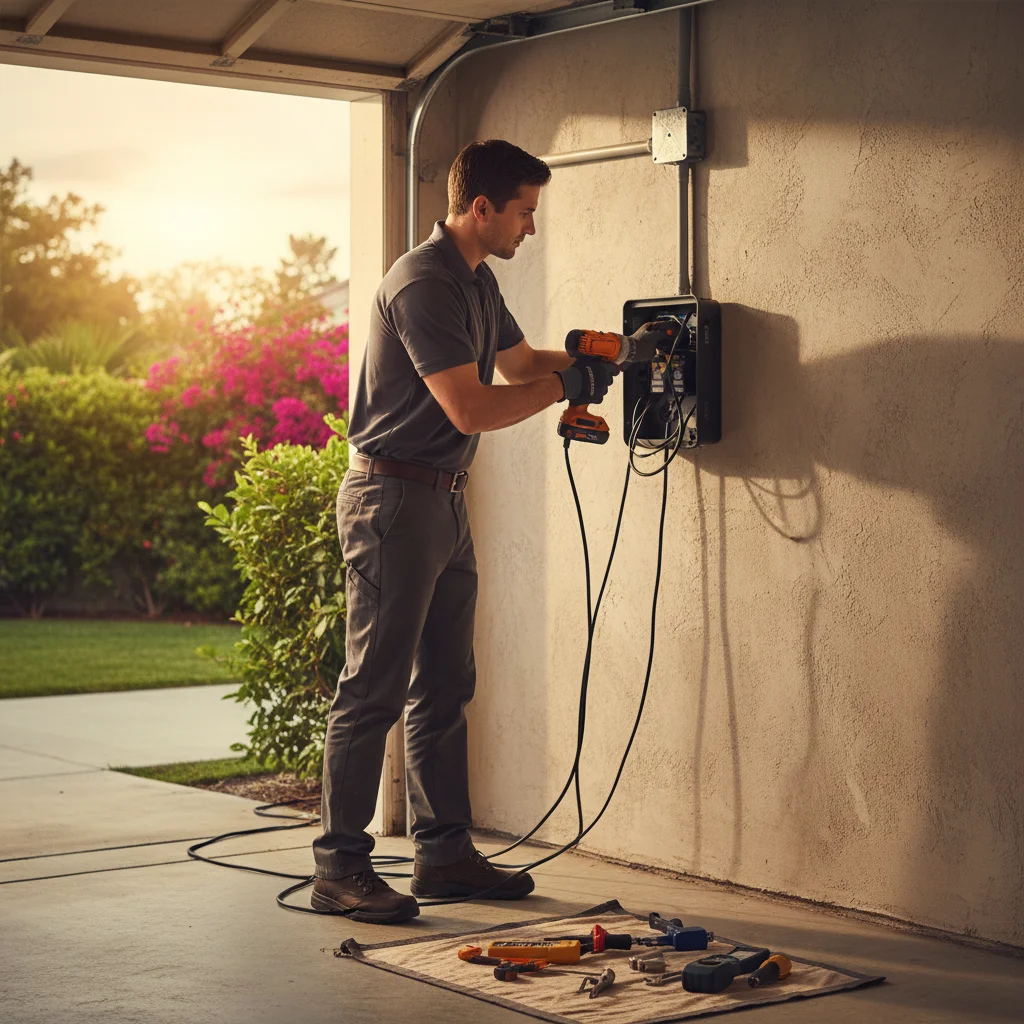
A south Pinellas city that lives next to the gulf
Seminole is a settled mid-peninsula city in south Pinellas. It covers 5.186 square miles, with 19,336 residents in ACS 2019-2023. The 2024 Census estimate is 19,395. Largo, Pinellas Park, St. Petersburg, and Clearwater sit around it. Bardmoor, Oakhurst, and the Bay Pines edge sit on that same map. Seminole City Center pulls daily errands. The Pinellas Trail cuts through local trips. Seminole Boulevard, Park Boulevard, and 113th Street carry the rest.
Tampa Bay is flat and near sea level, so grade never hands range back. Heat and salt air do that work instead. Recurrent Auto’s published research is the figure to cite. An EV loses about 5 percent of range at 90°F. Losses run 20 to 30 percent above 95°F. They sit around 17 to 18 percent near 100°F. The hit varies widely by model. The AC season here runs from spring into late fall.
Duke Energy Florida serves Pinellas County. Home charging in Seminole runs on Duke, not Tampa Electric. Duke publishes a Charger Prep Credit for wiring upgrades. It also publishes an Off-Peak Charging Credit. Confirm both on Duke’s own pages before you plan around them. ACS 2019-2023 puts 24.9 percent of Seminole housing before 1980. That older stock is a proxy for panels that may need work. It’s not proof a house can’t take a charger.
Condo and HOA living is common across Pinellas. Florida Statute 718.113(8) lets a unit owner install a charger. It has to sit in an exclusive space or limited common element. A declaration can’t block a properly submitted request. The owner pays for install, power, and upkeep. That’s why some Seminole drivers live on public charging. A gulf day can still leave them stalled.
The beach-day return is the local stall
A gulf trip from Seminole looks short on a map, but it still burns energy. You run AC on Seminole Boulevard toward the water. You idle in a Madeira Beach lot, then add extra loops looking for a spot. You sit with climate on while someone finishes a walk. None of that looks like a long highway drain. It can still empty a pack that looked fine at breakfast.
Hurricane Helene in late September 2024 is the other coastal memory. Record storm surge hit Tampa Bay tidal gauges. Pinellas barrier islands were closed from the Dunedin Causeway through Tierra Verde. Madeira Beach and Indian Rocks Beach sit in that gulf chain. If a car took on salt water, treat it as a safety problem. Federal and fire-service guidance warns a soaked EV can be a fire risk later. Keep it away from buildings and other vehicles until it’s inspected.
The ordinary Seminole call is a car that sat too long in heat. Or a pack that ran down on the beach return. Or a 12-volt that died in a lot at Seminole City Center. If you’re planning the next trip, start on the Seminole charging page. The stall in front of you is still a bumper job.
Seminole Boulevard, Park Boulevard, and the beach approach
Road strandings here cluster on the named corridors. Seminole Boulevard is the north-south spine. Park Boulevard is the east-west cut, and 113th Street is the other local run. The approach to the gulf beaches is the fourth pattern.
Seminole City Center is a private-lot risk as much as a traffic risk. If the car dies in a shopping lot, Florida Statute 715.07 can apply. An owner or lessee may have an unauthorized vehicle removed. Pinellas County caps non-consent tow rates by ordinance. That cap lives in Ordinance 19-39 and Code Chapter 122. A current maximum rate wasn’t confirmed against the live schedule. Confirm the posted rate with the tower and the county before you pay.
Bardmoor and Oakhurst add the neighborhood version of the same stall. The car sits in a driveway after a gulf day. It won’t wake the next morning. Bay Pines edge trips see the same heat soak after a parked sit. If you’re already at zero, out-of-charge recovery is the name for an empty pack. A 12-volt failure looks similar from the sidewalk. The dash is dark, and the doors may not act right. The car won’t go into ready. Those are different jobs, and the operator has to sort them at the bumper.
Empty pack or a 12-volt that won’t wake
An empty high-voltage pack is a range problem. A dead 12-volt is an electronics problem. Both leave you stranded in Seminole, and they don’t get the same fix.
If the car still shows miles, you may still roll to a safer spot. If it’s at zero, stay put once you’re out of the lane. Operators we connect you with typically add 10 to 20 miles of range. That’s from 15 to 30 minutes of charging. That’s charging time, not a promise of when someone arrives. It can finish a local trip, but it’s not a full charge.
The 12-volt battery runs computers, lights, and contactors. Heat is hard on that small battery. A jump or an on-site replacement can wake the car. It doesn’t refill an empty pack. If you jumped it and it died again, the 12-volt may be failing. Don’t keep jumping it in a hot lot.
Tesla, Hyundai, Ford, Chevy, Rivian, and the rest all use a low-voltage battery. The high-voltage chemistry doesn’t change the first check. If it won’t ready, start with that small battery.
What to do when you stop on a Pinellas boulevard
Turn on the hazards as soon as power is fading. Coast out of the travel lane if the car will still roll. A side street or a legal parking stall beats a through lane. Florida Statute 316.194 covers a disabled vehicle on a highway outside a municipality. It lets you stop on the pavement when you can’t get off it. Seminole is a city, so that section may not govern local streets. Don’t leave a dead EV in moving traffic.
Stay with the car if traffic is close. Pinellas boulevards aren’t the Sunshine Skyway. They still have bikes, turning traffic, and dark stretches at night. Florida Highway Patrol Troop C covers disabled vehicles on the interstates. FDOT Road Rangers in District 7 patrol I-4, I-75, and I-275. Reach them at *347 from those roads. Published help includes a jump-start, a tire, and fuel. They can also move a disabled car to a safer spot. The free state patrol carries fuel and can jump a 12-volt battery. Its published services don’t include charging an EV. That’s an observed absence in the materials reviewed. It’s not a claim they refuse to help an EV driver.
If you’re on Seminole Boulevard, you’re not on those interstates. A Road Ranger truck may never be the unit that arrives. On private property, a manager can tow under 715.07 if the signs meet the statute. In Pinellas, a towed car must be stored within 10 miles. Ask where the yard is before you agree to a hook.
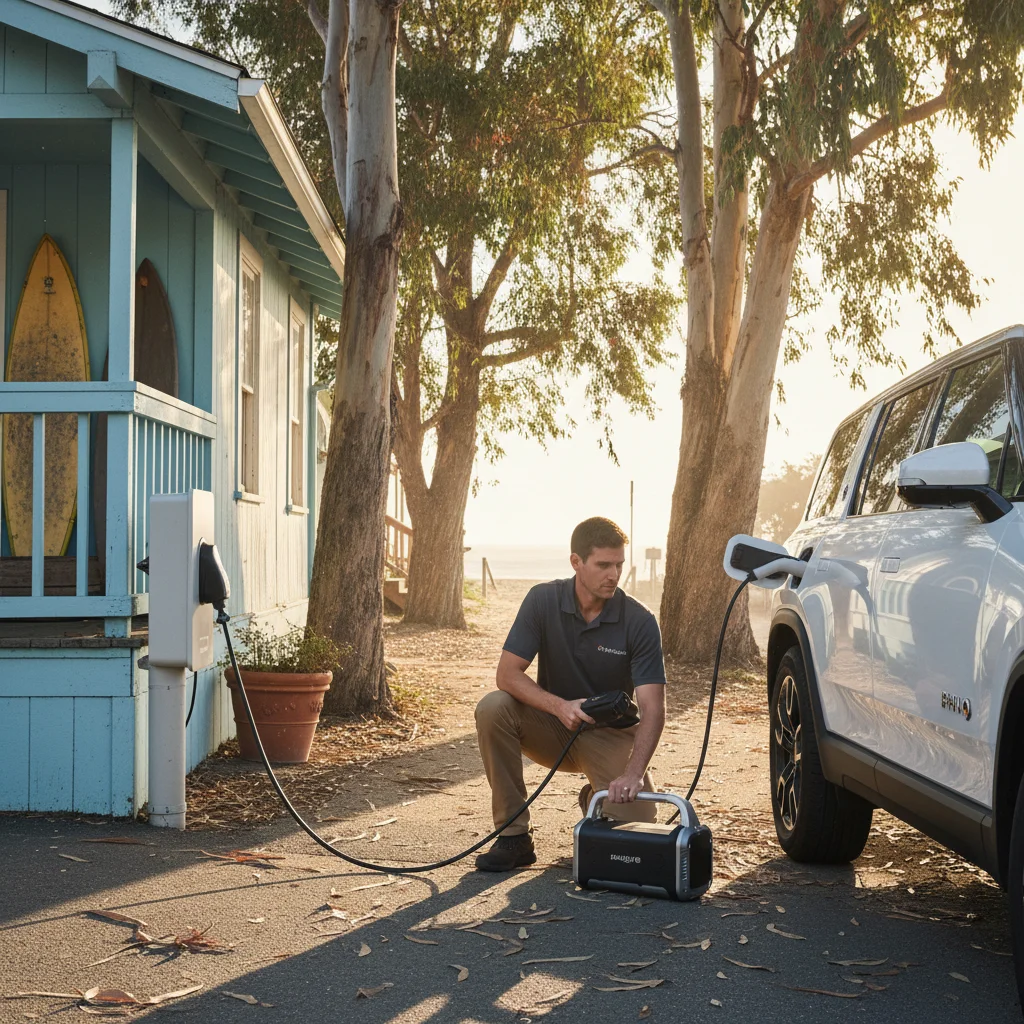
A mobile charge versus a tow from Seminole
A tow is the last resort for a dead EV, not the first. The car usually has to ride a flatbed. Neutral and transport mode matter, because a rushed hook can damage a motor. Pinellas non-consent rates are capped, but a consent tow is a private quote. The operator who shows up quotes you before work starts.
Mobile EV charging brings the charger to the bumper. You don’t wait at a shop while a flatbed unloads you. For the longer comparison, read mobile charge versus tow.
A Level 2 roadside charge isn’t a Supercharger session. It’s a 240-volt top-off. Operators typically add 10 to 20 miles. That can finish a local ride after a beach lot sit. It can also get you off Park Boulevard. It isn’t a claim about any one public site. If you want a full pack, that’s a later stop you choose.
If the 12-volt is the failure, charging the high-voltage pack won’t wake the car. The operator has to jump or replace that small battery. Tell the person on the phone what the dash said before it went dark. Say whether the car clicked, locked you out, or rolled to a stop.
Who Charge Pro TPA sends, and who we aren’t
We don’t hold a trade license for this work. We don’t own the truck, employ the technician, or publish hours or arrival times. Independent local operators do the rescue. The pros we connect you with are licensed and insured. They handle the quote and the bill.
Don’t expect the brand to stage a fleet on Seminole Boulevard. When you call, you’re asking for a match. You’re not asking for a wrecker with our name on the door.
When to pick up the phone
Call when the car won’t ready or the pack is empty. Call if the 12-volt has dropped out. Call from Seminole Boulevard, Park Boulevard, or a beach lot. Driveways in Bardmoor and Oakhurst count too. Stay out of traffic, and tell the operator your plug type if you know it. NACS, CCS, and J1772 all show up in this city.
Charge Pro TPA matches that call to a local operator. The number is (813) 536-4545. The operator quotes before starting, and you pay that operator directly.