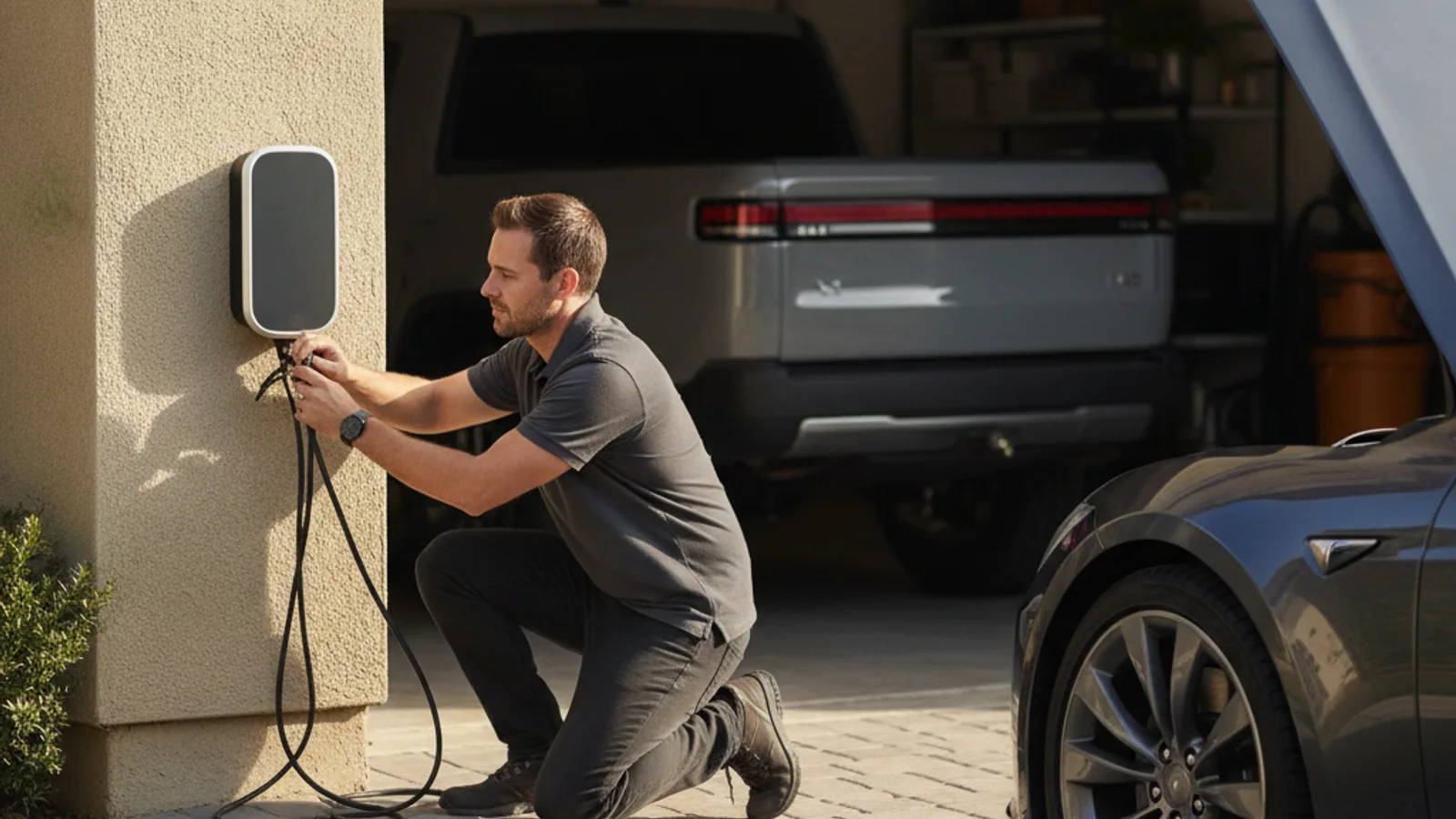
A Tesla Model X that will not wake in a Tampa Bay driveway is almost always a 12-volt problem, not a traction-pack problem. The Model X uses the same two-system layout as the rest of the Tesla lineup. The 12-volt runs the wake-up circuit for the screens, locks, contactors, and the falcon-wing doors. Heat here runs well into the 90s from late spring through early fall. Heat ages a small 12-volt faster than a big traction pack. A driver who returns to a dark cabin in the Model X usually needs a 12-volt jump, not a tow.
What the Model X 12-volt actually does
The Model X runs two electrical systems. The traction pack moves the wheels and sets the range number. The 12-volt battery is the wake-up circuit for everything else. It feeds the screens, the shift controller, the parking brake, the computers, and the contactors that connect the pack to the motors. It also feeds the falcon-wing door motors. Without that small battery, the high-voltage system cannot boot itself. The doors cannot open. The driver is locked out.
A driver who sees a black screen and no handles has a 12-volt problem. A driver who sees a low range warning and the screens still light up has a traction-pack problem. The two jobs are different. The operator brings different gear.
For the wider 12-volt pattern, see our Tesla 12V failure symptoms guide. For the diagnosis walkthrough, see the Tesla 12V diagnosis guide.
Why the falcon-wing doors make this worse
The Model X falcon-wing doors need 12-volt power to open. A 12-volt no-start in a Model X means the driver cannot get into the car through the front. The mechanical key hidden in the key fob opens the driver’s door but does not power the falcon-wing doors. The driver can get into the car, but the screens will stay black until the 12-volt is jumped.
For the locked-out walkthrough, see our Tesla dead and locked out guide.
What Tampa Bay heat does to a small battery
Recurrent Auto’s research puts range loss at about 5 percent at 90 degrees Fahrenheit. Above 95, that loss climbs to 20 to 30 percent. That is traction-pack range. The same heat sits on a small 12-volt in a closed garage. Model X drivers in newer Tampa and Hillsborough subdivisions see this most in years three and four. An SUV that sits in a hot driveway through a workday returns to a black cabin. The 12-volt is the cause.
Florida is among the most lightning-dense states in the country. Vaisala’s lightning data confirms the pattern. Storms cut power even when they do not bring a hurricane. A multi-day outage drains the small battery because the car cannot charge itself from a dead outlet.
For the storm side, see our mobile EV charging vs home battery explainer.
What a Model X rescue looks like
A local operator brings a lithium jump pack designed for the 12-volt on the Model X. The pack clips to the small battery, which is accessible under the hood. The operator confirms the chemistry. Lead-acid and lithium 12-volt batteries want different jump profiles. The SUV wakes in seconds. The operator does not replace the 12-volt on site. A replacement is a different job and the operator may offer to tow to a shop if the battery is shot.
For an empty traction pack, the operator brings a 240-volt Level 2 source with a native NACS plug. A typical charge adds 10 to 20 miles of range from 15 to 30 minutes of charging. That is charging time, not an arrival time.
For the no-power tow side, see our Model S tow no-power guide. For the cost and coverage side, see our Cost and coverage explainers.
What to tell the operator on the call
State the model, year, and trim. The Model X has had running changes across model years. Tell the operator whether the cabin is fully dark or if the screen still shows a range number. Share the nearest cross street if you are on the road. The operator uses that to bring the right gear and quote before work starts.
Charge Pro TPA is a referral line. It matches stranded drivers with independent local operators. It does not own trucks, employ crews, set prices, or promise an arrival time. The operator quotes you before starting work and bills you directly.
When to make the call
Call from a safe spot the moment the warning light comes on. Call from the driveway if the SUV will not wake. Stay with the car if it is safe to do so. On a busy road, pull off first, then call.
Charge Pro TPA connects Tampa Bay Tesla drivers with local operators. Call (813) 536-4545 and we will match you with an independent EV rescue operator who works your part of Tampa Bay.