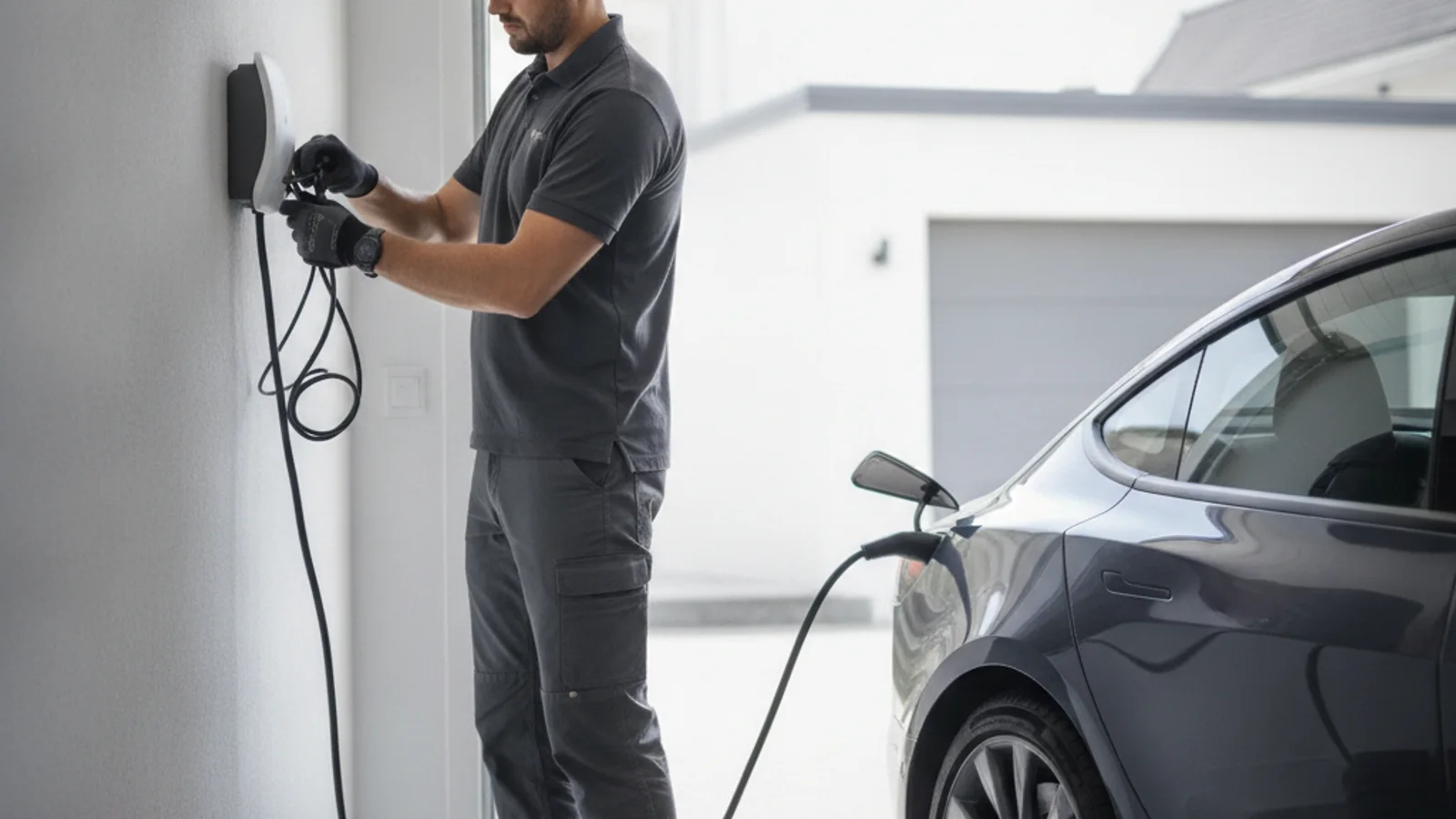
A Tesla Model 3 driver in Tampa Bay who is asking about pack replacement is usually asking about heat-related range loss, not a failed pack. The questions are common because the heat here is real. Recurrent Auto’s research puts range loss at about 5 percent at 90 degrees Fahrenheit. Above 95, that loss climbs to 20 to 30 percent. Near 100, the hit is roughly 17 to 18 percent. A driver who leased a Model 3 with 310 miles of range and sees 250 in July is asking the same question every other Tampa Bay Tesla driver asks.
What the questions usually are
The first question is whether the range loss is normal. The answer is yes for Tampa Bay summers. Heat cuts range. The pack recovers when the temperature drops. The second question is whether the pack needs replacement. The answer is usually no. Heat-related range loss is not a failed pack. The third question is what the warranty covers. The answer depends on the model year and the warranty terms.
Tesla’s battery warranty is national. The exact terms vary by model year and trim. Confirm the current terms with Tesla before relying on them. Tesla service-center locations in Tampa Bay are not confirmed in our research. Do not list any.
For the broader 12V walkthrough, see our Tesla 12V failure symptoms guide. For the wider Tampa Bay pattern, see our Tampa Bay EV roadside guide.
What pack replacement actually looks like
A pack replacement is a service-center job. Tesla removes the high-voltage pack, replaces it with a new or refurbished pack, and returns the car to the driver. The work takes hours, not minutes. The driver needs alternate transportation during the work. Confirm the current terms with Tesla before scheduling.
A driver who is asking about pack replacement because of heat-related range loss does not need a pack replacement. The driver needs an honest answer about what the warranty covers and what heat does to the range number. The range number recovers when the temperature drops.
What 12-volt replacement looks like
A 12-volt replacement is a different job. The small battery is serviceable. A driver who plans for the swap avoids the day the cabin goes dark. The replacement itself is a service-center job or a mobile-service job. Tesla has used lead-acid 12-volt batteries across parts of the lineup and lithium low-voltage batteries on later cars. The chemistry matters for the replacement part.
For the broader 12V replacement walkthrough, see our Tesla 12V replacement planning guide. For the diagnosis pattern, see the Tesla 12V diagnosis guide.
What a referral line covers
Charge Pro TPA is a referral line. It matches stranded EV drivers with independent local operators. It does not own trucks, employ crews, set prices, or promise an arrival time. The operator quotes you before starting work and bills you directly.
A referral line is the wrong tool for a pack replacement. That is a service-center job. A referral line is the right tool for a 12-volt jump on the shoulder or a 240-volt Level 2 charge brought to the car.
For the cost and coverage side, see our Cost and coverage explainers.
What to tell the operator on the call
State the model, year, and trim. Tell the operator whether the cabin is fully dark or if the screen still shows a range number. Share the nearest cross street if you are on the road. The operator uses that to bring the right gear and quote before work starts.
When to make the call
Call from a safe spot the moment the warning light comes on. Call from the driveway if the car will not wake. Stay with the car if it is safe to do so. On a busy road, pull off first, then call.
Charge Pro TPA connects Tampa Bay Tesla drivers with local operators. Call (813) 536-4545 and we will match you with an independent EV rescue operator who works your part of Tampa Bay.