A full day on Clearwater Beach spends more pack than the drive in. Cabin AC runs on the Memorial Causeway. Heat soaks the car in a Sand Key lot. Island Estates parking does the same. You walk back and the display is already in the red. EV roadside assistance in Clearwater is a mobile 240-volt charge brought to that space. It’s not a gas can. It’s not automatically a tow.
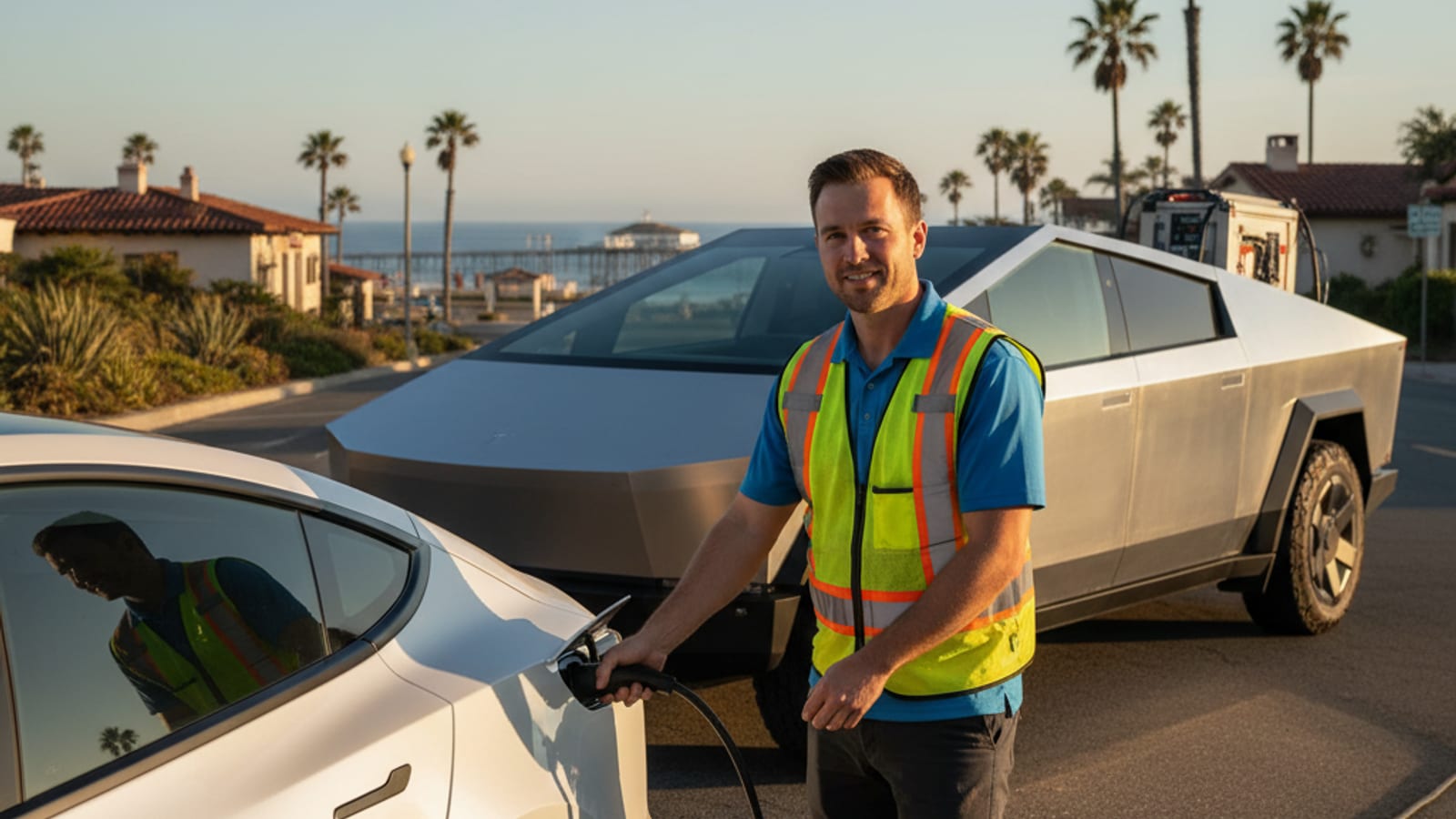
Clearwater is one name on two shores
Clearwater is the north-Pinellas anchor. ACS 2019-2023 counts 117,075 people here. The 2024 Census estimate is 116,811. Land area is 26.175 square miles. That compact map still splits in a way that matters. A dead EV on the mainland isn’t the same job as one on the island.
The mainland holds downtown Clearwater and Countryside. Drew Street and McMullen-Booth Road cut across that side. US-19 is the north-south spine. SR-60, Gulf-to-Bay Boulevard, runs toward the Courtney Campbell Causeway. The same boulevard also feeds the beach.
The barrier-island side is Clearwater Beach, Island Estates, and Sand Key. The Memorial Causeway is the beach run. Coachman Park sits on the mainland edge of that trip. So does the Clearwater Marine Aquarium. Operators need that split. A pin that only says Clearwater still leaves them guessing. Say whether you’re on the island or the mainland. Then name the corridor.
Largo, Dunedin, Safety Harbor, and Palm Harbor sit next door. Close on a map isn’t the same as reachable. Remaining range is the real limit. City limits aren’t.
Heat and AC do the damage, not the grade
Tampa Bay is flat and near sea level. Grade never gives range back. Heat and AC are the whole story. Recurrent Auto’s published research finds about 5 percent range loss at 90°F. Above 95°F the same work finds 20 to 30 percent. Roughly 17 to 18 percent loss shows up near 100°F. The effect varies by model.
A beach afternoon with climate control running spends that margin. So does a slow crawl back over the Memorial Causeway. So does a hot lot while the car keeps the cabin cool. None of that is a mystery electrical fault. It’s climate doing work the window sticker never showed.
Tampa Bay is one of the most lightning-prone metros in the country, per Vaisala. Lightning doesn’t empty a pack by itself. A storm delay with the AC on does. Plan the return with that delay in mind.
You didn’t stall in one moment. The morning drive to the Memorial Causeway used a slice. Then the car sat in heat on Clearwater Beach. Island Estates and Sand Key lots do the same soak. If you left climate control on, that slice kept going. The afternoon return crawls. Gulf-to-Bay and the causeway both see that crawl. Recurrent’s heat numbers stack on top of that. A 5 percent hit at 90°F is easy to shrug off at home. After a beach day it’s the whole buffer.
Two failures that look the same from the sidewalk
An empty high-voltage pack and a dead 12-volt battery look similar. They’re not the same rescue.
The pack ran out
The car woke, drove, and then range hit zero. Screens still work. You just can’t go farther. The fix is energy at the bumper. Mobile EV charging is the referral for that case. The operator brings a 240-volt Level 2 source to the car. Tesla owners get a native NACS plug. Other brands use a CCS or J1772 adapter. A typical session adds about 10 to 20 miles of range. That takes 15 to 30 minutes of charging. That’s charging time. It’s never an arrival time.
You usually don’t need a full pack in the lot. You need enough to reach a place you’ve already verified. Out-of-charge recovery is the path when the car can’t roll.
The 12-volt died instead
The high-voltage pack can still be full. The 12-volt battery runs locks, computers, and wake-up. If it dies, the car may not wake. Doors can be fussy. Screens stay dark. Charging the pack won’t fix that. Operators can jump or replace a dead 12-volt on site. That covers Tesla and every major EV brand. Ask for a Tesla 12-volt battery jump if the car won’t wake.
Say the symptoms. Don’t diagnose the pack from the sidewalk.
The trips that actually empty a Clearwater EV
The local pattern isn’t a random stall on a nameless road. It’s a short list of real trips.
The SR-60 run to Clearwater Beach and back is first. You left the mainland with a buffer. You used AC all afternoon. Traffic on Gulf-to-Bay spent the rest. The car dies in a beach lot. Or it dies on Island Estates. Or it dies on Sand Key after you already crossed.
The US-19 corridor is second. That’s the mainland spine. A Countryside errand can finish a low pack. A downtown stop near Coachman Park can do it too. Drew Street and McMullen-Booth Road help a dropped pin. The word Clearwater does not.
The Courtney Campbell Causeway is third. If the pack is failing on that span, stay put. Don’t invent a new public stop from the bridge. Our Courtney Campbell empty-EV guide covers how to stay put on the span. Florida Statute 316.194 covers disabled vehicles on the traveled way. Subsection (2) exempts a vehicle that’s disabled on the pavement when you can’t avoid stopping. A dead EV on a shoulder fits that exemption. Move occupants to a safer spot if traffic allows. Call 911 if anyone is in immediate danger.
Hurricane evacuation off the low barrier islands is fourth. That isn’t a beach-day story. It’s still a Clearwater story. The surge section below covers that clock.
Why a regular roadside plan often ends in a tow
Most insurance roadside plans were built for gasoline cars. A fuel can doesn’t help an empty EV pack. Many plans default to a tow. Towing an EV often means a flatbed. That’s to protect the drivetrain. The pack is still empty when the truck drops you. You also inherit whatever the lot’s tow rules allow.
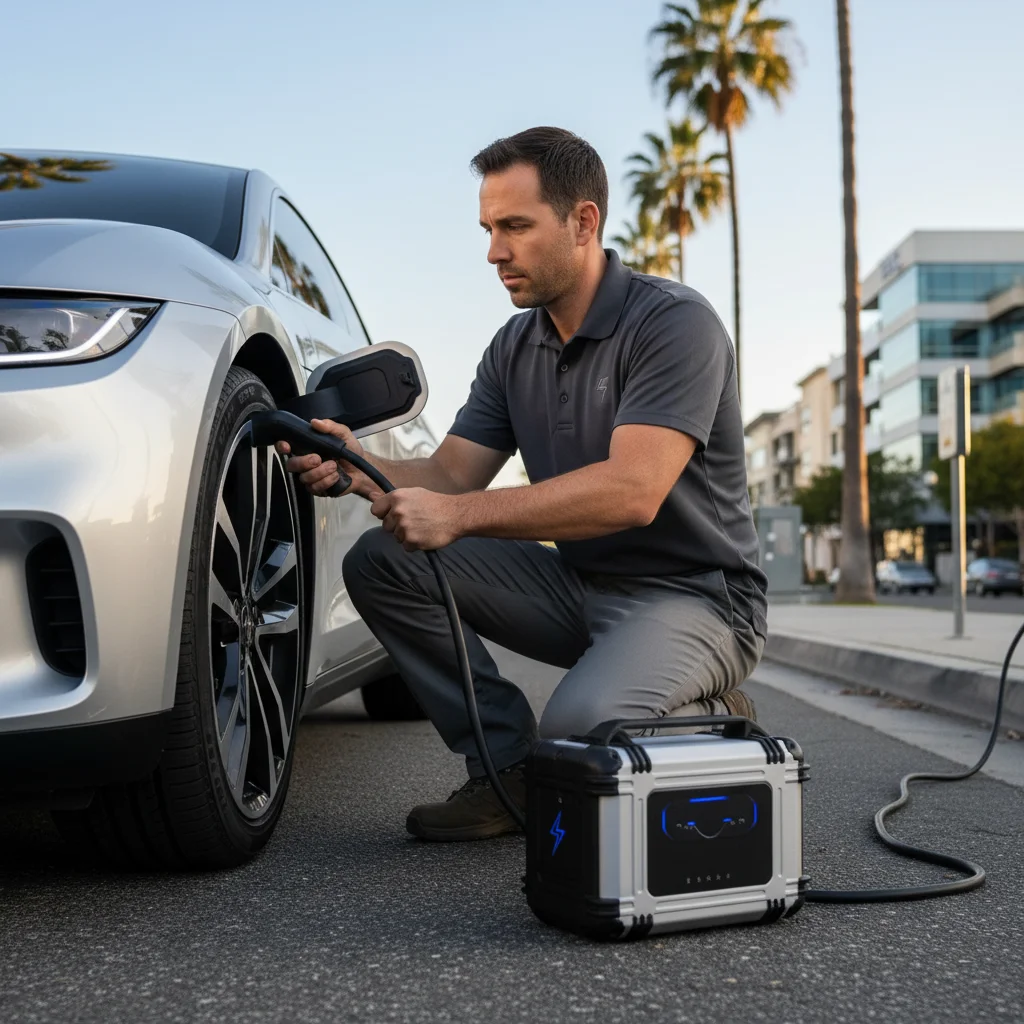
Charge Pro TPA doesn’t tow as the first answer. We connect you with an independent operator who can charge the car where it sits. The operator quotes you before work starts. The operator bills you directly. We don’t own trucks. We don’t employ technicians. We don’t set prices. We don’t promise when someone arrives. The pros we connect you with are licensed and insured. That’s a claim about the network.
FDOT Road Rangers in District 7 patrol I-4, I-75, and I-275. They also cover the airport interchange. You reach them by dialing *347. The District 7 center is the Tampa Bay SunGuide Center. Their published list includes fuel, a 12-volt jump, and tires. It includes two free local calls. It includes moving a disabled car to a safer spot. The materials reviewed don’t mention charging an EV. Use them for traffic safety on those interstates. Don’t treat *347 as a mobile charge. US-19 and Gulf-to-Bay aren’t those patrol routes.
Florida Highway Patrol Troop C covers disabled vehicles on the interstates here. Florida 511 is the state’s traffic-information system. None of those replace a Level 2 source at the bumper.
If a public stall already failed in front of you, stop hunting on the last miles. Our note on public charging in Clearwater covers that stall-side choice.
What a mobile Level 2 visit actually is
The pros we connect you with bring a 240-volt Level 2 source. It’s the same class of power as many home wall units. It isn’t a DC fast charger. It isn’t a 120-volt household outlet. U.S. Department of Energy Alternative Fuels Data Center materials describe Level 2 as 240-volt service in typical homes. Actual speed still depends on the car. It also depends on the pack and the equipment on that truck.
Tesla, Ford, Hyundai, Rivian, Chevy, and other major brands are in scope. Confirm the make, model, year, and port with the operator. An adapter isn’t a guess. The operator confirms the plug before they start.
A typical top-off is about 10 to 20 miles. That’s often enough to leave a beach lot. Then you can reach a stall or a home circuit you’ve already checked. Don’t ask the truck to fill the pack. That isn’t what this visit is for.
Charge Pro TPA makes no arrival promise. The independent operator gives you a realistic window when they call. We serve Clearwater and the rest of the Tampa Bay service area.
The operator inspects access first. Gates, height bars, and tight garage ramps matter. They confirm the port and the adapter. Then they connect Level 2 power. You wait with hazards on if you’re roadside. In a garage, stay with the car so the lot doesn’t treat it as abandoned.
When the session hits the agreed miles, they disconnect. You still have to drive to the place you named. The truck doesn’t follow you there. If the operator sees a 12-volt problem instead, they’ll say so. Charging a pack that already has energy won’t wake a dark car.
Older houses, beach condos, and overnight charging
ACS 2019-2023 shows 28.6 percent of Clearwater housing was built before 1980. That older stock is a weak fit for a 240-volt home circuit. Many beach and downtown buildings are condos. Those owners often live on public charging until a station exists in their space.
Florida Statute 718.113(8) covers condo charging rights. A unit owner may install a station in exclusive parking or a limited common element. A declaration can’t be enforced to prohibit it. The board can’t deny a properly submitted request. The owner still pays for install, operation, maintenance, insurance, and separately metered power. Until that work exists, a failed public session isn’t a short walk to a garage outlet. It’s a stranded car.
Duke Energy Florida serves Pinellas County. Home programs include the Charger Prep Credit and the Off-Peak Charging Credit. The Charger Prep Credit helps with wiring and electrical upgrades for a Level 2 charger. It doesn’t cover the charger hardware or permit fees. Confirm current program rules with Duke before you count on them. Florida has no state EV purchase rebate. Utility programs are the local incentive layer.
Don’t treat a missed overnight charge as a reason to limp across the causeway. Stay put and request a mobile charge.
Private lots and Pinellas tow rules
Beach lots, aquarium lots, and downtown garages are often private property. Florida Statute 715.07 covers removal of vehicles from private property. An owner or lessee may have an unauthorized vehicle removed. An authorized person may too. Required signs use light-reflective letters. Vehicle-will-be-towed language must be at least 2 inches high. “Tow-away zone” must be at least 4 inches high. The tower’s name and current phone number must be on the sign. Signs mount 3 to 6 feet above ground.
Pinellas has more than 500,000 people. In counties that size, a towed vehicle must be stored within a 10-mile radius of removal. The tower must file current rates with local law enforcement. An identical schedule must be posted at the storage site.
Pinellas County caps non-consent tow rates by ordinance. That includes Ordinance 19-39. It also includes Code of Ordinances Chapter 122, Article II.5, §122-42. Exact current maximum dollar figures weren’t confirmed against the live schedule. Don’t treat a blog as the cap. Check the county’s current ordinance. Or read the posted storage-site schedule. The point is simple. A dead EV in a tow-away space is a towing risk. Call before the lot treats you as abandoned.
Surge, salt water, and leaving the island on a clock
Clearwater Beach, Sand Key, and Island Estates sit on low barrier islands. They’re surge- and evacuation-exposed. Hurricane Helene in late September 2024 drove record storm surge at Tampa Bay tidal gauges. Pinellas barrier islands from the Dunedin Causeway through Tierra Verde were closed. Hurricane Milton in early October 2024 largely spared Pinellas a second catastrophic surge. It still dropped heavy rain on the peninsula.
If an evacuation order is live, don’t shop for another public plug. Leave with a usable buffer. Or request a charge before you roll. An empty pack on an evacuation route is worse than a beach-day stall.
Federal and fire-service guidance warns about saltwater-soaked EVs. A car submerged or soaked in salt water can be a delayed lithium-ion fire risk. Keep a flooded car away from structures and other vehicles until it’s inspected. Don’t write a DIY restart plan for a flooded pack.
What to do in the first few minutes
Get out of the travel lane if you can. Hazards on. If you’re on a shoulder, stay with the car unless it’s unsafe. If you’re in a garage or a surface lot, stay with the vehicle. Don’t wander looking for a different stall on a guess.
Write this down before you call:
- Exact neighborhood: beach, Island Estates, Sand Key, downtown, or Countryside
- Corridor and direction: US-19, Gulf-to-Bay, Drew Street, McMullen-Booth, or the Memorial Causeway
- A visible property name, garage level, gate, or height bar
- Make, model, and remaining percentage
- Whether the car powers on and shifts
- Whether the charge port opens
- Any 12-volt or lockout symptoms
- Whether a public stall already failed in front of you
Send a pin, not just a copied address. Clearwater repeats property names along US-19.
Charge Pro TPA is a referral line. Tell us those details. We match you with a licensed, independent local operator. Confirm price, scope, and access with that operator before you authorize work.
The Clearwater EV charging city page is for planning the next trip. It isn’t a live stall map.
What not to do while you wait
Don’t roll to zero chasing a pin you haven’t verified. Tampa Bay is flat. Heat and AC keep spending miles while you hunt.
Don’t pop the hood and improvise a jump unless you know it’s a 12-volt job. You also need the right gear. Many EVs hide the 12-volt and use specific posts. A wrong clamp can damage electronics.
Don’t assume a neighboring city’s lot is in range. Dunedin, Largo, Safety Harbor, and Palm Harbor are close. The pack may not agree.
Don’t treat Road Rangers as a charger on US-19. They’re a safety patrol on listed interstates.
Don’t leave the car in a marked tow-away space and walk to dinner. Pinellas private-property tow rules are real.
After you’re moving again
Plug in at home if you have a working 240-volt circuit. If you live in a condo, follow the 718.113(8) path. Don’t hope the public stall is free every night. Ask Duke about the Charger Prep Credit and Off-Peak Charging Credit if you’re a Pinellas residential customer. Confirm current terms on Duke’s own pages.
Build a beach-day buffer on purpose. The Memorial Causeway return is part of the trip. So is AC. So is a hot lot. The EPA range figure doesn’t include that stack.
Keep the Charge Pro TPA number saved for the next time the display lies. Call (813) 536-4545 when you need a local operator. We’ll connect you. We won’t quote an arrival clock.
Frequently asked questions
What EVs can an operator help in Clearwater?
Almost every major electric car is in scope. Tesla uses a native NACS plug. Other brands use a CCS or J1772 adapter. Confirm the exact model and port with the operator before they start.
How much charge does a roadside session add?
A typical Level 2 visit adds about 10 to 20 miles. That takes 15 to 30 minutes of charging. That’s charging time, not travel time to you. The goal is enough range to leave, not a full pack.
What if the car won’t wake, but the pack isn’t empty?
That’s often the 12-volt battery. Operators can jump or replace it on site. Pack charging won’t wake a dead 12-volt. Describe dark screens and sticky doors when you call.